
Israel Centeno
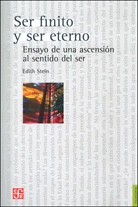
Parisian café. The atmosphere is thick with the aroma of freshly brewed coffee and cigarette smoke. In a quiet corner, Edith Stein and Jean-Paul Sartre sit across from each other. The conversation flows, as does the wine.
Sartre: Edith, I’ve long held that existence precedes essence, meaning that we first exist and then define ourselves. So when you speak of an “Eternal being,” are you not placing an essence before the very concept of existence?
Stein: Jean-Paul, your perspective is deeply rooted in human existence and its inherent freedom. But the Eternal being transcends this framework. God, or the Eternal being, is the very essence of existence. He does not come into existence like humans; He “is.”
Sartre: But that’s just it, Edith. If God “is,” then where is the freedom? For man, life is a series of choices; we are condemned to be free. But if God is eternal and unchanging, does He have freedom?
Stein: God’s freedom is not like ours. He is free from constraints, time, and change. While we experience freedom in the realm of choices and decisions, God’s freedom is in His unbounded love and the act of continuous creation. His essence is His existence.
Sartre: Such a notion seems paradoxical to me. If God’s essence is His existence, He is bound by His nature. Is He not, in some sense, trapped in His own eternality?
Stein: God’s nature isn’t a limitation. His eternality, omnipotence, and omniscience aren’t chains but expressions of His infinite freedom. To be eternal is to be beyond time, not trapped within it.
Sartre: And yet, Edith, for humans trapped within time, God’s existence or nonexistence has profound implications. If God exists, then perhaps there’s hope beyond the absurdity of life. If He doesn’t, we are left to navigate the chaos alone.
Stein: Even if one doesn’t accept God’s existence, the human longing for the infinite and eternal is undeniable. This longing points towards something beyond ourselves, a source from which this longing emanates. For me, this source is the Eternal being.
Sartre: Our existence is filled with anguish, responsibility, and despair. It’s a continuous struggle to carve out meaning. I find it hard to reconcile this with the idea of a benevolent Eternal being.
Stein: Our struggles, while natural, also lead us to moments of transcendent joy, love, and understanding. For every despair, there’s hope. For every anguish, a relief. This duality points to a greater unity in the Eternal being.
Sartre: We may never see eye to eye on this, Edith. But I respect the depth of your conviction and the sincerity with which you hold your beliefs.
Stein: And I yours, Jean-Paul. Our journeys, though different, both seek understanding and meaning in a complex world.
The two continue their conversation as the evening descends, each challenging and enriching the other’s perspective. The café, with its dimming lights, becomes a space of profound dialogue between two great minds of the 20th century.
Stein: .., an astute observation. Our human sense of eternity is just a glimpse, a mere hint, of the fullness of eternity that God encompasses. We experience moments – perhaps in deep prayer, contemplation, or even in profound human connections – where we feel a touch of the eternal, a brief transcendence beyond time and space.
Sartre: But isn’t that sense of eternity, that transcendence, just a projection of our desires? A need to escape our temporal confines, a wishful escape from our finite existence?
Stein: Not necessarily. While it’s true that humans have a deep-seated desire for transcendence, there is still the possibility that such moments genuinely connect us to a higher reality. Instead of viewing it as an escape, we could see it as a harmonizing, an alignment with more excellent order, free from the confines of time and space.
Sartre: But if God is genuinely beyond time and space, how can we, bound by both, ever truly comprehend or connect with Him? How can the finite grasp the infinite?
Stein: We may only partially grasp the infinite in its entirety. However, with its inclinations towards the eternal, our very nature suggests a connection. Just as a drop of water reflects the vastness of the ocean from which it came, our souls, in their deepest yearnings, mirror and point toward the Eternal.
Sartre: So, you’re saying that even in our finitude, we carry a spark of the infinite?
Stein: Precisely. Our capacity to ponder eternity, to feel its pull, is indicative of that spark. It’s a testament to our origin and our ultimate destination. It’s an echo of the Eternal within us.
Sartre: These echoes, while intriguing, also highlight the tension of our existence. We are torn between the temporal and the eternal, bound by one and longing for the other.
Stein: It’s in that very tension, Jean-Paul, that our spiritual journey unfolds. The interplay between our earthly existence and our eternal aspirations is the crucible where our soul is refined, drawing us closer to the source of all Being.
Sartre: Indeed, Edith. Our very nature pushes us towards understanding and discovery, even when faced with the vast unknown. It’s as if the questions themselves propel us forward regardless of the answers or lack thereof.
Stein: I concur. It’s as if the journey and the seeking are intrinsic to our nature. Even when faced with the unfathomable – the mysteries of galaxies or the enigma of the Eternal – we persist in our quest for understanding.
Sartre: And yet, many times, this persistence in seeking answers leads to more despair, more existential angst. If the universe is indifferent and vast, and if the Eternal is beyond our grasp, aren’t our efforts in vain?
Stein: Not necessarily. While the answers might elude us, seeking in itself has value. The journey molds us, shapes our character, and enriches our understanding of ourselves and the universe. Even if we can’t grasp the entirety of the Eternal or the cosmos, our pursuit gives our existence depth and dimension.
Sartre: But to what end? If the journey doesn’t lead us to concrete answers, is it not a futile exercise?
Stein: Perhaps the answers are only sometimes concrete or definitive. The value lies in the humility of recognizing our limitations while still daring to seek, to question, to wonder. In that humility, we find a deeper connection to all of existence and the Eternal.
Sartre: It’s a fascinating perspective, Edith. While I might see the vastness and ambiguity as grounds for existential despair, you see them as an invitation to deeper engagement and understanding.
Stein: And isn’t that the beauty of human existence, Jean-Paul? We stand at the crossroads of finitude and eternity, constantly questioning, always seeking, always striving to understand more, even in the face of the incomprehensible.
Sartre: Our very existence is predicated on the tension between our deep-seated need to seek and the harsh realization of our mortality. We quest for meaning, for purpose, driven by an inner yearning, even as we confront the seemingly absurd nature of existence. If, in the end, we become nothing but dust, then one could argue that our pursuits, passions, and endeavors are all in vain.
Stein: Yet, Jean-Paul, even if we accept that our physical existence is transient and that we eventually return to dust, does that negate the value of our pursuits? The soul’s yearning and the desire to connect, understand, love, and create are imprints of something eternal within us. Our temporal existence might be fleeting, but the essence of who we are, our spirit, points to something beyond the confines of the physical world.
Sartre: But why does that matter, Edith? If there’s no definitive proof of something beyond or certainty of an afterlife or a higher plane, then aren’t we just deluding ourselves? Is our search for meaning not just a way to cope with the existential dread of our impending nonexistence?
Stein: I understand your perspective, but consider this: the fact that we grapple with these questions that we seek something beyond indicates our unique position in the cosmos. We are not merely biological entities driven by instinct. We ponder, we reflect, we dream, we love. Whether or not there’s an afterlife, this capacity for introspection and transcendence gives our lives invaluable depth and richness.
Sartre: But to what end, Edith? If all our dreams, aspirations, and loves end in oblivion, what’s the point?
Stein: Even if we were to assume that our existence ends in oblivion, the impact of our lives – the love we share, the knowledge we pass on, the art we create – reverberates through time. We might physically return to dust, but our essence, our legacy, lives on. And in that legacy, in that continuous chain of human connection and progress, there’s a glimmer of the eternal.
Sartre: It’s an intriguing notion, Edith. Even in the face of the void, our existence has value, not just in the moment but in the ripples it creates in the fabric of time.
Stein: Exactly, Jean-Paul. Our lives are not isolated events. They’re interconnected threads in the vast tapestry of existence. And in that interconnection, we find a purpose in the love and knowledge we share. The reason, Jean-Paul, is a gift that elevates our existence beyond mere survival. Yes, the wolf is skillful, and the dolphin communicates, but our capacity to reason allows us to contemplate, dream, seek meaning, and question the very fabric of existence. It’s what makes us uniquely human.
Sartre: But to what end, Edith? If the universe is inherently indifferent, if everything is destined to vanish, then isn’t reason just an elaborate evolutionary accident? A cruel joke played on a species that’s painfully aware of its own transience?
Stein: It’s true that the universe, in its vastness, might seem indifferent. But our ability to reason, introspect, and seek meaning is not accidental. It’s a manifestation of a more profound potential within us. We are not just passive participants in the cosmos; we actively engage with it, shape it, and contribute to it.
Sartre: But why? Why would evolution bestow upon us this capacity to reason and ponder our existence if it leads to existential despair? Why not remain as other animals, blissfully unaware, driven only by instincts and immediate needs?
Stein: Perhaps it’s because reason offers something more profound than immediate survival. It allows us to create, love deeply, and aspire for the transcendent. Even in the face of despair and the vastness of the universe, our capacity to reason allows us to seek meaning, connect deeply with others, and transcend our immediate circumstances.
Sartre: But if everything is destined to end, if the universe itself is temporary, then doesn’t reason lead us to the inevitable conclusion that all is futile?
Stein: Not necessarily. Even if the universe is temporary, our ability to reason, love, and create adds depth to our existence. It’s not just about the end result but the journey itself. The art we make, the bonds we form, and the questions we grapple with enrich our lives here and now. And perhaps that’s reason enough.
Stain: Why the whys?
Sartre: You’re hitting at the core of existential thought, Edith. If the universe is indifferent, and if we’re mere accidents within its vast expanse, then why should there be constants that seem to favor life? And, stemming from that, why should we impose upon ourselves moral restrictions or seek justice and freedom?
Stein: It’s a profound question, Jean-Paul. Constants that favor life suggest an underlying order, or perhaps even a purpose, to the universe. If everything was sheer chaos, life as we know it wouldn’t have been possible.
Sartre: But that’s a giant leap. Just because there’s a semblance of order doesn’t necessarily point to a purpose. And even if there was a purpose, it doesn’t dictate how we should live our lives or whether concepts like justice and freedom are inherent.
Stein: True. But our capacity to reason, to reflect on these constants, and to question our place in the cosmos sets us apart. It allows us to create structures, moral systems, and societal norms that provide meaning and purpose to our existence. Whether or not there’s an inherent purpose to the universe, we can create our own.
Sartre: But why should we? Why not embrace the absurdity of the chaos and live without restrictions?
Stein: Our nature compels us to seek order, meaning, and connection. Even if the universe is indifferent, we aren’t. Our ability to question and reason drives us to seek understanding, justice, and freedom. It’s not just about hedonistic pursuits; it’s about elevating our existence, connecting deeply with others, and seeking a purpose beyond the self.
Sartre: So, you’re suggesting that even in the face of an indifferent universe, our intrinsic nature, our capacity to reason and reflect, pushes us to seek meaning, justice, and freedom?
Stein: Precisely. And in that quest, we find a deeper purpose, a more prosperous existence, even if the cosmos itself doesn’t provide one. Our ability to question, love, and seek justice and freedom makes us human. And that, in itself, is a profound gift. Albert Camus raises a valid concern in the face of the apparent absurdity of life. But the fact that we can recognize this absurdity and question our existence and its challenges is a testament to our profound ability to transcend mere existence.
Sartre: Edith, Camus’ argument is that recognition of the absurdity of life can lead one to question the value of living. If life is ultimately devoid of inherent meaning, and if all we face is a never-ending cycle of routine and challenges, then why endure it? Could you just end it?
Stein: But that’s a somewhat narrow perspective. While life may present challenges and routines, it’s also filled with moments of beauty, love, and profound connection. Our ability to experience these moments, to cherish them, and to find purpose in them gives life value.
Sartre: It’s a leap of faith, then? To believe that amidst the absurdity and challenges, there’s still value in living?
Stein: Not necessarily faith in the religious sense, but faith in the human experience. Our capacity to love, connect, create, and find meaning in the most unexpected places makes life worth living. Even in the face of absurdity, there’s an undeniable richness to our existence.
Sartre: But Camus might argue that this is just a coping mechanism. A way to shield ourselves from the harsh reality of the absurd.
Stein: Perhaps. But if that coping mechanism allows us to lead fuller, richer lives, connect deeply with others, and find pockets of happiness amid challenges, then isn’t it worth embracing? Life is not just about confronting the absurd but also about finding meaning and purpose amidst it. And in that journey, we see the true essence of being human.
Stein: Precisely. The human yearning for the transcendent, for meaning beyond the immediate and tangible, is inherent in our nature. Even if one rejects traditional religious beliefs, that underlying search for something greater persists. This is evident in the art we create, the philosophies we espouse, and even in the daily rituals we maintain.
Sartre: But Edith, isn’t this yearning simply a byproduct of our self-awareness? Realizing our finitude and the apparent meaninglessness of the universe, we construct narratives and rituals to cope.
Stein: Perhaps, Jean-Paul. But the persistence of this yearning across cultures, epochs, and even personal beliefs suggests that it’s more than just a coping mechanism. It speaks to a deeper aspect of our nature. We don’t merely seek to exist; we strive to understand, connect, and transcend.
Sartre: One could argue that this is evolutionary, that these “transcendent” yearnings helped our ancestors form cohesive communities, ensuring survival.
Stein: While evolution might explain the origins, it doesn’t diminish the profundity of the experience. When a person meditates, prays, or loses themselves in a work of art, a depth of experience there is unmistakably genuine. Whether one believes in God, multiple gods, or no god, that sense of connection to something greater, that feeling of transcendence, is a fundamental part of the human experience.
Sartre: It’s an intriguing perspective, Edith. Even in my staunch existentialism, I cannot deny that humans possess a unique propensity to seek out the transcendent, in whatever form that may take.
Stein: And perhaps that’s what unites us, Jean-Paul. Despite our differences in belief, our shared search for meaning, connection, and transcendence is a testament to the depth and richness of the human spirit.
Sartre: Why should we live? The fundamental question of existence. If, as existentialists argue, life lacks inherent meaning and purpose, then why endure it, especially when faced with its absurdities, challenges, and inevitable end? It’s precisely because life has no preordained meaning that we must create our own. We are condemned to be unable to make choices, and it’s through these choices that we define our essence.
Stein: But Jean-Paul, even if we agree that life has no inherent meaning, it doesn’t follow that life is without value or worth. Our temporal existence, fleeting as it may be, is filled with experiences, relationships, and moments that shape us. Each moment, each interaction, adds layers to our being, making our journey unique and valuable.
Sartre: But to what end? If everything culminates in nothingness, what does it matter how we live or what choices we make?
Stein: It matters to us, here and now. Even if we accept that our existence might end in nothingness, our lived experiences are real and meaningful. We love, we suffer, we rejoice, we despair. These experiences, in and of themselves, have intrinsic value. They shape us, and through us, they shape the world around us.
Sartre: So, you’re suggesting that the value of life lies in the living itself, in the experiencing, regardless of any ultimate end or cosmic purpose?
Stein: Precisely. Our lives are a tapestry of moments, and while the broader universe may be indifferent to our existence, these moments matter to us. We find meaning not in the grand cosmic narrative but in the intimate, personal stories we weave throughout our lives.
Sartre: It’s a compelling perspective, Edith. While I may not fully embrace the idea of inherent value in life’s moments, I cannot deny the human drive to seek meaning and purpose, even in the face of apparent absurdity. That, in itself, is a testament to the significance of our existence.
Sartre: You’re right to some extent. In discussing their perspective, every philosopher hopes to tap into a greater truth that transcends their own personal experience and speaks to a more significant human condition. This isn’t so much about seeking personal immortality but about hoping that the ideas and truths we uncover can benefit humanity now and in the future.
Stein: But Jean-Paul, isn’t this drive towards benefiting humanity, this desire to leave a lasting impact, a reflection of a more profound human yearning for transcendence? Even if not in a religious sense, but in the hope that our lives, actions, and thoughts have a lasting significance?
Sartre: Perhaps. But this yearning isn’t about seeking some cosmic significance but rather about our need to matter in the eyes of the other. We want to be recognized, to be seen, to be validated. It’s less about reaching towards some higher plane and more about deeply rooted social and psychological needs.
Stein: That may be true, but even that drive for recognition, for leaving a mark, suggests that we see value in life and existence. Whether we attribute this value to a divine source, human connection, or personal legacy, we acknowledge that life, with all its challenges and absurdities, is worth living.
Sartre: I can’t argue with that, Edith. While I might not see a divine hand guiding us, I can’t deny the intrinsic human need to find meaning, connect, and hope that our existence matters in some way. Whether a comforting lie or a profound truth, it’s a part of the human condition. Humanity’s future extinction, whether inevitable or not, is a distant concept for most, but our personal nonexistence is immediate and terrifying. To immortalize our thoughts, ideas, or actions, we’re indeed seeking a form of continuation to combat our own personal destruction.
Stein: The fear of oblivion, the dread of our personal end, certainly motivates many of our actions. Whether it’s in leaving a legacy, creating something lasting, or seeking spiritual eternity, humans grapple with the ephemeral nature of existence. However, it’s worth noting that even if our individual lives are fleeting, they can still hold profound meaning and value in the moment.
Sartre: Absolutely. Even if one doesn’t believe in an afterlife or any form of personal continuation after death, our current existence is rich with experiences, emotions, and connections. And while I’d argue against the existence of an inherent or divine purpose, I cannot deny the human capacity to create meaning, to derive value from existence itself.
Stein: And in that creation of meaning, in our ability to love, to suffer, to wonder, and to seek, we find a form of transcendence, even if not in the spiritual sense, but in the profound depth of human experience.
Sartre: It’s ironic. In our confrontation with nothingness and the absurdity of existence, we find our most profound truths and genuine experiences. It’s in the very act of questioning, of seeking, that we find meaning. Whether that’s a form of immortality or just a brief, luminous flash in the vast expanse of the universe, it’s undeniably real to us. The constant quest for “why” is rooted in our consciousness and inherent nature to understand, rationalize, and derive meaning. It’s not merely passive existence for us; it’s about active engagement with the world. We’re beings who reflect, who question, and who seek answers. To “let it be” would stifle a fundamental part of our human nature.
Stein: To add, asking “why” is a testament to our profound capability to transcend mere existence. We’re not just beings in the world; we’re conscious of the world and ourselves. This consciousness prompts us to question, understand, and seek more profound truths. While there’s wisdom in accepting certain realities and finding peace in them, the quest for understanding is also a path to deeper fulfillment and connection.
Sartre: Indeed, “let it be” can be a form of acceptance, a recognition of the limits of our understanding. But questioning the “why” also affirms our freedom, our refusal to accept things merely as they are without understanding or challenging them.
Stein: Ultimately, the balance between acceptance and questioning, between “letting it be” and asking “why,” shapes our individual journeys and personal narratives of understanding and growth. Both are essential to the fullness of the human experience. Indeed, the ancient Greeks, particularly philosophers like Aristotle, posited the idea of a “Prime Mover” or an “Unmoved Mover” as the first cause of all things, a being that itself is uncaused. This idea has profoundly influenced many theological and philosophical traditions throughout history. It’s a testament to humanity’s search for the origins and explanations of existence.
Sartre: However, while the Greeks might have posited such ideas, it’s also worth noting that their conclusions were products of their times, influenced by the knowledge and understanding available to them. Today, with advancements in science and cosmology, we have a different understanding of the universe’s origins and workings, and while the questions remain, the answers—or the possibilities—have expanded.
Stein: True, Jean-Paul. But irrespective of the era or the knowledge available, the underlying search for meaning, origin, and purpose remains a constant in the human spirit. Whether we turn to science, philosophy, or faith, we must understand our place in the grand scheme.
Sartre: Absolutely, Edith. And while the Greeks, like many after them, sought answers in the idea of a first cause or a divine being, others might find solace in the sheer randomness and contingency of existence. The existential angst, the realization of our finitude, drives us to seek answers, whether in ancient wisdom or modern understanding.
Stein: It’s a humbling thought that the fundamental human questions remain even as civilizations rise and fall, even as knowledge evolves. The search for meaning, for understanding our origin and purpose, bridges the gap of millennia, connecting the ancient Greeks to us in a shared quest for understanding.
Sartre: Ah, the Big Bang! It’s an exciting concept, suggesting a moment of origin for our universe. If it came from “nothingness,” it would seem to be a radical embodiment of my assertions about existence preceding essence. It’s a profound idea that challenges our understanding of causality and origin.
Stein: It’s fascinating to think about. If the universe had a beginning, a singular point from which everything emerged, it raises significant philosophical and theological questions. The concept of creation ex nihilo, or “creation out of nothing,” has been a central tenet in many religious traditions, asserting that God brought the universe into existence from nothing.
Sartre: Yes, but it’s crucial to differentiate between philosophical nothingness and the scientific understanding of “nothing.” In cosmology, “nothing” might mean an absolute void but rather a state of potentiality, a quantum vacuum, or some other precursor state. The Big Bang doesn’t necessarily imply a creation from absolute nonexistence but rather a transition from one state to another.
Stein: That’s a valid point, Jean-Paul. But whether we approach it from a scientific or a theological perspective, the Big Bang offers a compelling narrative of origin. It echoes the age-old human quest to understand where we come from and what if any, purpose or meaning underlies the cosmos.
Sartre: True, and regardless of its origin, the universe’s sheer existence and the randomness of its unfolding events challenge us to create our own meaning, to carve out our own essence amidst the vast expanse of space and time. The Big Bang, if proven, would only further emphasize the contingency and unpredictability of existence, pushing us to confront our own freedom and responsibility in the face of it.
 Israel Centeno Author
Leave a comment