
“Flashes from the Crucifixion”
Israel Centeno
Crucifixion as a means of execution in the Roman Empire had as its express purpose the elimination of victims from consideration as members of the human race. It cannot be said too strongly: that was its function. It was meant to indicate to all who might be toying with subversive ideas that crucified persons were not of the same species as either the executioners or the spectators and were therefore not only expendable but also deserving of ritualized extermination.
Rutledge, Fleming.
1
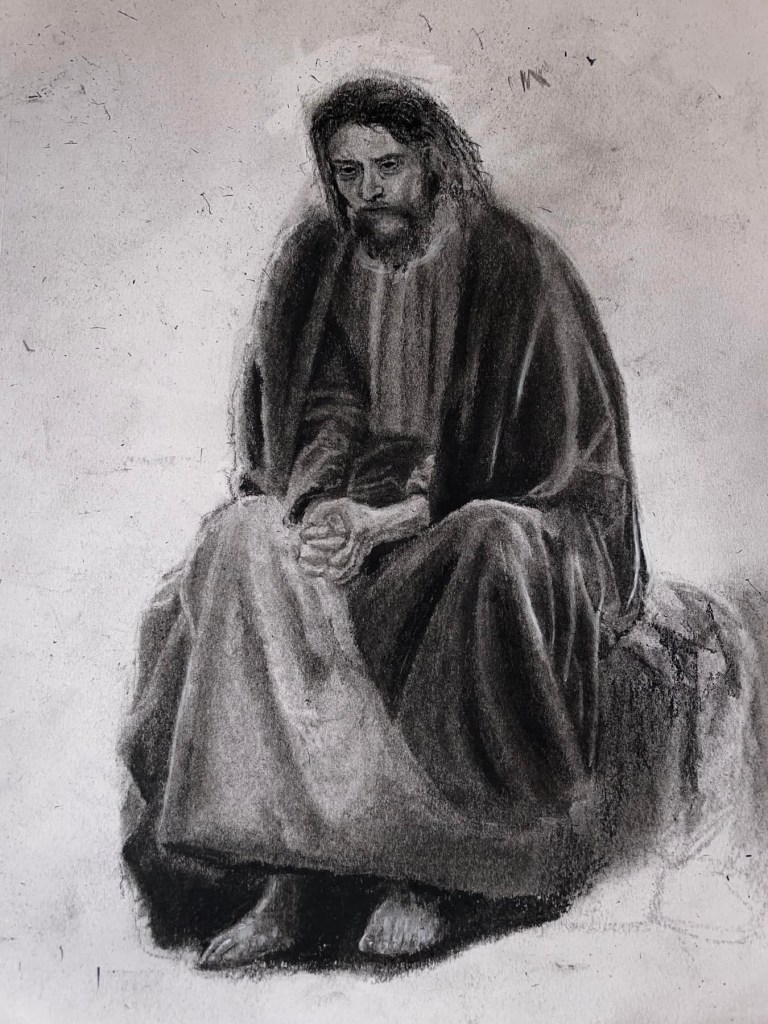
The sound of hammer against nail echoed through the air as the narrator stared at the scene unfolding before him, trying to make sense of it all. A crowd had gathered around the hill, some weeping, others jeering and mocking. The sky was overcast, casting an eerie gray light over everything.
Christianity is unique in that its central focus is on the suffering and degradation of its God. The image of God as the crucified one, though familiar and moving, is unusual.
2
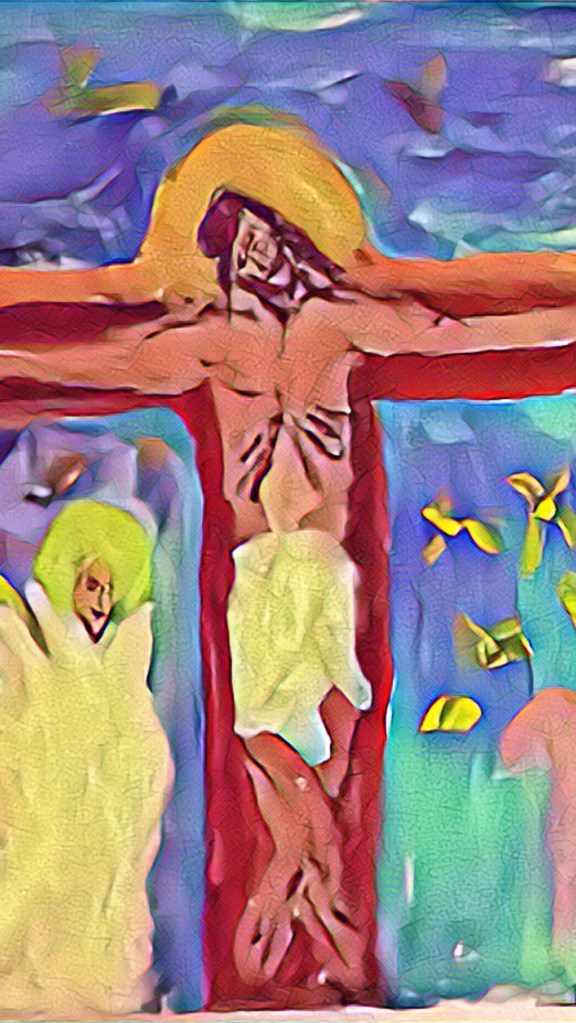
The sun bore down like a merciless hammer, casting its relentless heat upon the desolate hill of Golgotha. It glinted off the twisted instruments of torture, their metallic surfaces-stained crimson with the blood of their victims. The air lay thick and heavy, oppressive in its silence, broken only by the ragged breaths of the man who hung suspended on the central cross.
“Yeshua,” whispered the lone witness to the unspeakable scene from the fringes of the gathering crowd. Her eyes, wide and brimming with unshed tears, were locked onto the dying man. She clutched her shawl tightly to her chest, the fabric dampened with sweat and despair. “My Yeshua…”
Her name was Miriam, a woman whose heart was entwined with that of the condemned. She could not look away from his broken form, his body wracked with pain, yet still he held himself with a quiet dignity that defied the cruelty of his fate.
“Look at him,” jeered one of the Roman soldiers to his comrade, his laughter cruel and cold like the edge of a blade. “Just another fool who thought he could stand against us.”
Miriam’s hands tightened into fists, her nails biting crescents into her palms as she fought to restrain herself. With each mocking word, her heart ached anew, but she knew that to act on her anger would only seal her own doom.
As the soldier’s laughter faded, Yeshua lifted his head, his eyes meeting Miriam’s across the distance. In that moment, something passed between them – an unspoken understanding, a shared strength. He did not merely endure his torment; within him, a light flickered, a beacon of resilience that refused to be extinguished.
“Father,” Yeshua gasped, his voice barely more than a whisper, “forgive them, for they know not what they do.”
Miriam’s breath hitched in her throat as she bore witness to his grace. In the face of such savagery, Yeshua transcended the very core of human cruelty and displayed a divine mercy that shook her to her soul.
“Yeshua,” she murmured softly, her voice lost amidst the jeers and taunts of the crowd. And yet, somehow, she knew he heard her.
The sun continued its brutal assault, but within Miriam, a spark ignited, a fire kindled by the unwavering dignity of the man who hung on the cross. She would carry his message forward, beyond the spectacle that sought to erase him from history, and into the hearts of those who would listen. For in the shadow of Golgotha, a new truth had been born – one that could not be silenced, nor forgotten.
The sun’s rays glinted off the spear tips of Roman soldiers as they formed a perimeter around Golgotha, their faces impassive beneath bronze helmets. Within this circle of steel and authority, the crowd swelled and surged like a sea of malice, voices rising and falling in a cacophony of mockery and scorn.
“Look at him now!” shouted one man, his words dripping with contempt. “King of the Jews? More like king of fools!”
“Save yourself, Yeshua!” another jeered, laughter bubbling up from within the throng. “Or are your miracles just empty promises?”
Yeshua’s breaths came in ragged gasps, each one a battle against the pain that threatened to consume him. His hands clenched into fists, nails biting into his palms as he fought to maintain focus, to not succumb to the hate that surrounded him.
3
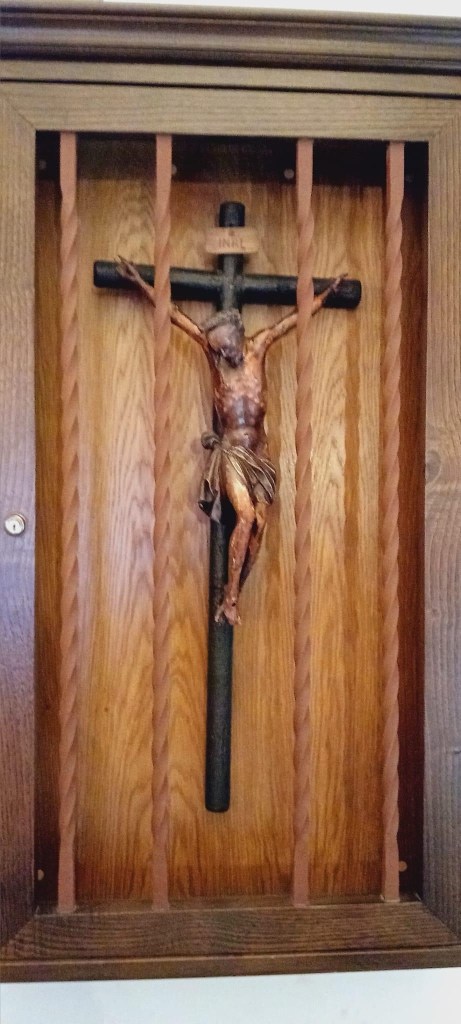
The shadow of Calvary hung heavy, a monument to the ruthlessness of Rome. Beneath the crosses, jeers and laughter echoed. This was no mere cruelty. It was a spectacle, orchestrated to dehumanize the condemned.
Gaio stood transfixed, unable to tear his eyes away. The man on the center cross writhed in agony, nails impaling his hands and feet. Blood trickled down the wood behind his thorn-crowned head.
The crowd bellowed taunts, demanding he prove his divinity by freeing himself. Some even threw stones, striking the condemned man, and drawing trickles of blood. The Romans looked on approvingly at this exclusion from humanity.
Gaio trembled, bile rising in his throat. How could the jeering mob not see this was a man suffering? A man now reduced to an object of ridicule and violence. The man’s eyes, though pained, shone with dignity. Gaio saw no resentment, only grace and stoic resignation.
This touched something in Gaio’s heart. This man embraced the cruelty, yet somehow challenged its purpose. The Romans wished to break him, but he would not be broken.
Gaio wanted to turn away but could not. The man’s gaze pierced his soul, and Marcus knew he was witnessing something profound. Though the shadow of Calvary was grim, this man transformed execution into transcendence. The human spirit could not be extinguished, not entirely. He understood that though the Romans appeared triumphant, it was the bleeding, broken man who truly won the day. A flicker of hope was kindled, a hope for something beyond fear and hate. Marcus would never forget this man, nor his unwavering courage. Turned his gaze back to the crucified man, watching as he weakly lifted his head to look upon the crowd. There was no anger or bitterness in those eyes, only compassion shining through the haze of pain.
The jeers and taunts of the soldiers echoed across the hillside, their mocking laughter cutting through the solemn air. Yet the man did not react in anger or retribution. He looked upon his tormentors with sadness and forgiveness.
At the foot of the cross, the Roman centurion shifted uneasily, averting his eyes from the crucified man’s unwavering stare. The spectacle of dominance he had helped orchestrate now felt empty and hollow. This was not the death of a conquered man but of one whose quiet dignity exposed the fragility of Rome’s fear-based control.
“Truly this was a righteous man,” Gaio heard the centurion murmur under his breath.
All around Gaio, ripples of doubt and discomfort moved through the crowd. The power of Rome no longer seemed so absolute. This simple act of grace in the face of unimaginable suffering had revealed the limitless depths of the human spirit. Het the crucified man’s gaze once more. A silent understanding passed between them. That shadow of Calvary would haunt him forever.
 Israel Centeno Author
Leave a comment