
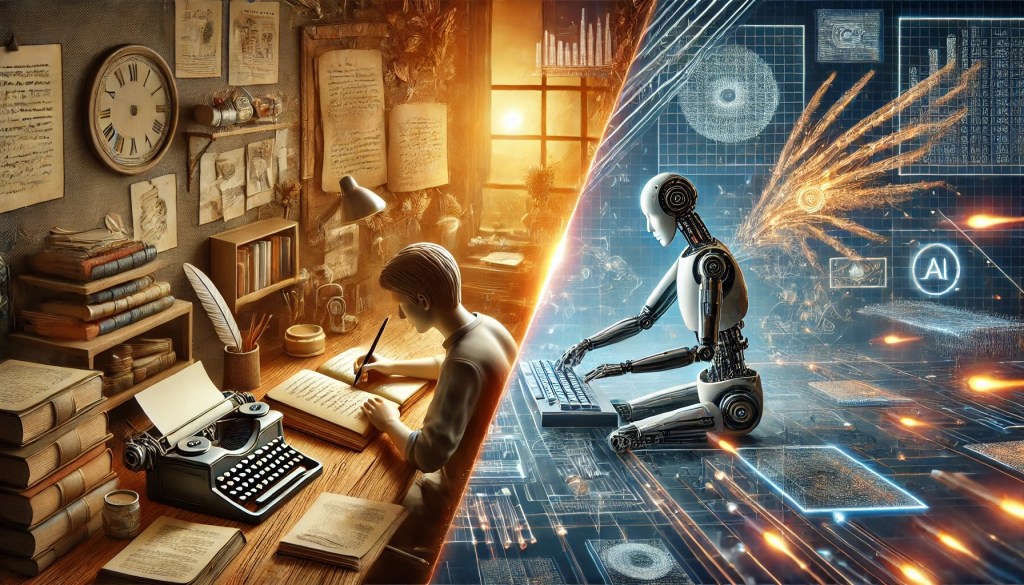
The increasing sophistication of artificial intelligence (AI) in text generation has posed an intriguing challenge: how can we distinguish between texts written by AI and those produced by humans? This question becomes particularly relevant in a world where machines are increasingly integrated into our creative and communicative practices. Here, I will explore some distinctive characteristics that can help us identify AI-generated texts.
One of the most notable signs of an AI-generated text is the lack of depth and breadth, even in the simplest sentences. While AI can process and reproduce vast amounts of information, it often lacks the ability to delve into the nuances and complexities of human language. This results in texts that, although grammatically correct and coherent, lack a genuine understanding or exploration of the subject matter.
The writing style of AI tends to be overly assertive. Sentences are direct and often lack the subtlety and nuance a human writer might use to convey uncertainty, ambiguity, or emotion. This excessive assertiveness can make the text seem flat and inauthentic, as if it were compensating for its lack of depth with apparent certainty.
Another crucial aspect is the superficiality in subjectivity. AI can imitate subjectivity but usually does so superficially. For example, describing a character’s reaction to the smell of wet earth after a light rain might seem plausible but lacks the authentic emotional depth a human author could provide. Subjectivity in AI-generated texts often feels forced, flat, and reminiscent of a poor writer trying to mimic a master of realism or minimalism.
In terms of narrative structure, AI-generated texts tend to present a succession of short sentences and paragraphs where subjective value quickly dissipates. Characters and conflicts appear casually, without true consideration of cause and effect. Plot twists are often arbitrary, reflecting an imperfect imitation of human narrative. This lack of coherence and narrative depth can make the text feel disjointed and unconvincing.
Creative writing is not just about telling a story but doing so in a way that has aesthetic value. Even when dealing with dark or grotesque themes, beauty in expression indicates the human touch. AI-generated texts often lack this aesthetic quality, tending to be functional and repetitive, more designed than created, which can make them feel artificial and soulless.
Qualia, or subjective experience, is another aspect that distinguishes human writing from AI-generated content. A human author can establish empathy with the reader, creating an emotional connection through their subjectivity. Literary figures in AI-generated texts are usually poorly crafted, and although they can imitate the structure of metaphors and other devices, you can often “see the seams,” revealing a lack of true understanding and creativity.
Recognizing a text written by artificial intelligence involves closely observing the depth, style, subjectivity, narrative structure, aesthetic value, and ability to establish empathy. While AI has made tremendous advances in its ability to generate text, it still lacks the subtleties and authenticity that characterize human writing. Identifying these deficiencies can be key to discerning when a text has been generated by a machine, allowing us to appreciate and value even more the richness of human creativity.
 Israel Centeno Author
Leave a comment