
Israel Centeno
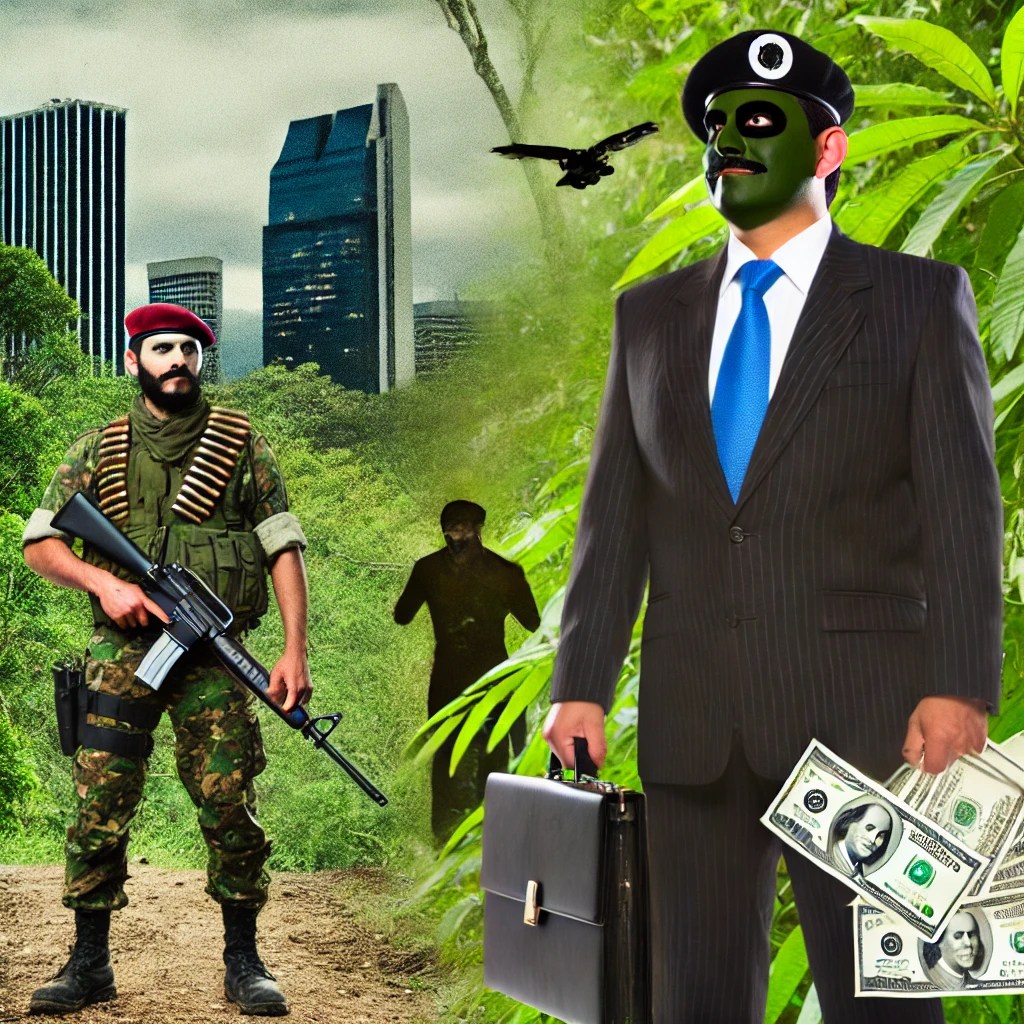
Ah, Latin America—a land once filled with revolutionaries, idealists, and guerrillas fighting for justice, land, and the people’s rights. Fast forward a few decades, and those once-noble warriors have traded in their rifles for briefcases, their ideals for profits. This isn’t your average rags-to-riches story; this is a narrative where crime, capitalism, and corporate ambition intersect in the most spectacularly ironic way.
The Guerrilla Roots: Picture it: the 20th century, Latin America ablaze with the fervor of revolution. Guerrillas, the self-styled champions of the oppressed, roamed the jungles with a mission to topple corrupt governments and redistribute land. They preached equality, justice, and sometimes even Marxism, but that was before they discovered the far more profitable enterprise of drug trafficking. Ideals are all well and good until someone dangles a few million dollars in front of you—then, it’s time to rethink those life choices.
The Cartel’s Corporate Ladder:
From Ideals to Deals: The metamorphosis of the guerrilla into the drug lord is akin to watching a grassroots activist become a Fortune 500 CEO. What started as a struggle for justice quickly became a lucrative venture. Gone are the days of fighting for the people; now, it’s about fighting for market share. Ideals? Those were so last century—it’s all about assets now.
The Cartel of the Suns: In Venezuela, the military isn’t just about protecting the nation; it’s about protecting the flow of cocaine. They’ve seamlessly merged the roles of soldier and cartel member, proving that institutional corruption can, indeed, reach dizzying new heights. Who needs camouflage when you can wear Armani?
Global Ambitions: These aren’t your run-of-the-mill drug dealers; they’re aspiring global entrepreneurs with a taste for hostile takeovers. Forget the corner market—these guys are eyeing entire countries. While world domination might seem a tad far-fetched, monopolizing the drug trade across multiple continents seems like a solid plan. The next strategic move? Probably a corporate merger with some off-the-books militia.
The 2024 Cartel Agenda:
Diversification: Like any good conglomerate, today’s cartels know the importance of diversifying their portfolio. Drugs are just the beginning. Real estate, technology, even venture capital—if there’s money to be made, they’re in it. In fact, their diversification strategies would put many Wall Street firms to shame.
Legitimacy: Forget knocking on the door of legitimacy—they’ve already bought the building. They’re investing in legitimate businesses, rubbing shoulders with politicians, and even contributing to society (sort of). In a world where reputation is everything, cartels are rebranding faster than a failed tech startup. Who needs a Silicon Valley IPO when you can just buy a few politicians and call it a day?
Corporate Social Responsibility: Yes, you read that right. The modern cartel understands the importance of image. Expect to see philanthropic efforts pop up, perhaps a charity or two—”The Drug Cartel Foundation for Economic Empowerment,” anyone? They might be laundering money, but hey, at least they’re doing it with a conscience. Or at least they want you to think so.
Endnote: And so, the evolution from guerrilla to global player is complete. What began as a fight for the people has ended in a quest for power and profits. The lines between crime and business have blurred to the point of non-existence. So here’s to the new breed of Latin American revolutionary—less about liberation, more about leveraging stock options. Welcome to the new normal, where the only revolution left is in the boardroom. #CapitalismWins
 Israel Centeno Author
Leave a comment