
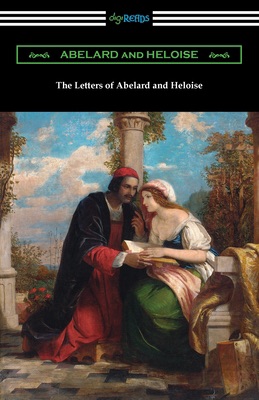
The story of Peter Abelard (1079–1142) and Héloïse (c. 1100–1164) is one of the most poignant and complex in the history of the Church. It is a tale of passionate love, intellectual brilliance, human frailty, and the search for redemption. Their correspondence, preserved in a series of deeply personal letters, offers us a unique window into their lives and their struggles to reconcile human love with divine calling.
Abelard, a brilliant philosopher and theologian of the 12th century, was renowned for his intellect and his mastery of dialectics. Héloïse, equally gifted, was a woman of extraordinary intelligence and learning, rare for her time. Their relationship began as a teacher-student dynamic but soon transformed into a passionate and illicit love affair. Their union resulted in a child, Astrolabe, and a secret marriage. However, their love story took a tragic turn when Héloïse’s uncle, Fulbert, enraged by what he saw as Abelard’s betrayal, arranged for Abelard to be violently attacked and emasculated.
This traumatic event led Abelard to enter monastic life and Héloïse to become a nun. However, their love and intellectual bond endured, as evidenced by their letters. These letters reveal the depth of their emotions, their theological reflections, and their attempts to make sense of their suffering in light of God’s providence. Héloïse, in particular, wrestled with the tension between her love for Abelard and her commitment to God, while Abelard sought to guide her toward a deeper understanding of divine love.
Their correspondence is not merely a romantic exchange but also a profound theological dialogue. Abelard’s letters often emphasize the themes of divine grace, the redemptive value of suffering, and the need to subordinate human desires to God’s will. Héloïse’s letters, on the other hand, are marked by her honesty, her intellectual rigor, and her deep longing for Abelard. Together, their letters provide a powerful testimony to the human struggle to integrate faith, reason, and love.
Abelard as a Theological Pillar: Contributions and Controversies
While Abelard is often remembered for his tragic love story, his contributions to theology and philosophy are equally significant. He was one of the most influential thinkers of the 12th century and a key figure in the development of Scholasticism, the intellectual tradition that sought to harmonize faith and reason.
- Dialectical Method and the “Sic et Non”
One of Abelard’s most important contributions was his use of the dialectical method, which he employed in his work Sic et Non (“Yes and No”). In this text, Abelard compiled seemingly contradictory statements from Scripture and the Church Fathers and invited readers to resolve these tensions through careful reasoning. While this method was initially controversial, it laid the groundwork for the Scholastic approach to theology, which would later be perfected by figures like St. Thomas Aquinas.
Abelard’s approach emphasized the importance of reason in the pursuit of theological truth. He believed that faith and reason were not opposed but complementary, a principle that remains foundational in Catholic theology. As St. John Paul II would later affirm in Fides et Ratio (1998), “Faith and reason are like two wings on which the human spirit rises to the contemplation of truth.”
- Moral Theory and the Role of Intention
Abelard also made significant contributions to moral theology, particularly through his emphasis on the role of intention in determining the morality of an action. In his work Ethica (Scito Te Ipsum), Abelard argued that sin lies not in the external act itself but in the intention of the heart. While this insight has value, it also led to controversy, as some critics accused Abelard of undermining the objective nature of moral law. The Church has since clarified that both intention and the objective nature of the act are essential components of moral evaluation (see Catechism of the Catholic Church, 1750–1754). - Christology and the Doctrine of Atonement
Abelard’s understanding of Christ’s atonement also sparked debate. In his Expositio in Epistolam ad Romanos (“Commentary on the Epistle to the Romans”), Abelard proposed a “moral influence” theory of the atonement, emphasizing that Christ’s death reveals God’s love and inspires us to love Him in return. While this view contains an important truth, it was criticized for downplaying the sacrificial and redemptive aspects of Christ’s Passion, as articulated in Scripture (e.g., Isaiah 53:5; 1 Peter 2:24) and Tradition. - Legacy and Influence
Despite his controversies, Abelard’s intellectual legacy is undeniable. His emphasis on reason and critical inquiry paved the way for the flourishing of Scholasticism and the great theological syntheses of the High Middle Ages. His life and works remind us of the importance of humility and fidelity to the Church’s Magisterium, especially when engaging in theological speculation.
Lessons from Abelard and Héloïse
The story of Abelard and Héloïse offers us profound lessons about the human condition, the nature of love, and the call to holiness. Their lives remind us that even the most brilliant minds are not immune to sin and suffering, but that God’s grace can transform even the darkest moments into opportunities for redemption. As Abelard himself wrote in his Historia Calamitatum (“The Story of My Misfortunes”), “The greater the suffering, the greater the reward.”
For Héloïse, her journey from romantic love to spiritual love exemplifies the call to place God above all else. Her letters reveal a heart that longs for truth and ultimate fulfillment, which can only be found in God. In her own words, “God is my witness that if Augustus, emperor of the whole world, thought fit to honor me with marriage and conferred all the earth upon me to possess forever, it would be dearer and more honorable to me to be called your whore than his empress.”
Peter Abelard and Héloïse are figures of immense historical and theological significance. Their letters continue to inspire readers with their honesty, intellectual depth, and spiritual insight. Abelard’s contributions to theology, though not without controversy, remain a testament to the Church’s commitment to the harmonious integration of faith and reason. Ultimately, their story is a reminder that our ultimate vocation is to love God above all things and to seek His will in all that we do.
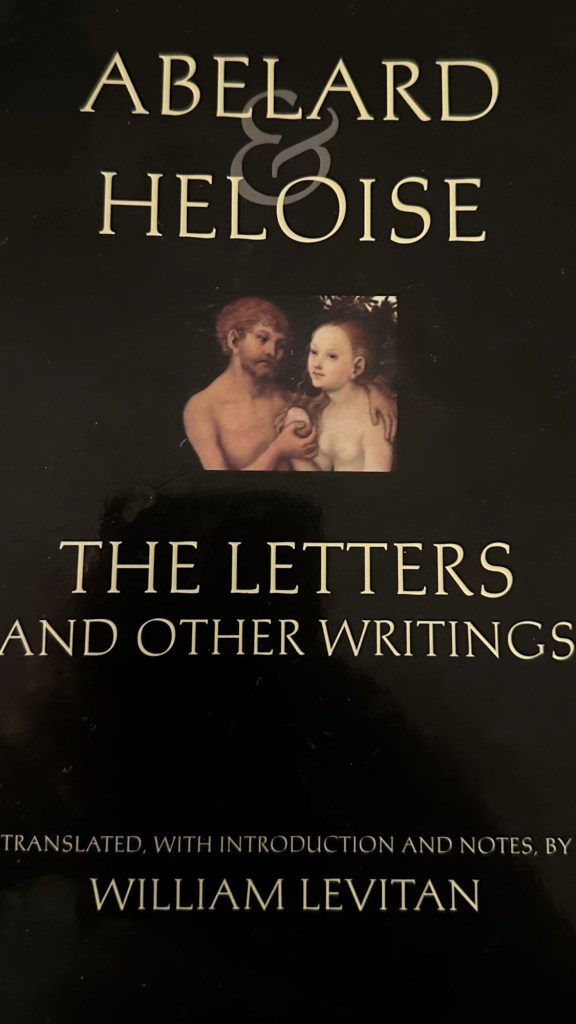
May their journey, marked by both human frailty and divine grace, inspire us to pursue holiness and to trust in God’s providence, even in the midst of suffering.
 Israel Centeno Author
Leave a comment