
Israel Centeno
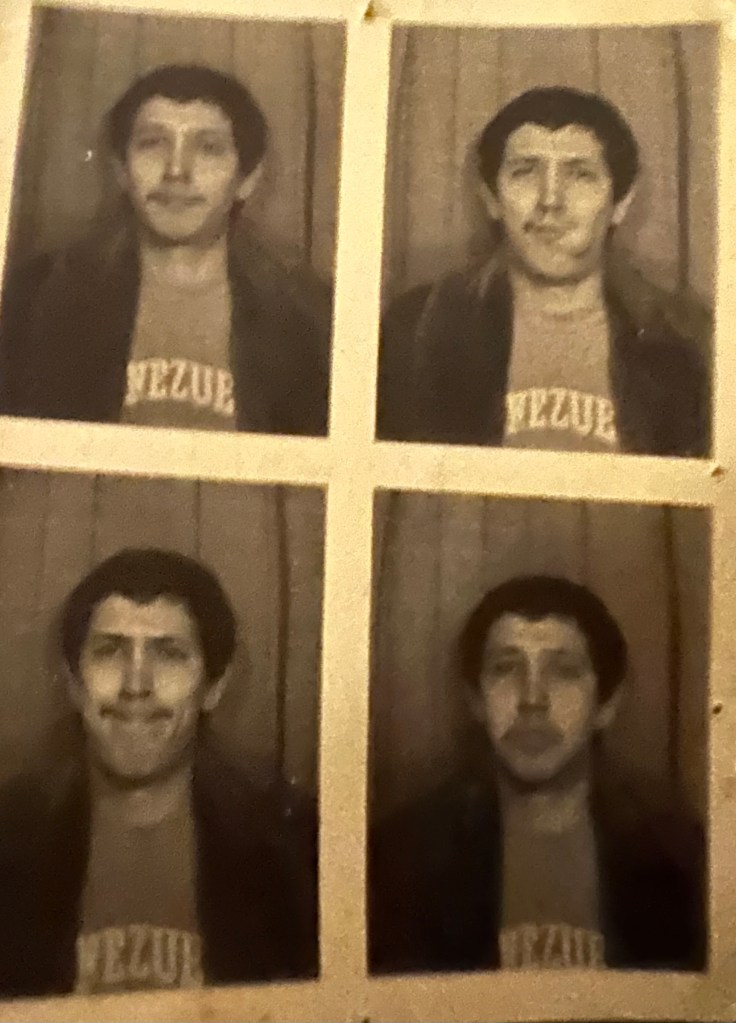
I was 19 years old. Today, I am almost 68. I had spent nearly six months in London, a time marked by chaos, hormones, and a deep denial of my failures. I was living in a squatter in Brixton Hill, an abandoned house shared with a group of misfits. I slept in the attic, wrapped in a sleeping bag, on the wooden floor. Winter had arrived, and the New Year was behind us. My life was in shambles: a failed filmmaker, caught between alcohol, excess, and a loneliness that hurt more than the cold.
I had grown up an atheist, shaped by disdain for any form of faith. In my childhood, I witnessed much manipulation of spiritual matters—people exploiting the devotion of others for their own ends. Worst of all, I, too, had once manipulated others for fun, mocking their faith. That was who I was.
I admired Lenin, Mao, Stalin, and Che. My life revolved around dreams of insurrection and violence. I believed myself strong, prepared to become a perfect killing machine. But that January morning in 1980, everything fell apart.
I woke up—or so I thought. I was conscious, but my body wouldn’t respond. Total paralysis immobilized me. It wasn’t a dream; I knew that. I felt an anguish that didn’t come from fear but from something deeper: the uselessness of my life. In those days, I was reading Camus’s The Myth of Sisyphus, confronting the essential question: why not just end it all? My days were a mixture of yelling at the moon, drunkenness, and empty nights. I had even lost the desire to seek meaning.
Then, suddenly, something changed. I felt a hand on my head. My heart pounded violently, as if it wanted to break the silence of the attic. Then, immense love began to flow from that hand. It was a love I couldn’t compare to anything: not my mother’s, not my grandmother’s. It was a love that enveloped me and pierced me. And then, clearly, I heard a voice in my mind. I asked:
—Who are you?
And it replied:
—I am the one who has loved you most, loves you now, and will love you forever.
Those words struck me like lightning. Everything changed. I felt an indescribable peace, as if all the weight of my life had lifted. I wanted to stay there, in that love, forever. But I woke up. My body hurt, and my reality remained unchanged. Still, something had happened. I had found Jesus—or rather, He had found me.
That encounter did not resolve my life immediately. On the contrary, my return was a free fall into self-destruction. I spent weeks wandering the Ramblas of Barcelona, cutting all ties with everything and everyone. By Holy Week, I had no money left, locked in a room, eating nothing but butter. Yet in the midst of that darkness, something new began to sprout: a seed of hope, a promise of redemption.
Jesus began to work in my heart patiently. Every time I tried to lift myself, He made me see my smallness. He taught me to recognize my fragility, to accept that my successes were fleeting and hollow. But He also showed me His grace, giving me people who loved me and teaching me to love them in return.
Years later, during a pilgrimage to Monserrat, something extraordinary happened. Standing before the image of the Moreneta, I experienced a moment that nearly made me die of happiness. It was a glimpse of grace, a reminder that I was not alone. For an instant, I felt the same love I had experienced that morning in London. The Virgin of Monserrat, with her serene gaze, seemed to confirm that the path, though arduous, was worth every step.
Those minutes I spent with Him became the foundation of my life. I treasure them as the most precious gift I have ever received, the memory that lights my darkest days. Every day, every step, I wait joyfully for the moment when I might deserve His eternal glory. For those words, that love, showed me that in Him, there is no condemnation—only a call to hope, life, and the purest love.
Oh Jesus, I love You and I wait. And with You, Virgin of Monserrat, I keep walking.
 Israel Centeno Author
Leave a comment