
Iarael Centeno
This Sunday I had a fruitful conversation with my niece Daniela, where Grace permeated everything. By the way, Daniela is the best kept (poetic) secret of the family. This article is the fruit of that conversation.
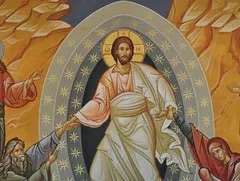
From the very beginning of creation, God designed humanity to live in perfect communion with Him, in a state of grace and original holiness. The Book of Genesis reveals that man and woman were created “in the image and likeness of God” (Genesis 1:27), endowed with a sanctity that reflected the goodness and glory of the Creator. Adam and Eve lived in harmony with God, themselves, each other, and all of creation. This state of grace was not simply a static condition but a gift meant to be safeguarded through freedom and obedience.
However, through the sin of Adam, error and death entered the world: “Therefore, just as sin came into the world through one man, and death through sin, and so death spread to all men because all sinned” (Romans 5:12). This original sin ruptured humanity’s communion with God, disordered human nature, and left us weakened, inclined toward sin. The grace of original holiness was lost. Yet, in His infinite mercy, God did not abandon humanity to this fallen state. From the moment of the fall, He promised a Redeemer, a Savior who would restore what was lost (cf. Genesis 3:15).
Here lies the glorious mystery of Christ, the New Adam. Saint Paul proclaims: “Thus it is written, ‘The first man Adam became a living being’; the last Adam became a life-giving spirit” (1 Corinthians 15:45). Jesus Christ, true God and true man, entered the world not merely to teach or to enlighten, but to reconcile us with the Father, to restore the communion that was broken. Through His Incarnation, Passion, Death, and Resurrection, He became the way by which sin is defeated and humanity is renewed.
Not Called to Become Buddha, but to Become Like Christ
A crucial distinction must be made here: Christ is not synonymous with Buddha, nor is Christianity akin to Buddhism. In fact, the two are fundamentally opposed. While Buddhism seeks the annihilation of the self and dissolution into a universal consciousness (nirvana), Christianity proclaims redemption and resurrection. For Christians, the body is not an illusion nor an obstacle to spiritual fulfillment; rather, it is “a temple of the Holy Spirit” (1 Corinthians 6:19). Our hope is not to disappear into some impersonal “oneness,” but to live eternally in communion with God, with a resurrected and glorified body, as Christ Himself was raised.
The Christian self-denial is entirely different in both meaning and purpose. It is not a denial of existence itself or a rejection of the self as inherently evil. Rather, it is a renunciation of the self that is enslaved to the senses, the self that lives solely for worldly pleasures and fleeting desires. This is the self that, as Christ says, always “thirsts” (cf. John 4:13). The Christian self-denial is a dying to this lower self, the self that perceives reality only through the senses and seeks fulfillment in created things. Instead, we are called to drink from the “living water” (cf. John 4:14), which is the life of grace that transcends the senses.
This is the supernatural state of grace, where we are elevated beyond the limits of our fallen nature. In this state, we become “like gods” (cf. John 10:34; Psalm 82:6)—not by nature, for we are creatures, but by grace, as adopted children of God. As Saint Athanasius famously said, “The Son of God became man so that we might become God” (De Incarnatione, 54). This does not mean we cease to be human; rather, it means we are raised to share in the divine life through Christ.
The Restoration of Perfection Through Christ
Christ, as the New Adam, lived in perfect obedience to the Father, undoing the disobedience of the first Adam. Saint Paul explains: “For as by one man’s disobedience many were made sinners, so by the obedience of one man many will be made righteous” (Romans 5:19). Through His sacrifice on the Cross, Jesus paid the price for our sins and opened the gates of Heaven. By His grace, we are transformed and called to be “new creations” (cf. 2 Corinthians 5:17), restored to the perfection for which we were created.
This restoration is not merely a return to the original state of Adam, but something even greater. In Christ, we not only recover what was lost, but we are elevated to a deeper communion with God. Through Baptism, we are made partakers of the divine nature (cf. 2 Peter 1:4), adopted as sons and daughters of God (cf. Romans 8:15-17). What Adam lost through sin, Christ not only regains but elevates to a supernatural level.
We Will All Be Like the New Adam
Christ did not come to save us individually in isolation, but to renew all of humanity. In Him, we are all restored to the perfection of Adam, but with an even greater fullness. As Saint Paul teaches: “So is it with the resurrection of the dead. What is sown is perishable; what is raised is imperishable. It is sown in dishonor; it is raised in glory. It is sown in weakness; it is raised in power” (1 Corinthians 15:42-43). In the final resurrection, we will be fully conformed to Christ, living in the glory of God with glorified bodies and sanctified souls.
This is the Christian hope: not to vanish into a universal consciousness, but to be reborn in Christ, to live eternally in communion with God and with one another, and to share in the glory of Heaven. We will all be like the New Adam, restored to perfection and living in the supernatural state of grace, for which we were created.
A Call to Holiness
This truth presents us with an immense challenge: to be like Christ, the New Adam. This is no easy path, but we are not alone. Christ gives us His grace, nourishes us with His Body and Blood in the Eucharist, and strengthens us with the Holy Spirit. He calls us to live in holiness, to die to sin, and to be reborn in Him.
May this hope inspire us to seek holiness with all our hearts, knowing that in Christ, the New Adam, we are restored to perfection and destined to live forever in the glory of God. Let us remember that our calling is not to disappear, but to rise, to be transformed, and to live as children of God. May the Blessed Virgin Mary, the New Eve, guide us on this journey to the fullness of life in Christ. Amen.
 Israel Centeno Author
Leave a comment