
Israel Centeno
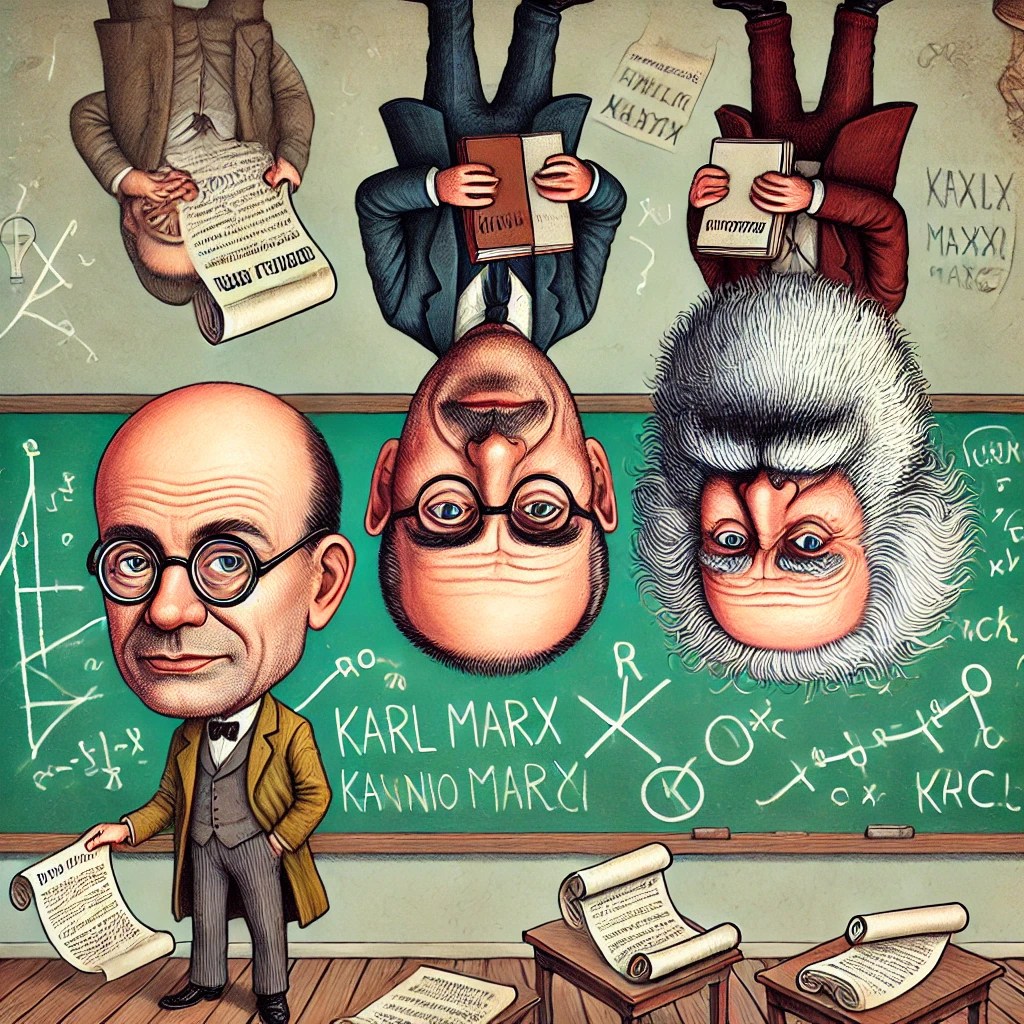
There was a time, when almanacs still outweighed algorithms, when aging was a solemn and almost heroic act. Reaching the age of sixty, with the dignified bearing of a survivor, was an achievement: laden with stories, scars, and the patience to endure the noise of the living. In my childhood, I saw the elderly as human monuments, pillars of the community who had endured wars, fashions, and the incessant drip of the centuries. Reaching one’s forties —that mythical age at which Bolívar died— was already a triumph, a moment of glory before the inevitable decline. But the years passed, and with them, life expectancy stretched, pushing the threshold of the venerable to the point of absurdity.
Vaccines, antibiotics, successful surgeries… Science, that capricious muse, turned life into an indefinite lease. What was once epic —a long life as a testament of resilience— became commonplace and, worse, stripped of its former dignity. Now we all live longer, but for what? War ceased to be a global stage and turned into a theater of shadows, with powerful countries resolving their disputes in foreign backyards, testing weapons no one asked for and fighting on battlefields that don’t appear on tourist maps.
This transformation, however, is not coincidental. It is the result of deliberate manipulations of thought, echoing the postmodern theories of Foucault and Gramsci. These intellectual frameworks, stripped of their nuance and weaponized for control, have shaped a social order that defies traditional labels of justice or functionality. Foucault’s notions of power as dispersed and omnipresent, combined with Gramsci’s concept of cultural hegemony, have been appropriated to normalize the fragmented, volatile reality we now inhabit. Instead of liberation, they have fostered a system where identity and data become tools of subjugation, creating an existence defined by confusion and control.
Meanwhile, the proletariat, that old protagonist of social dramas, morphed into something grayer, more diffuse: a democratic poor class that consumes, goes into debt, and survives. We no longer speak of absolute hunger but of poverty sweetened with access to credit and the illusion of well-being. It is the class that travels, sends its children to college, and buys “more or less decent” health insurance. But beware: a single misstep, a stroke of bad luck, can send them into the invisible abyss we inhabit with fear and disdain: the homeless, the marginalized, those uncomfortable ghosts who serve as the most tangible reminder of our collective fragility.
The middle class, for its part, is a euphemism, one of the phases of general and flat poverty, born of a mediocre dynamic. It maneuvers within a diverse group defined more by identities than by economic condition. It is a malleable category, sold as the ideal to aspire to, but oscillating between those with precarious access to certain privileges and those who barely graze them. The identity diversity within this class creates an illusion of mobility and security, but at its core, it is a volatile territory, trapped between debts, the fear of falling, and promises of progress that rarely come true.
Technology and social media have replaced the old barricades. Today, everyone shares their opinions in the noisy marketplace of social media, where ideas are compressed into 280 characters and shouts are mistaken for arguments. In this universe of rails and video blogs, the elderly —those from the immediately preceding generation— are viewed with disdain, as if their experience and memory were a burden rather than a treasure. This is the era of the noisy citizen, a bristling and manipulable creature, whose true value lies not in their vote but in their “data.” And while we distract ourselves fighting over hashtags and trending topics, the real puppet masters —those invisible faces behind the pharmaceutical industry, tech monopolies, and global finance— pull the strings in a spectacle we don’t even bother to watch.
In this panorama, dystopia no longer feels like a literary warning but the stark description of a present we’ve accepted with a mix of cynicism and resignation. Cryptocurrency, that promise of economic freedom, resurfaces, not as a lifeline, but as another cog in a machine that devours our privacy. We’ve already surrendered our biotypic data without resistance, allowing our bodies to be converted into codes that someone, somewhere, trades as just another commodity.
After killing God, humanity has lost communion with its spirit, emptied its body of a soul, and left it as a shell filled with fleeting glories. Far from Marx, far from God, and far from any notion of redemption, humanity drifts in a void of its own making, where ideologies are commodified and spiritual anchors are discarded as relics of a bygone era. We are approaching a modern Babel, a place where languages are confused, not by the hand of an angry god, but by the weight of our own technological ambition and collective selfishness. This confusion and dispersal, however, is not organic. It is the calculated product of a system designed to fragment and isolate individuals, making them easier to manipulate. Power has become invisible, dispersed across institutions, while the illusion of choice and agency keeps the masses placated and docile. We not only deconstruct existing powers but simultaneously construct an invisible superpower—an omnipresent system of control that shapes every facet of our lives without revealing its true face.
We will scatter, as we did then, but this time without the need for towers. Where to? No one knows. Perhaps all that remains, like those elders of old, is to sit and wait, with the weary aura of those who have survived their time, while the world keeps spinning, ever faster and less comprehensible.
Aging is no longer an honorable act. It’s a formality. And if one thing is clear, it’s that this formality has no instruction manual.
 Israel Centeno Author
Leave a comment