
Israel Centeno
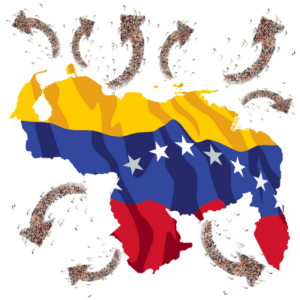
Temporary Protected Status (TPS) is a humanitarian immigration policy established by the U.S. government to protect nationals of countries experiencing armed conflicts, natural disasters, or extraordinary circumstances that make safe return impossible. Currently, over 600,000 Venezuelans benefit from this designation, but the future of their status remains uncertain under the administration of President Donald Trump, who began his second non-consecutive term on January 20, 2025.
The Venezuelan diaspora surged during Trump’s first presidency (2017–2021), a period marked by escalating economic sanctions against the Maduro regime and Washington’s recognition of Juan Guaidó as the legitimate interim president of Venezuela. The failure of that political strategy left millions of Venezuelans in limbo, with no viable pathway for returning home. As President Trump reassesses immigration policies, the fate of TPS beneficiaries—who fled political persecution, economic collapse, and state-sponsored violence—hangs in the balance.
The Legal Foundation of TPS and Its Justification for Venezuelans
Under Section 244 of the Immigration and Nationality Act (INA), the Secretary of Homeland Security has the authority to designate countries for TPS when conditions prevent safe return. Venezuela was granted TPS due to the unprecedented humanitarian crisis, the disintegration of democratic institutions, and widespread human rights violations under Nicolás Maduro’s rule.
Despite this legal framework, the Trump administration is now evaluating whether to extend, redesignate, or terminate TPS for Venezuelans, a decision that could have profound humanitarian and geopolitical consequences. The principle of non-refoulement, enshrined in U.S. asylum law and international treaties such as the United Nations Convention Against Torture, prohibits returning individuals to countries where they face persecution, torture, or extrajudicial killings. Ending TPS without offering an alternative status would not only violate these principles but also expose thousands to grave danger.
Stigmatization of Venezuelan Migrants: A Political Narrative Without Basis
Some sectors have sought to link the Venezuelan diaspora to criminal organizations like the “Tren de Aragua,” using this association as a pretext to advocate for stricter immigration enforcement. However, statistical analysis does not support these claims. The vast majority of Venezuelans under TPS are law-abiding individuals—professionals, workers, and families—who fled a collapsed state where corruption, economic ruin, and political repression have made migration not a choice, but a necessity.
It is unjust to paint an entire population with the actions of a criminal minority. The Venezuelan people are victims of a dictatorial regime and a failed economic model, not perpetrators of crime. The United States played a direct role in shaping Venezuela’s geopolitical reality, supporting Guaidó’s failed transition and implementing economic sanctions that—while targeting Maduro’s inner circle—also contributed to deepening the suffering of the general population. To now abandon Venezuelan migrants or force them back into anarchy would be an act of political inconsistency and moral failure.
The Political and Diplomatic Consequences of a TPS Revocation
If the Trump administration moves forward with ending TPS for Venezuelans, it will face a set of legal, political, and diplomatic dilemmas:
- Mass Deportation Challenges – The forced return of over 600,000 Venezuelans is logistically unfeasible and would create a refugee crisis at U.S. borders, as many would seek asylum rather than return to a failed state.
- Geopolitical Fallout – Washington has consistently denounced the Maduro regime as illegitimate. Deporting Venezuelans would contradict this stance and could undermine U.S. influence in Latin America by appearing indifferent to the plight of those fleeing dictatorship.
- Impact on U.S. Domestic Politics – The Venezuelan-American community, particularly in Florida, has been a key Republican voting bloc. A decision to revoke TPS could alienate this demographic, affecting Trump’s political standing among Latino conservatives.
Trump’s Dilemma: Political Pragmatism vs. Humanitarian Obligation
President Trump faces a defining decision: Will he uphold the protection granted to Venezuelans during his first term, or will he reverse course to align with hardline immigration policies? If the administration prioritizes political expediency over humanitarian responsibility, the consequences could be dire—not just for Venezuelans, but for America’s credibility in defending democracy abroad.
A TPS extension or redesignation would not be an act of leniency, but a recognition of geopolitical realities: Venezuela remains a collapsed state, ruled by a narco-dictatorship that offers no guarantees of security, justice, or economic stability. Deporting Venezuelans under these conditions would not only be reckless but also an abdication of the moral leadership the United States claims to uphold.
TPS for Venezuelans is not a privilege—it is a necessity dictated by the humanitarian and political catastrophe that has consumed Venezuela. As President Trump charts his second-term immigration agenda, he must weigh America’s legal obligations, foreign policy commitments, and humanitarian responsibilities. History will judge whether he chooses to stand with those fleeing tyranny or abandons them to a fate unworthy of the principles America claims to defend.
 Israel Centeno Author
Leave a comment