
Israel Centeno
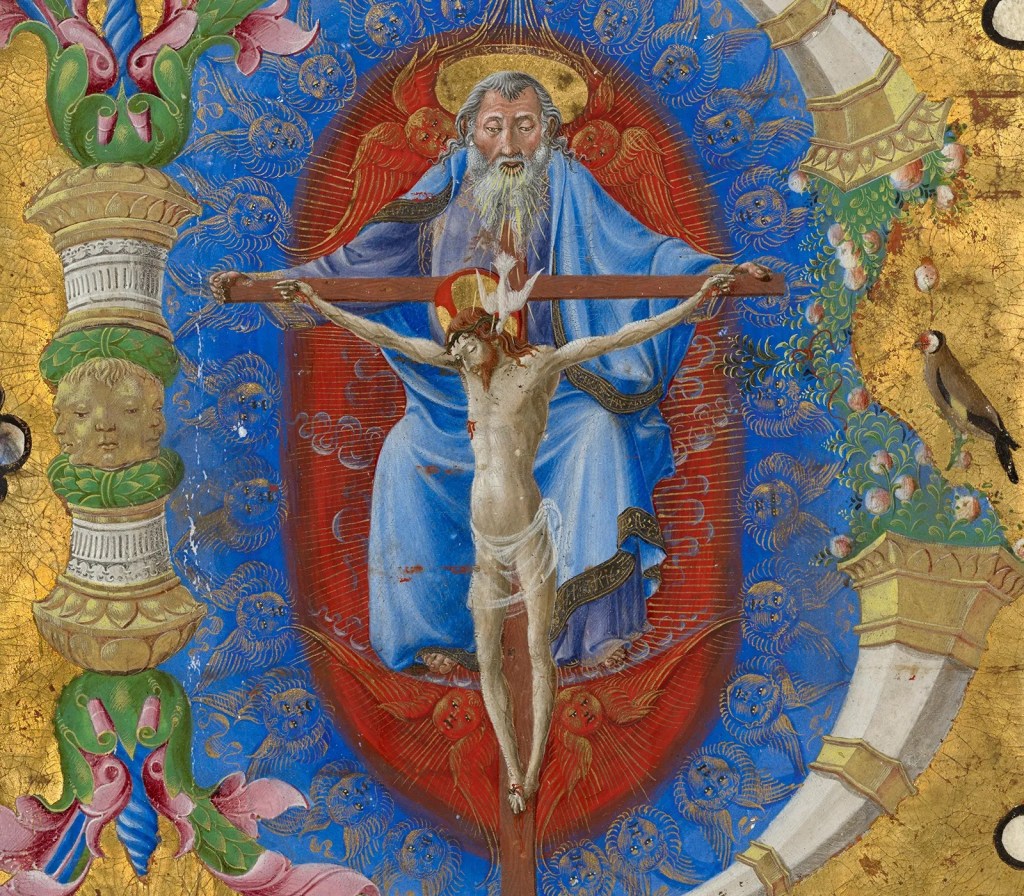
Eternity is one of the most profound mysteries of our faith, a reality that transcends human understanding and escapes the categories of time, space, and measurement. As Christians, we are called to contemplate eternity not as a static, lifeless concept but as the dynamic fullness of divine life and love. It is not merely a philosophical abstraction but the ultimate reality of God’s eternal joy, into which we are invited. However, we must be careful not to misinterpret eternity as something fixed and immobile, like a butterfly pinned to a board. Instead, eternity is the infinite vitality of God’s being, the eternal “now” that is alive with love and joy. Let us explore how we can approach this mystery, address the common misconception that movement requires space, and give meaning to what seems so ineffable.
Eternity: Beyond Time, Space, Measurement, and Fixity
Eternity, by its very nature, is beyond time and space. Time is the measure of change, a succession of past, present, and future, while space refers to the dimensions in which physical movement occurs. Eternity, however, is not an infinite extension of time or an endless expanse of space; it is something entirely different. It is the “ever-present now,” the fullness of being that transcends all temporal and spatial categories. As Saint Augustine writes in his Confessions (Book XI):
“Your years neither come nor go, but ours do, so that all your years are at once… Your today does not yield to a tomorrow, nor does it follow a yesterday. Your today is eternity.”
This eternal “now” is not static or frozen. It is not a lifeless state of immobility, but the plenitude of life itself. God, who is eternal, is not a passive or inert being. He is pure act (actus purus), the fullness of life and love. Eternity is not a “place” or a “thing,” but the infinite and dynamic reality of God’s presence. As the Psalmist declares:
“Before the mountains were brought forth, or the earth and the world were formed, from eternity to eternity, you are God” (Psalm 90:2, CPDV).
To imagine eternity as static would be to misunderstand its essence. It is not like a photograph frozen in time or a butterfly pinned to a board. Instead, eternity is the living, vibrant communion of love within the Blessed Trinity—the Father, Son, and Holy Spirit eternally giving and receiving love in an infinite exchange.
Does Movement Require Space?
To address the question of movement in eternity, we must clarify what we mean by “movement.” In the physical world, movement involves a change of position within space over time. This is the kind of movement we experience as embodied beings subject to the limitations of time and space. However, in eternity, where there is no time or space, movement must be understood in a completely different way.
Eternity does not involve physical movement, for there is no space to traverse or time within which change occurs. Instead, the “movement” of eternity is a metaphorical way of describing the dynamic vitality of God’s eternal life and love. God is not static or inert; He is the fullness of being, the infinite act of existence itself. As Saint Thomas Aquinas explains, God is actus purus—pure act, without any potentiality. This means that God’s being is not a process of becoming or changing but the perfect and complete actuality of infinite life and love.
In eternity, the “movement” we speak of is not spatial or temporal but relational. It is the eternal exchange of love within the Blessed Trinity—the Father eternally begetting the Son, the Son eternally offering Himself to the Father, and the Holy Spirit eternally proceeding as the bond of love between them. This relational “movement” is not a change or a sequence of events but the infinite dynamism of God’s self-giving love.
To help us understand this, consider an analogy: a piece of music. When we hear a symphony, we experience it as a sequence of notes in time. But the composer, in creating the symphony, holds the entire piece in his mind as a single, unified whole. Similarly, in eternity, there is no succession of moments, but the fullness of life and love is present all at once, in a way that is infinitely dynamic and alive.
The Eternal Joy of Dwelling in the Trinity: Insights from St. Elizabeth of the Trinity
Saint Elizabeth of the Trinity, a Carmelite mystic from the early 20th century, offers a profound vision of eternity as a communion of love within the very heart of God. For her, the ultimate destiny of the human soul is to be “immersed” in the life of the Most Holy Trinity, where we will live forever in the infinite love of the Father, Son, and Holy Spirit. She expressed this beautifully in her famous prayer:
“O my God, Trinity whom I adore, help me to forget myself entirely so as to establish myself in You, unmovable and peaceful, as if my soul were already in eternity.”
In this prayer, St. Elizabeth reveals that eternity is not a distant reality we must wait for, but a life we are called to begin living even now, in the depths of our soul. She understood the indwelling of the Trinity as a foretaste of heaven, where God invites us to enter into His eternal life and love. For her, heaven is not a static “place” but an eternal “state of being” in which we are fully united with God:
“It seems to me that I have found my heaven on earth, since heaven is God, and God is in my soul.”
This immersion is not static or fixed, but dynamic and alive, a continual participation in the eternal exchange of love between the Father, Son, and Holy Spirit. She described this eternal communion as a kind of “holy abyss” of love, where the soul is lost in the infinite beauty and goodness of God.
Giving Meaning to Eternity Without Fixing It
Eternity is not something to be measured, imagined, or pinned down like an object of study. It is something to be lived, something to be anticipated with hope and joy. It is the infinite vitality of God’s being, the eternal communion of love that is alive with infinite possibilities. As Saint Paul reminds us:
“Eye has not seen, nor ear heard, nor has it entered into the heart of man, what things God has prepared for those who love Him” (1 Corinthians 2:9).
In this life, we can only approach eternity through analogy and participation. We experience time as a series of fleeting moments, but in eternity, all is present. We experience love as imperfect and incomplete, but in eternity, love is perfect and total. By contemplating God, who is eternal, we begin to understand that eternity is not a “thing” but a relationship—a sharing in the very life of God.
The Eternal Now as Living Joy
Eternity is not a static state, a frozen moment, or an abstract concept. It is the fullness of life and love, the infinite vitality of God’s being. It is not a “butterfly trapped by a pin,” but a living, dynamic communion with the Triune God. In eternity, we will not be fixed in place but fully alive, participating in the eternal exchange of love within the Blessed Trinity, as St. Elizabeth of the Trinity reminds us: “In heaven, I will be Love, and I will love You as You love Yourself.” Let us live in hope and anticipation of that eternal joy, knowing that it begins even now in the depths of our soul and reaches its fullness in the infinite embrace of God.
 Israel Centeno Author
Leave a comment