
Israel Centeno
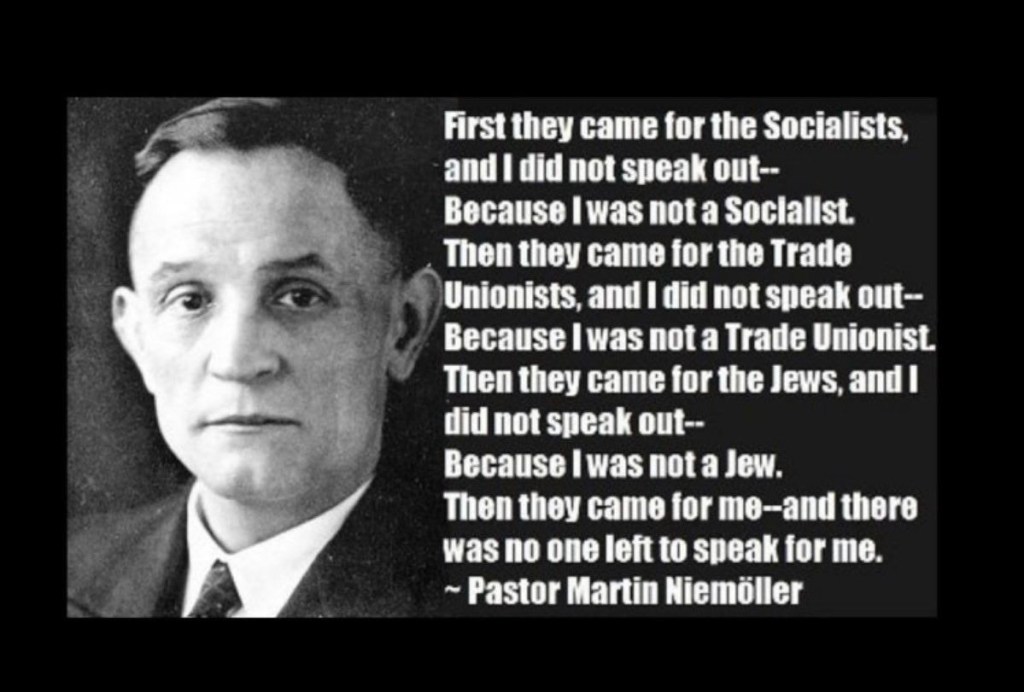
John Donne’s famous meditation, No Man is an Island, reminds us of the fundamental interconnectedness of human life:
“Any man’s death diminishes me, Because I am involved in mankind, And therefore never send to know for whom the bell tolls; It tolls for thee.”
Donne’s words, written in the early 17th century, resonate through history, warning against isolation and indifference. Centuries later, Martin Niemöller’s postwar confession, First They Came, echoed this same theme in the context of Nazi persecution. Niemöller, once a supporter of Hitler’s rise, eventually realized the devastating consequences of silence and complicity. His poem is not merely a historical reflection—it is a moral indictment of passivity in the face of injustice.
Niemöller’s lines expose the dangers of selective concern: when oppression begins, it rarely stops at the first victim. First, it targets the outsiders—the communists, the socialists, the trade unionists, the Jews. But with each silence, the circle of vulnerability expands. By the time it reaches the indifferent observer, there is no one left to intervene.
The connection between Donne and Niemöller is clear: we do not exist in isolation. The suffering of others is our concern, not because of abstract morality but because the fate of one eventually becomes the fate of all. To ignore injustice is to invite it to our own doorstep.
These warnings remain as urgent today as ever. Tyranny and persecution do not announce themselves with immediate brutality; they creep in through indifference, through the erosion of rights deemed unimportant by those who feel secure. But history teaches us that no one is truly safe.
The bell tolls, always. The only question is whether we will listen before it tolls for us.
 Israel Centeno Author
Leave a comment