
The Woods, The Likeness, and the Möbius Loop of Crime Fiction
Israel Centeno
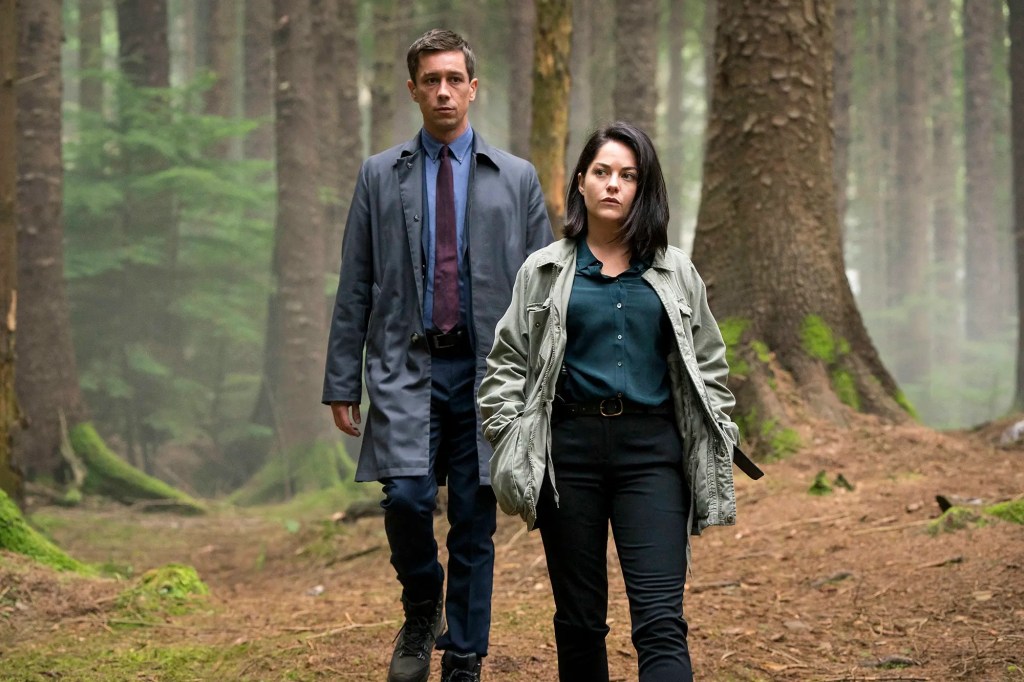
There is a moment, a flicker, a turn of the page, when crime fiction stops being about crime and becomes about something else entirely. Something like memory. Or déjà vu. Or maybe just the way certain streets, certain houses, certain nights refuse to let go of us.
Cue Should I Stay or Should I Go by The Clash.
Because that’s the real question, isn’t it? Whether we stay in the past or leave it behind. Whether the crime is solved or remains open-ended, a ghost forever haunting its own evidence board.
Tana French, with the sleight of hand of a magician (or maybe just a good Irish storyteller), doesn’t write crime novels so much as she writes echoes—stories that repeat, distort, loop back on themselves. Take The Woods and The Likeness, the twin pillars of The Dublin Murder Squad series. Two books, two crimes, two characters unraveling mysteries that are less about whodunit and more about who am I, and how did I get here?
Because The Woods isn’t just about a missing boy. And The Likeness isn’t just about a dead girl.
No, The Woods is about the fracture of time—how a single night can split a life in two, how some forests are less physical landscapes than they are spaces where time pools like water, where children vanish, where the past refuses to die. And The Likeness? It’s a quantum crime, a Möbius strip of identity, a case that forces Cassie Maddox to become the girl she’s investigating, until the lines between self and shadow, detective and dead, dissolve entirely.
The Quantum Eight of Exile
And suddenly, I’m not talking about The Dublin Murders anymore.
Because I’ve been here before. In a city where the past never quite disappears. In a house with tiled courtyards, before the walls shrank, before the espiritistas of Joaquín Trincado whispered to the dead. In a Caracas of caobos and guerrillas, of midnight arrests and lost childhoods. In a bar in London where a Greek bartender with the face of Juan Vicente Gómez pours ouzo and asks,
—Do you return, or do you stay?
Fleet Road. Notting Hill Gate. Belsize Park. Marble Arch. Victoria Station. Pasaje Sur. San Bernardino. The Dublin Mountains. The Ávila. Shetland. The Arctic Circle. The Woods. The Likeness. The crime is the same. The crime is time itself, folding in on itself, hiding its solution inside a loop.
Cassie Maddox steps into a house and becomes someone else. Rob Ryan walks into the woods and emerges a different man. I walk the streets of a city that exists in both memory and exile, and the question remains the same.
—Do you return, or do you stay?
But the answer was never the point.
Because in the end, whether you stay or go, the story has already been written.
 Israel Centeno Author
Leave a comment