
Israel Centeno
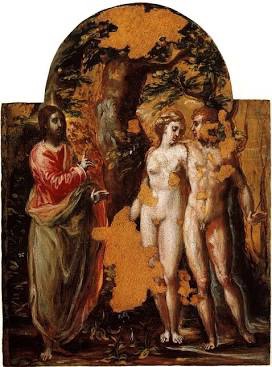
The relationship between human desire, sexuality, and identity has been a central concern in both psychoanalysis and Christian theology, particularly in the Theology of the Body articulated by Saint John Paul II. While Freud, Jung, and Lacan each developed their own theories on how the human psyche is shaped by sexuality and unconscious drives, the Theology of the Body offers a vision in which human desire is not merely psychological or biological but is ultimately a call to communion with God.
Despite their fundamental differences, both psychoanalysis and Christian anthropology recognize that human sexuality is not just a matter of physical instinct but is deeply connected to the self, relationships, and meaning. However, while psychoanalysis often frames desire in terms of lack, repression, and the structuring of the psyche, the Theology of the Body sees desire as a path to self-gift and transcendence.
Freud: The Primacy of Libido and Repression
Sigmund Freud’s psychoanalysis places sexuality at the core of human identity. According to Freud, the libido—the life instinct, primarily expressed through sexual energy—is the primary force behind human motivation. He argued that civilization itself is built upon the repression of sexual impulses, which are redirected through mechanisms such as sublimation, neurosis, and the formation of the super-ego.
Freud saw religious morality, particularly Christian teachings on chastity, as a repressive force that forces individuals to internalize guilt and suppress their instinctual drives. For him, the formation of the psyche was fundamentally a negotiation between the desires of the id (instinctual drives), the restrictions of the superego (internalized social norms), and the ego (the mediating self).
The Theology of the Body, in contrast, does not view sexual morality as repression but as the path to a higher fulfillment. Where Freud sees human development as a battle between instinct and repression, John Paul II sees it as a journey toward self-gift and communion. While Freud treats sexual desire as an unconscious force that must be managed, Christian theology sees it as a vocation to love—one that can be distorted by sin but also elevated by grace.
Jung: Archetypes and the Integration of the Self
Carl Jung diverged from Freud by rejecting the idea that sexuality is the sole or primary driver of the unconscious. Instead, he introduced the concept of the collective unconscious, a repository of archetypes and primordial symbols that shape human experience. For Jung, human sexuality and relationships were part of a broader psychological and spiritual quest for wholeness, which he called individuation.
Jung’s concept of anima and animus—the unconscious feminine aspect in men and the unconscious masculine aspect in women—suggests that each individual carries within themselves a complementary “other” that they must integrate in order to achieve psychological wholeness. This idea bears some resemblance to the Christian idea of complementarity between man and woman, but there is a crucial difference: Jung sees this integration as an inner psychological process, whereas the Theology of the Body sees complementarity as an external and relational reality that calls the person into communion.
Additionally, Jung was deeply interested in mystical and religious experiences, seeing them as necessary for human development. However, his approach was psychological rather than theological. While Jung viewed religious symbols as expressions of the Self archetype—humanity’s deepest image of totality—Christianity sees them as real encounters with a transcendent God. The Theology of the Body affirms that human relationships, particularly in marriage, are not just psychological integrations but reflections of divine love itself.
Lacan: Desire, the Lack, and the Symbolic Order
Jacques Lacan built upon Freud’s work but reinterpreted it through the lens of linguistics and structuralism. Central to his theory is the idea that human desire is shaped by lack—we always desire what we do not have, and this lack structures our identity. Lacan famously claimed that “desire is the desire of the Other,” meaning that our deepest longings are not purely biological but are mediated by language, culture, and the symbolic order.
For Lacan, the subject enters the Symbolic Order through language and social norms, which shape identity but also impose an unavoidable sense of separation from the original unity experienced in infancy. This mirrors, in some ways, the biblical idea of the Fall: humanity once experienced perfect communion with God but now lives in a fragmented state, longing for restoration. However, Lacan’s approach is existential and structural rather than theological—there is no “redemption” in the Christian sense, only an endless deferral of satisfaction.
In contrast, the Theology of the Body does not see desire as an endless cycle of lack but as a call toward fulfillment in love. While Lacan suggests that human identity is always fractured and constructed through external symbols, John Paul II affirms that the human person has an intrinsic dignity and purpose. For Christianity, the ultimate “Other” that we long for is not an abstract concept but a real relationship with God.
Desire: A Fundamental Divergence
The greatest difference between psychoanalysis and the Theology of the Body lies in their understanding of desire.
• Freud sees desire as a conflict between biological drives and social repression.
• Jung sees desire as a pathway to individuation and the integration of archetypes.
• Lacan sees desire as structured by lack, an endless longing shaped by the symbolic order.
• The Theology of the Body sees desire as a vocation to love, fulfilled not through repression, nor mere psychological integration, but through self-gift and communion.
While psychoanalysis often views religion—especially Christian sexual ethics—as a constraint on human fulfillment, John Paul II argues that it is precisely through the proper ordering of desire that we achieve true freedom. Freedom is not the absence of restriction but the ability to give oneself in love.
Sexuality: From Neurosis to Sacrament
For Freud, repression of sexual instincts leads to neurosis. For Lacan, the subject is always structured by a fundamental absence. In both cases, sexuality is seen as problematic—either because it is repressed or because it is never fully satisfied.
The Christian vision, however, does not see sexuality as a source of neurosis but as a sacramental reality. The marital union is not a battleground of unconscious conflicts but a sign of God’s love. In John Paul II’s Theology of the Body, the body expresses a divine mystery: it is through love and self-gift that the human person finds fulfillment. Even celibacy is not a rejection of desire but its transformation into a higher vocation.
Conclusion: The Body as Prison or Path to God?
Psychoanalysis and Christian theology both recognize that human beings are deeply shaped by desire, relationships, and sexuality. However, their conclusions differ radically.
• Freud and Lacan see sexuality as a site of struggle, repression, and endless longing.
• Jung sees it as part of a psychological integration process.
• The Theology of the Body sees it as a path to divine love, whether through marriage or celibacy.
In the end, the key question is: Is desire a cycle of lack, neurosis, and repression? Or is it a call to communion and self-gift?
For Christianity, the body is not a prison of instincts but a temple of the Holy Spirit. Human love—when properly ordered—is not merely a response to psychological need but a participation in the eternal love of God. While psychoanalysis remains within the limits of the unconscious and the symbolic, the Theology of the Body looks beyond: it sees the body, not as a battleground of drives, but as a sign of the divine mystery that calls each person to love, and ultimately, to eternal communion.
 Israel Centeno Author
Leave a comment