
Israel Centeno
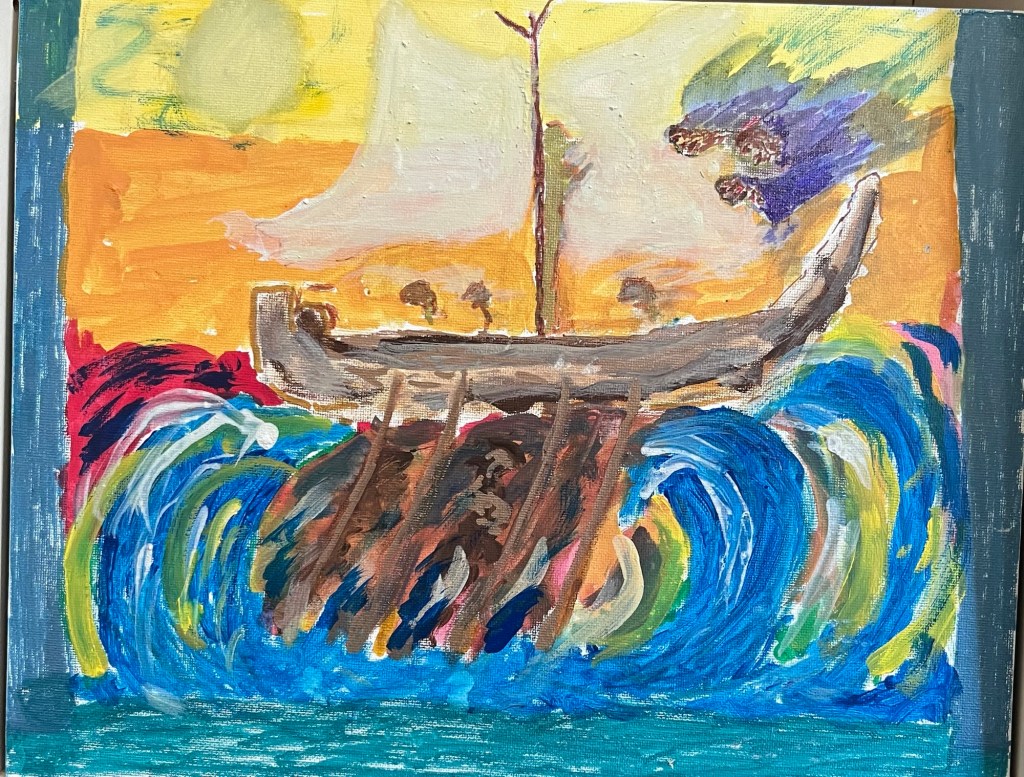
Dedicated to the one who asked for Wisdom.
He asks—who? There is no name for the one who meditates on the fall, on the endless stretch of wind and toil. He could be a king who has seen everything and understood that gold turns to ashes in one’s hands. He could be a witness, a wanderer who has walked too far, who has seen dawn in the palaces and dusk in the streets. Or perhaps he is no one at all—just a voice echoing in the void.
He looks at the world and recognizes it for what it is: an architecture of servitude. The old, the primordial, the slavery of chains and branded flesh still lingers in the shadows. Children bending their backs over unseen quarries, extracting minerals for the machines that surround us. Tiny hands assembling the circuits of modern promises. Lives anchored in ancient bondage, hidden in the least spoken-of corners of Asia and Africa. And alongside them, the new slavery—more insidious, more refined. No chains are needed when the mind itself is shackled by administered pleasures, by manufactured desires. No bars are needed when the will surrenders, nor guardians when thought is ensnared in the infinite web of algorithms, and later, in the labyrinth of the quantum, where absolutism will be total.
And it is not only the future—it is the present. The future is already here, and it bears the mark of slavery. We bear it, tattooed not on the skin but within the very structure of our existence. We have accepted it, internalized it, called it comfort, progress, security. We have learned to love surveillance, to demand it. With an ever more cultivated meekness, we plead to be told what to think, what to feel, what to desire. We train ourselves in submission while speaking the word freedom.
And he asks about the beast. He does not see it, but he senses it in the geometry of the systems, in the mathematical precision of punishment and reward. He searches for the number, longs to pronounce it, but it vanishes before forming into sound. Every sequence is possible—except that one. He raises his hands to his head, as if trying to brush away the shadow, to rid himself of a bad dream. But the dream is not his alone—it belongs to all.
“We discovered penicillin,” he says. “We vaccinated our children. We learned to read. We ventured into the mysteries of the universe.” But did we understand? Or did we merely learn to repeat patterns, to interpret formulas without grasping the meaning of the most fundamental sign?
In the end, man can only be master or slave. Every differentiation of class, caste, and race dissolves into this truth. And when he believes himself free, he is the administrator of an injustice, the foreman of one of the hells on Earth, erected in the name of the heavens.
What has been will be again.
What is done will be done again.
And there is nothing new under the sun.
 Israel Centeno Author
Leave a comment