
Israel Centeno
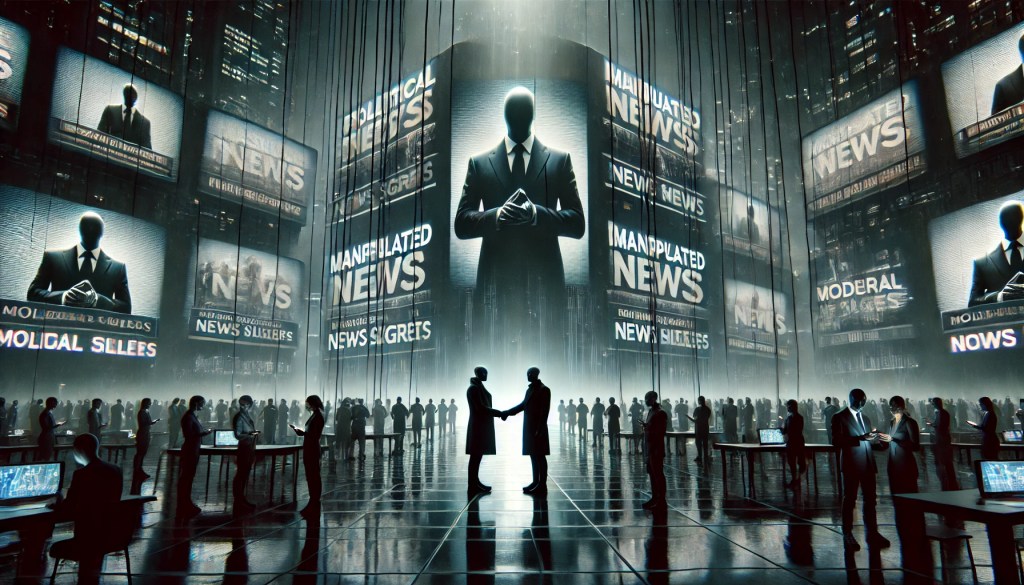
There is no profession where deceit and the absence of integrity are more praised as virtues than in politics. Once upon a time, breaking one’s word was a moral failing. Today, it is strategy. The art of the lie, the science of betrayal—these are the tools of power. The notion of the common good is nothing more than a rhetorical flourish, invoked as needed, discarded just as quickly.
Now, as the illusion of democracy fades and new forms of neo-totalitarianism take shape, politics has refined its methods. It no longer governs through brute force, but through the manufacturing of emotions, the manipulation of public perception, and the careful engineering of social division. We live in an age where maps paint entire nations blue, labeling them “full democracies” while their press is muzzled, their universities turned into echo chambers, and their public discourse dictated by an invisible hand.
The same tactics appear everywhere: facts are stripped from context, repackaged into Stalinist persecution dramas, and deployed as political weapons. The media amplifies the scandal, turning the national conversation into a raging fire of fear and fury. A society in perpetual anxiety is a society that can be controlled.
And then, the next scene: the very same political actors who screamed at each other on camera now shake hands behind closed doors, negotiating power, rearranging alliances. Politics is the business of deception, of staged conflicts and scripted outrage. It is the art of the dirty deal, always in the name of progress.
But power today is not content with shaping laws and controlling narratives. It is reaching for something deeper: the relationship between master and slave.
Technology has ceased to be a tool and has become an idol. We worship it willingly, handing over our data, our privacy, our autonomy—offering ourselves up, free of charge, grateful for the latest application that will generate new illusions for us.
The future no longer looks like Orwell’s 1984, where obedience is extracted through terror. Instead, it is shaping up to be Huxley’s dystopia, where servitude is embraced, where submission feels like pleasure, and where chains are made of convenience, not iron. The mark of the slave is not imposed—it is demanded.
This is the new virtuality, the simulated reality, where even freedom and truth are nothing more than well-curated performances. It is no surprise that, despite all evidence to the contrary, voices are emerging to declare that free will does not exist.
What criminals will they seek to absolve, arguing they were never capable of knowing right from wrong?
Because if man is not free, then no one is guilty.
And if no one is guilty, then evil ceases to be evil.
This is the world we live in.
And for now, this is where it is headed.
 Israel Centeno Author
Leave a comment