
Israel Centeno
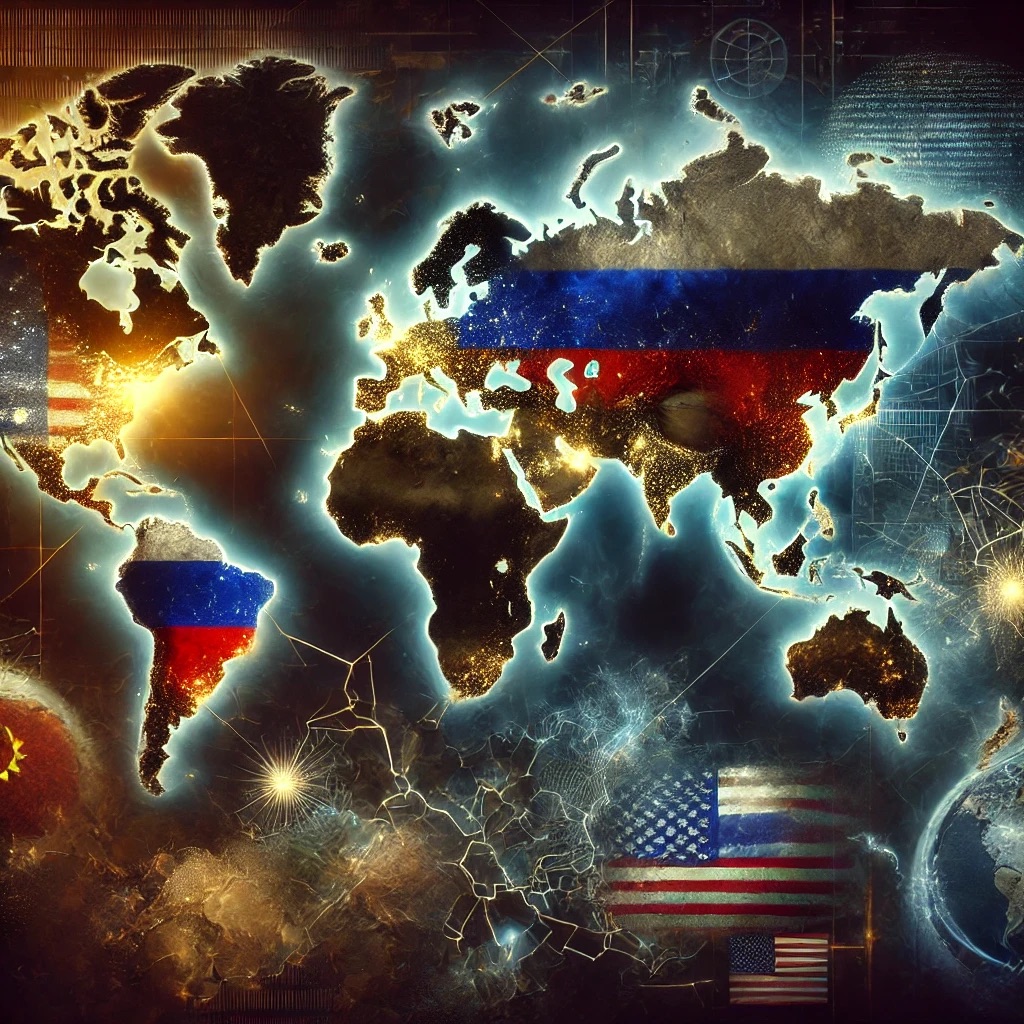
The current geopolitical landscape is undergoing significant transformations, marked by Russia’s evolving role under Vladimir Putin’s leadership, the resurgence of illiberal trends worldwide, and the recalibration of global power dynamics. To fully grasp these shifts, it is crucial to analyze Russia’s historical influence in Eastern Europe, the increasing autonomy of the European Union, and the broader consequences for regions often left out of these strategic calculations, such as Latin America, Africa, and parts of South Asia.
Russia’s Historical Influence in Eastern Europe
Perceiving Putin merely as a communist leader oversimplifies the complexity of his background and current objectives. Although he served as a KGB agent, his present focus is on reaffirming Russia’s influence within its traditional geopolitical sphere. This strategy is not new; historically, Russia has sought to maintain a security zone encompassing countries like Ukraine, Poland, Lithuania, and Estonia.
A notable example is Poland, which vanished from the map for nearly a century after being absorbed by the Russian Empire. Later, it became a point of contention between Nazi Germany and the Soviet Union, highlighting its role as a buffer zone in these powers’ expansionist strategies. Similarly, countries like Hungary, Romania, and the Balkan nations have historically served as buffer zones for Russia, a nation with deep Asian roots striving to integrate into the European concert of nations.
While Russia has consistently worked to maintain these areas within its sphere of influence, today’s geopolitical shifts complicate this effort. Many of these nations, wary of Russian expansionism, have sought integration with the European Union and NATO, creating tensions that go beyond the traditional East-West dichotomy.
The Resurgence of Illiberal Trends in the New World Order
Concurrently, the global order is experiencing a transformation with the resurgence of illiberal trends, even in countries traditionally identified as liberal democracies. This phenomenon manifests in the adoption of policies emphasizing state control and the limitation of certain civil liberties, challenging traditional democratic principles.
The European Union, which has historically promoted democratic values and human rights in its external relations, currently faces challenges in upholding these principles in its foreign policy. While the EU continues to advocate for democracy and human rights, in practice, some member states maintain diplomatic and commercial relations with regimes considered authoritarian, such as Venezuela, Cuba, and Nicaragua. This pragmatic approach reflects the complexity of European foreign policy, where economic and strategic interests often coexist with the promotion of democratic values.
Moreover, this illiberal trend is not exclusive to authoritarian regimes. Many democratic nations, including the United States and members of the European Union, are increasingly prioritizing national interests over the universal principles they once championed. This shift raises concerns about the future of multilateral cooperation and the long-term stability of international institutions.
The Anti-Trump Sentiment in Europe and Strategic Realignment
The anti-Trump sentiment in Europe transcends a simple ideological opposition; it is rooted in concerns that Donald Trump’s policies could weaken the U.S. commitment to European security, particularly within the framework of NATO and other international alliances.
During his previous term, Trump called NATO “obsolete” and suggested he might reconsider aid to member countries if they did not increase their defense spending. This stance raised concerns among European leaders about the reliability of the United States as an ally, highlighting the need for Europe to take greater responsibility for its own security.
Additionally, the Trump administration displayed a tendency toward unilateral policies, such as withdrawing from the Paris Agreement and imposing tariffs on European allies. These moves increased the perception that his leadership posed a threat to multilateral cooperation and the stability of international institutions.
In response, the European Union has taken measures to strengthen its security and defense, seeking alliances with countries like the United Kingdom, Canada, Turkey, and Norway, while also considering the creation of an independent European army. These initiatives reflect Europe’s concern about maintaining its security and stability amid uncertainty regarding the future commitment of the United States.
The anti-Trump stance in Europe, then, is not solely about political ideology but also about the fear of being left alone in a world increasingly defined by power blocs and strategic interests rather than democratic values.
The Marginalization of Latin America, Africa, and South Asia
While global powers reposition themselves, entire regions—such as Africa, Latin America, and parts of South Asia—are being increasingly marginalized in decision-making processes. This phenomenon reflects a historical pattern where dominant powers prioritize their interests, often at the expense of less privileged regions.
In Latin America, the Trump administration’s aggressive tariff policies significantly impacted countries like Mexico and Canada, disrupting decades of cooperation and generating economic and political tensions in the region. However, despite these tensions, the region remains largely ignored in major geopolitical realignments.
In Africa, the perception of a new form of digital neocolonialism is growing, as technological advancements are increasingly concentrated in the hands of a few dominant powers. This perpetuates inequality, particularly in the Global South, which remains technologically dependent on these centers of power.
Additionally, China’s Belt and Road Initiative aims to connect Asia with Europe and Africa through large-scale infrastructure investments. While this could create opportunities for participating regions, there is also a risk of fostering economic and political dependencies that further entrench their marginalization in the global order.
Europe’s Pursuit of Strategic Autonomy
The European Union finds itself at a crossroads, seeking to strengthen its strategic autonomy amid uncertain transatlantic relations. The need for a common defense policy and reducing dependence on the United States for security are central themes on the European agenda. This process involves redefining alliances and adapting to an international environment where illiberal trends are gaining ground.
The current global dynamic is characterized by the emergence of major power blocs operating under governance models that transcend traditional democracy. China and Russia are consolidating their influence through illiberal approaches, while the United States adjusts its role in a multipolar environment. In this context, Europe must redefine its strategy to ensure its autonomy and relevance, facing the challenge of adapting to a transforming international order.
At the same time, Europe’s approach must also consider the growing marginalization of Latin America, Africa, and parts of South Asia. If the continent wishes to maintain a global leadership role, it must address the inequalities created by its own economic policies and foreign relations.
The world is witnessing a profound transformation in its balance of power. Traditional alliances are being reconsidered, and the influence of illiberal governance models is expanding. The European Union’s struggle to define its role, the strategic recalibrations of the United States, the persistence of Russian expansionist ambitions, and China’s economic assertiveness are shaping a new global order that prioritizes power and pragmatism over ideological consistency.
As this new world order takes shape, it is imperative to recognize the systemic marginalization of certain regions and ensure that the redistribution of influence does not come at the cost of entire continents being left behind. The challenge ahead lies in balancing power dynamics while fostering an international framework that does not abandon the democratic and cooperative ideals that have historically shaped global stability.
 Israel Centeno Author
Leave a comment