
Israel Centeno
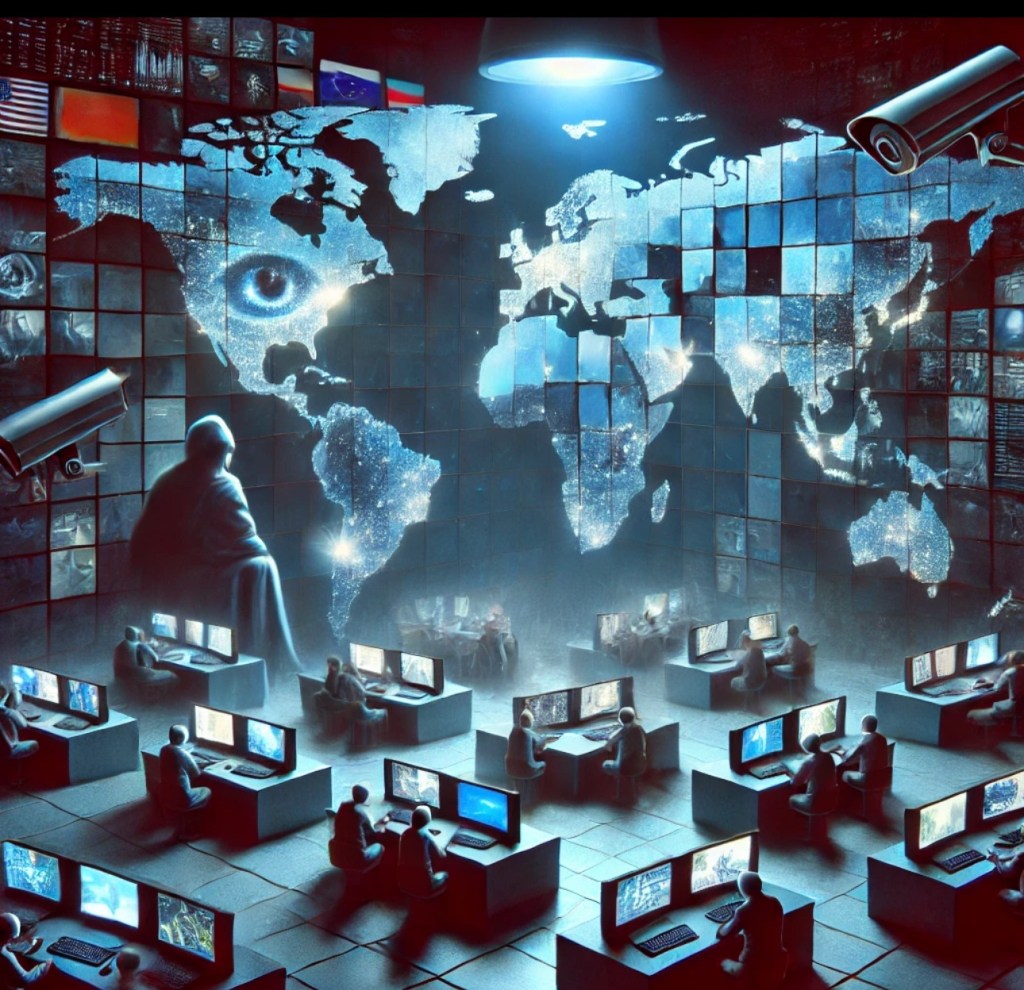
For decades, the global narrative was defined by a struggle between two opposing blocs: the democratic and Christian West versus the tyrannical and atheist East. This was the rhetoric of the Cold War, the premise upon which alliances were built, wars were justified, and propaganda systems were articulated. However, today, this dichotomy has vanished—not because one side triumphed over the other, but because the game board has been reconfigured. The question is no longer whether we choose democracy or tyranny, but rather under which form of post-liberal or openly illiberal hegemonic power we will find ourselves.
Putin, with his characteristic pragmatism, has become an unexpected defender of Christianity. Not because he is a devout believer, but because he understands that Russian Orthodoxy is a key piece of his geopolitical strategy. Securing his borders is not just a military issue, but a cultural and religious one. Within his sphere of influence coexist historic Muslim communities and nations with strong Islamic heritage, from the Caucasus to Central Asia. Maintaining stability requires a delicate balance between Slavic nationalism and the ethnic and religious diversity of his vast territory.
Meanwhile, the West no longer recognizes itself in its own reflection. Post-Christian Western Europe has turned faith into a cultural relic, a museum piece remembered only in times of crisis or in political speeches of convenience. America, on the other hand, still clings to its fervent evangelical identity, yet its global influence is not what it once was. The moral force that once justified its interventions has dissipated into a pragmatism that increasingly borders on relativism. In its attempt to save the world from external tyrannies, it has imposed an internal surveillance apparatus that eclipses the totalitarian ghosts of the 20th century.
The Dilemma of the 21st Century: Under What Kind of Hegemony Do We Want to Live?
The struggle is no longer between democracy and tyranny but between different models of control. Do we prefer China’s technocratic surveillance system, where stability is achieved at the cost of absolute monitoring? Russia’s pragmatic nationalism, which negotiates with faith while strengthening its state machinery? Or the corporate-driven progressivism of the West, where individual rights exist in theory but are increasingly absorbed by the control of big tech platforms and government oversight mechanisms?
The average citizen is no longer a political subject but a cog in surveillance systems, a mere dataset, an algorithmically managed entity placed within a consumption and control model. The idea of freedom has been replaced by the illusion of comfort. As long as we have access to goods, entertainment, and the ability to voice complaints on social media, the system remains balanced. But what happens when these structures fail?
We are not choosing between freedom and oppression; we are choosing which form of oppression will be more tolerable. The question is no longer whether we want to live in a democratic or autocratic world but rather in what type of digital cubicle we will end up confined. The battle between ideologies has given way to a dispute over architectures of control.
The problem is not whether the future will be democratic or not. The problem is whether, amid this transition, anyone will still dare to imagine a true alternative.
 Israel Centeno Author
Leave a comment