
Villalta, Pinto, and an Exile Without Return
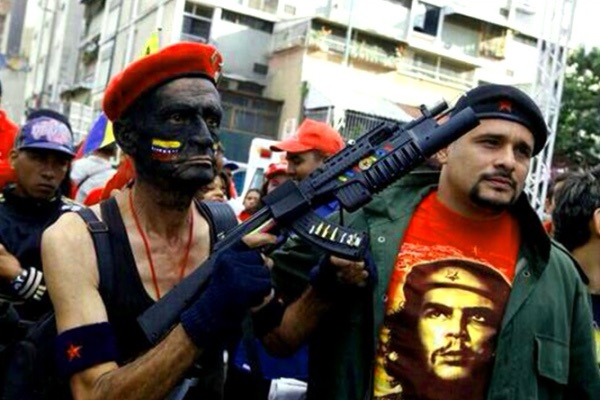
For years, I lived under the shadow of two figures exalted as revolutionary heroes: Rafael Villalta and José Pinto. Villalta, a veteran of the guerrilla movement in the 1960s, took part in actions like the kidnapping of U.S. officer Michael Smolen, securing decorations while his darker side remained outside the official narrative. Pinto, leader of the Tupamaros of 23 de Enero, commanded one of the most radical urban militias of Chavismo, a true power in the shadows.
I do not question their role in the armed struggle of the 1960s. What I knew was the Villalta who, decades later, pursued my family with relentless cruelty. He threatened me, beat me, and described how he would cut off my head and place it in a can full of excrement. He knew where my daughters went to school. But the worst was with my mother: he pulled her out of the Caracas metro at gunpoint and told her he would take her to La Vega to rape her. She was over 65 years old. She managed to escape, but the harassment did not stop until we left the country.
José Pinto, for his part, was accused in 2020 of having disappeared and murdered several people, whose bodies were found on his estate in Carayaca. That same estate where I was taken one night, where they showed me the spot where, according to them, I was going to be buried. It was not an empty threat. It was a clear message: they knew they could do it.
Putting this into words is a therapeutic act. My therapist has advised me to open up, to disclose as a way of processing what I lived through. For years, I kept silent out of fear of reprisals against those still in Venezuela. I apologize to those whom I may have unintentionally put in danger by approaching them for work or friendship. I did not always measure the consequences of my actions, but I know that by investigating me, they also investigated those around me.
Today, I can speak. And I can also say with certainty: I will never return to Venezuela.
 Israel Centeno Author
Leave a comment