
By Israel Centeno
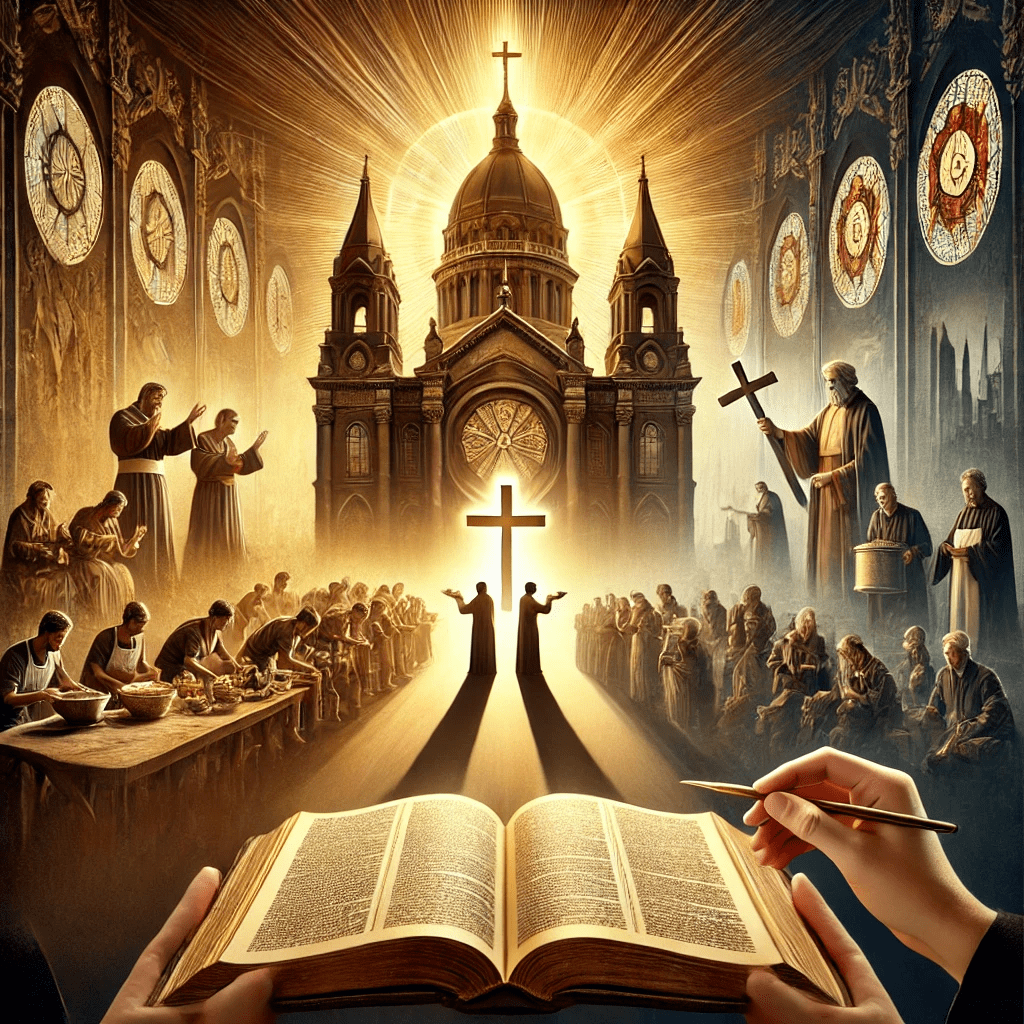
The Social Doctrine of the Church (SDC) is a moral compass that guides Christians in their engagement with society, offering ethical principles that promote justice and charity without reducing the Church’s mission to a political ideology. Rooted in the Gospel commandment to love God and neighbor (cf. Mt 22:37-39), its purpose is not to align with political factions but to proclaim truth, defend human dignity, and work for the common good.
However, in today’s polarized world, whenever the Church speaks out against social injustices or defends core Christian values, there is an attempt to frame its stance as either “conservative” or “liberal.” When the Church defends life, family, and the natural order, it is often labeled as conservative; when it speaks against poverty, exploitation, or social inequality, it is accused of progressivism. This tendency is not only a misrepresentation but a deliberate attempt to manipulate the Church’s message for partisan ends.
The Church Serves No Earthly Power
A fundamental truth must be stated clearly: the Church cannot bow to any ruler, ideology, or idol—it belongs to God alone. Its mission transcends politics and cannot be subordinated to the interests of any government, political party, or social movement. From the earliest days of Christianity, when the apostles refused to worship Caesar, to the modern era, when the Church has resisted totalitarian regimes and unjust laws, it has remained faithful to this truth.
The words of Christ are unmistakable: “My kingdom is not of this world” (Jn 18:36). The Church exists in history, but it is not bound by the shifting ideologies of the age. Whenever a political system, ruler, or ideology demands the Church’s submission, it must respond as St. Peter did: “We must obey God rather than men” (Acts 5:29).
The Social Doctrine of the Church: A Path of Justice and Charity
The SDC is built upon the dignity of the human person, the common good, solidarity, and subsidiarity. These are not political positions but moral imperatives that reflect the truth about human nature and society. The Compendium of the Social Doctrine of the Church affirms that this teaching “is a proclamation of the truth about man and society” (CSDC, n. 81). Its role is to guide the faithful in building a just society without being reduced to a political program.
The Church Is Not a Political Party
One of the greatest dangers today is the temptation to instrumentalize the Church for ideological purposes. Some attempt to align its message with leftist causes; others seek to mold it into a conservative stronghold. Both approaches are errors.
As Pope Benedict XVI warned in Deus Caritas Est:
“The Church cannot and must not take upon herself the political battle to bring about the most just society possible” (n. 28).
This does not mean the Church is indifferent to injustice. Rather, it means that its role is to form consciences, proclaim truth, and call the world to conversion—not to serve as an arm of any political system.
When the Church is co-opted by ideologies, it loses its prophetic voice. History has shown that whenever the Church has aligned itself too closely with political movements—whether in monarchies, communist regimes, or modern democracies—it has suffered spiritual corruption and internal division.
The Error of Reducing Faith to Ideology
To claim that the Church’s positions on social issues are merely “conservative” or “liberal” is to misunderstand its mission. The Church does not operate according to human political logic but according to the Gospel.
The defense of life, justice, human dignity, workers’ rights, the family, the environment, and peace are not partisan concerns—they are moral duties. The moment we reduce them to political labels, we risk distorting the truth.
As Pope Francis warns:
“When we speak of ideologies, we speak of closed-mindedness, an inability to engage in dialogue. Ideology destroys, closes minds and hearts.”
How to Avoid Partisan Distortions in Social Action
For Christian social action to remain faithful to the Gospel rather than being hijacked by political interests, certain principles must be followed:
• The Church respects the autonomy of temporal affairs, recognizing that politics and economics have their own proper functions—so long as they remain within the bounds of moral law. Laypeople are called to transform society from within, without compromising their faith.
• The Church forms consciences, offering principles rather than endorsing specific political policies. Its mission is not to dictate technical solutions but to guide believers in applying moral truth to social issues.
• The Church promotes the common good, which is not about serving particular interests but about ensuring the well-being of all, especially the most vulnerable. The Catechism of the Catholic Church states:
“The common good consists of three essential elements: respect for the person, the social well-being and development of the group, and peace” (CCC, n. 1906).
• The Church opposes polarization, recognizing that divisions fueled by ideology are obstacles to unity and charity. The Gospel calls us to build bridges, not walls.
The Church as a Witness to the Kingdom of God
Ultimately, the Church’s mission is not to establish an earthly utopia but to proclaim the Kingdom of God. As St. Paul reminds us:
“If I have not love, I am nothing” (1 Cor 13:2).
The Church does not seek to impose a political system; it seeks the transformation of hearts. True social change begins with personal conversion, not with party platforms.
When the Church speaks against injustice, it does so because Christ commands it, not because it serves an ideology. Christian charity cannot be reduced to a political program—it is a way of life rooted in the Gospel.
Conclusion
The Social Doctrine of the Church is a guide for justice and charity, not a partisan weapon. When its teachings are labeled as “conservative” or “liberal,” the Church’s mission is distorted. It speaks not as a servant of politics but as a witness to truth.
The Church cannot bow to rulers, ideologies, or worldly powers—its allegiance belongs to God alone. No government, party, or system can claim ownership over its message.
May our commitment to justice always remain faithful to this truth. As the prophet Micah teaches:
“He has shown you, O man, what is good; and what does the Lord require of you but to act justly, to love mercy, and to walk humbly with your God?” (Mic 6:8).
Let us work for justice, but never at the cost of truth. Let us serve the world, but never become enslaved to it. Above all, let us remain faithful to Christ, who alone is Lord.
 Israel Centeno Author
Leave a comment