
Israel Centeno
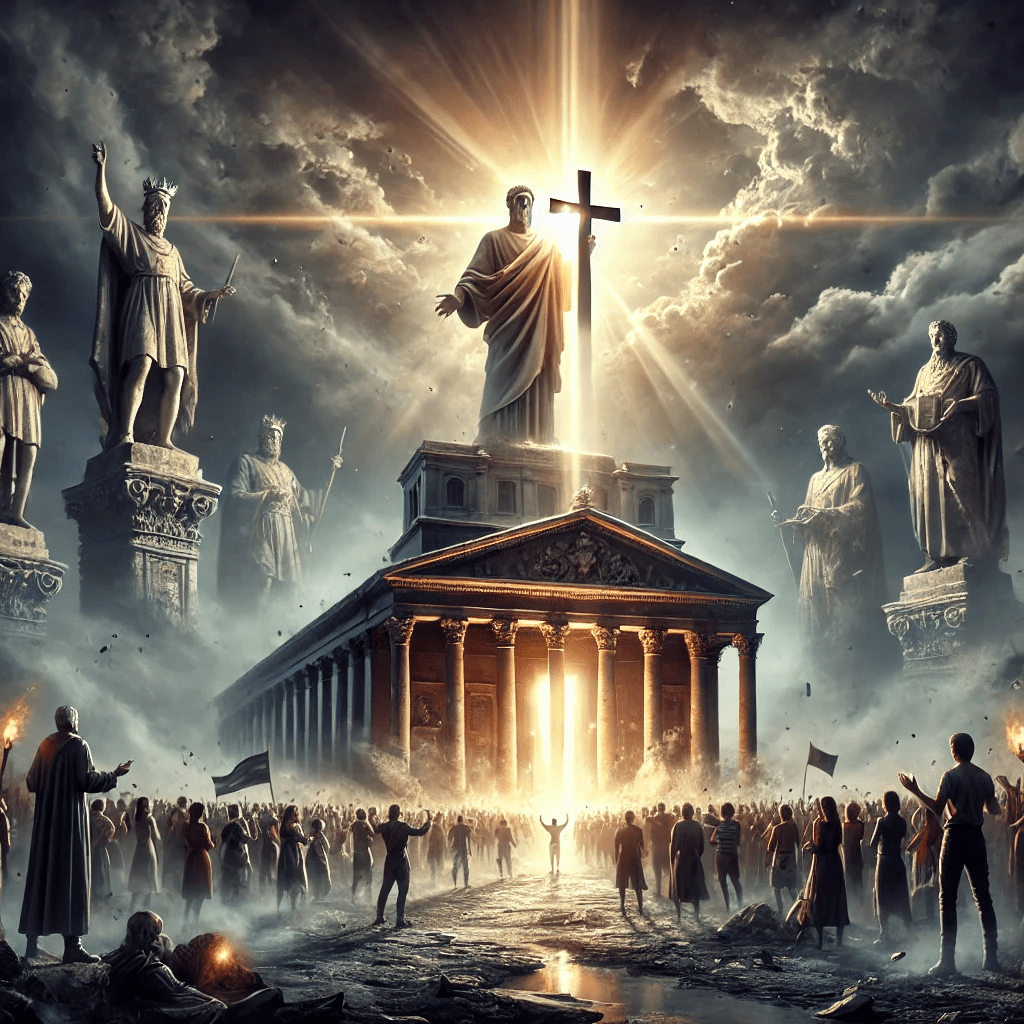
History has repeatedly shown us the dangers of political ideologies that elevate race, nation, or state to an idolatrous level, transforming them into pseudo-religions that claim absolute authority over human destiny. Pope Pius XII, writing in the shadow of totalitarian regimes that sought to subsume the Church under the authority of the state, issued a powerful warning against such distortions of the divine order. His words remain profoundly relevant today, as nationalism, racial supremacism, and false messianic movements attempt once again to hijack Christianity for their own purposes.
The Idolization of Race and Nation
Pope Pius XII declared:
“Whoever exalts race, or the people, or the State, or a particular form of State… above their standard value and divinizes them to an idolatrous level, distorts and perverts an order of the world planned and created by God.”
This statement was a direct condemnation of Nazi Germany’s racial ideology, which sought to elevate a particular people as the superior race, relegating others to subhuman status. It was also a critique of totalitarian states that sought to establish themselves as absolute, replacing God with their own ideology.
Today, we see similar distortions reappearing in new forms. Whether through ethno-nationalist movements that claim divine sanction for racial superiority or political ideologies that merge national identity with religious destiny, these tendencies pervert Christianity by turning it into a tribal weapon rather than a universal faith. The Church has always affirmed that God is the creator of all humanity, that salvation is offered to all people, and that the dignity of the human person transcends any political or ethnic identity.
The Danger of a ‘National God’
Pius XII also warned against attempts to forge a “national religion” that would subjugate the Church to the state:
“None but superficial minds could stumble into concepts of a national God, of a national religion; or attempt to lock within the frontiers of a single people, within the narrow limits of a single race, God, the Creator of the universe, King and Legislator of all nations before whose immensity they are ‘as a drop of a bucket’ (Isaiah XI, 15).”
This was a response to the Nazi attempt to establish a “Reich Church,” a state-controlled Christianity that would replace the universal Church with a nationalized, race-based religion. But his warning is not confined to that historical moment. In contemporary politics, we see troubling echoes of this tendency when leaders or movements claim that their nation has a special covenant with God that justifies their supremacy over others, or when political parties instrumentalize Christianity to serve their own ambitions.
Christianity is not a political ideology, nor is it the servant of any nation. It is a faith that transcends borders, languages, and cultures. Any attempt to limit God’s kingdom to the boundaries of a state, a party, or a race is a profound heresy.
The False Messiahs of Modern Politics
Throughout history, certain leaders have sought to position themselves as political messiahs, promising national redemption while demanding absolute loyalty. These figures often exploit religious language to justify their power, convincing people that they are divinely chosen to lead a new era. The papal encyclical warned of such deception:
“Enemies of the Church, who think that their time has come, will see that their joy was premature.”
No political leader, no party, no ideology can replace Christ as the true source of salvation. Whenever rulers or movements attempt to claim ultimate authority over human conscience—whether through racial ideologies, nationalist mythologies, or pseudo-Christian political platforms—they are engaging in a form of idolatry.
The Christian Response: Fidelity to Truth and Justice
Faced with these dangers, the Christian response must be clear:
1. Reject all forms of racial supremacy and nationalism that distort the universal nature of God’s kingdom. Christianity teaches the unity of the human race under God, not the exaltation of one people over others.
2. Resist the political instrumentalization of faith. The Church is not a political tool. When politicians use Christianity to justify their own power, they are manipulating the faith for their own gain.
3. Recognize false messianism. No leader or ideology can replace Christ. Any attempt to deify a political figure or movement must be met with firm resistance.
4. Defend the integrity of the Church. When governments attempt to subjugate the Church to their will—whether through persecution or co-optation—Christians must stand firm in defense of their spiritual freedom.
Pope Pius XII’s warning remains as urgent today as it was in his time. The idols of nationalism, racism, and political messianism continue to seduce people away from the true faith, distorting Christianity into a tool of division and domination. The Church, however, does not belong to any nation or political movement. It belongs to Christ, and through Him, to all humanity.
Faithful Christians must stand against these false ideologies and uphold the true order established by God—one in which human dignity, justice, and love transcend the narrow ambitions of men.
 Israel Centeno Author
Leave a comment