
Israel Centeno
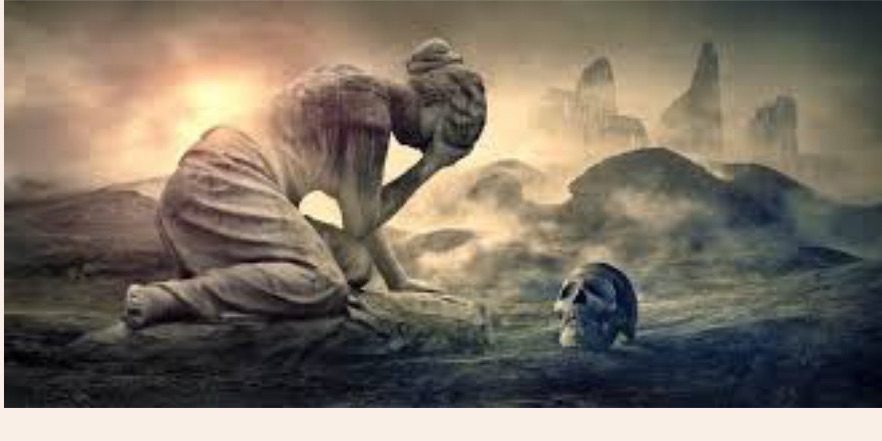
The world has entered a phase of geopolitical reconfiguration. The globalist and democratic liberalism that dominated the 20th century is no longer the guiding ideology. Its collapse has given way to a pragmatic, authoritarian, and multipolar order, where nationalism, technocracy, and populism have displaced the ideals of popular sovereignty and individual rights.
The United States, though still a power, has lost its global hegemony. China and Russia have taken strategic positions, Europe is trapped in its own identity crisis, and regions such as Africa and the Arab world have opted for pragmatic alliances, unattached to ideological values.
The 21st century no longer belongs to liberalism.
⸻
1. Latin America: Naturally Illiberal
Latin America was never fully liberal. Historically, it has operated under caudillismo, populism, and state-controlled economies. The alternation between left- and right-wing governments has not changed the structure of power, which remains dominated by informal networks of influence and systemic corruption.
Three main trends:
• Pragmatic authoritarianism → Bukele in El Salvador, Milei in Argentina.
• Clientelist socialism → Venezuela, Bolivia, Nicaragua.
• Economic dependence on China → Brazil, Peru, Chile.
• China and Russia have displaced the U.S. as strategic and trade partners.
• Democracy will persist as a ritual, but real power will reside in opaque structures of influence.
In the new global order, Latin America will not be a key player but rather a territory of economic influence for external powers.
⸻
2. Asia: The New Center of the World
While the West remains trapped in political and ideological crises, Asia has taken the lead in global economic and technological dominance.
• China rules the region with an anti-liberal model of state control and technocratic capitalism.
• India plays its own game, neither fully aligning with the U.S. nor China.
• Japan and South Korea remain in the U.S. orbit, but their survival depends on China.
• Southeast Asia is already under Chinese economic control, with fragile democracies prioritizing stability.
Asia will be the epicenter of the 21st century, displacing the West as the axis of global power.
⸻
3. Europe: The Declining Old Continent
Europe is experiencing an existential crisis. Its liberal and globalist model has fractured, while nationalism and pragmatism are resurging in several countries.
• The European Union is fractured, with Hungary, Poland, and Italy resisting the globalist model.
• France and Germany still uphold the globalist vision but face weakened economies and internal migration crises.
• The United Kingdom remains adrift after Brexit.
• Europe is a decaying bureaucratic empire: militarily weak, facing an energy crisis, and lacking a strategy against China and Russia.
Without a change in direction, Europe will become irrelevant in global politics.
⸻
4. Africa: The New Colony of China and Russia
Africa has become the largest geopolitical battleground, with the West losing influence to China and Russia.
• China controls African resources through loans and infrastructure projects.
• Russia provides stability in exchange for military influence, particularly through the Wagner Group in the Sahel.
• The U.S. and Europe have lost significant influence, except in humanitarian efforts.
• Democratic governance is virtually nonexistent, with military coups and corruption dominating politics.
Africa is a territory of exploitation and competition among global powers, with no clearly defined future within the new global order.
⸻
5. The United States: What Remains of Its Hegemony?
The United States remains a major power, but it has transitioned from being a global empire to just another player in a multipolar world.
• In Latin America, its political control has weakened, though it still dominates trade and security.
• In Europe, it maintains NATO, but European countries are seeking greater autonomy.
• In the Asia-Pacific region, it remains allied with Japan, South Korea, and Australia, but China is the dominant force.
• In Africa and the Middle East, its influence is steadily declining.
The United States no longer dictates the world’s rules but instead adapts to an evolving balance of power.
⸻
6. Failed States: Pieces That Don’t Fit
There are countries that do not fit into any functional power structure, becoming time capsules sustained by mafias, dead ideologies, or criminal networks.
• Cuba: A clientelist mafia state, dependent on the underground economy.
• Venezuela: A hybrid narco-state, with no real ideological project.
• Nicaragua: A personalist dictatorship, where Ortega is worse than Somoza, consolidating a repressive system with no prospect of reform.
These countries have no clear future and function as havens for criminality and destabilization.
Additionally, some territories have completely collapsed as states, giving way to transnational crime structures:
• Haiti: Controlled by armed gangs.
• The Sahel: A zone influenced by jihadists and Russian mercenaries.
• Somalia, Sudan, Yemen: Black markets for weapons and illicit trade.
Far from disappearing, these failed states will continue to serve as platforms of chaos in the new global order.
⸻
7. Canada: A Western Satellite
Canada remains part of the Western bloc but with diminished autonomy.
• Economically, it is entirely dependent on the U.S.
• It maintains globalist policies, while the rest of the world shifts toward pragmatism.
• It possesses strategic resources, but their exploitation is limited by environmental restrictions.
In a multipolar world, Canada will be a spectator rather than an influential player.
⸻
A Multipolar and Anti-Liberal World
Globalist liberalism has collapsed and has been replaced by a pragmatic order, where:
• China leads the economic and technological bloc.
• Russia expands its military and political influence in Eurasia and Africa.
• The U.S. remains a power but no longer holds absolute hegemony.
• Europe weakens and becomes irrelevant.
• Latin America, Africa, and the Arab world align themselves based on economic interests rather than ideology.
The future will not be liberal or democratic but pragmatic, authoritarian, and controlled by state and corporate actors.
The United States is no longer the world’s arbiter. Europe is a bureaucratic empire in decline. The center of global power has shifted to Asia, and the rest of the world is restructuring according to strategic interests, detached from the democratic values of the 20th century.
Liberalism did not fall due to a revolution. It is eroding from within.
 Israel Centeno Author
Leave a comment