
By Israel Centeno
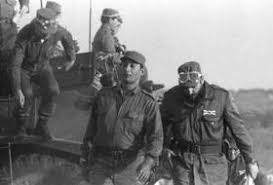
Arnaldo Ochoa Sánchez was the most decorated of Cuba’s revolutionary generals. A hero of the Revolution, a veteran of the Sierra Maestra, and a central figure in Cuba’s military campaigns in Africa—Angola and Ethiopia—he returned as a victor: decorated, admired, with the respect of both the troops and the people. And yet, it was that very prestige that condemned him.
Before Africa, Ochoa had a brief but significant role in one of the guerrilla fronts in Venezuela. There, he imposed with unwavering severity the Stalinist discipline imported from the Cuban revolutionary apparatus. Young Venezuelan fighters were not simply punished—they were executed. Tied to trees overnight, not as correction, but as part of the process: they would be shot at dawn. One could be executed for something as minor as making noise during a night watch, or for taking a can of condensed milk. It wasn’t just discipline—it was terror as a method of internal cohesion. Repression as doctrine.
Decades later, by then a popular general, respected and with a voice of his own, Ochoa became a problem for the regime. Not because he conspired to seize power, but because, if the moment ever came, he could have assumed it. He had loyal troops. He had a combat history. He had the people’s sympathy. And that was intolerable to the Castros—especially to Raúl, who had never earned any of those things.
When the Soviet Union collapsed and Cuba entered the so-called “Special Period,” the regime faced an unprecedented political and economic crisis. Black markets emerged alongside covert networks for trafficking in ivory, gold, and drugs—mechanisms to fund the survival of the state. But someone had to take the fall. And they found the perfect scapegoat in Ochoa.
He was arrested. Displayed before national television cameras, clearly sedated, reading a confession written by others. He assumed total responsibility: corruption, drug trafficking, treason. Alongside him fell Antonio de la Guardia, head of international intelligence operations—known in inner circles as “Fidel’s 007.” A man who knew too much. Who managed the darkest operations of the regime. He too was executed. Not for betrayal, but because he had become a liability.
Ochoa’s trial was a staged show, aired in prime time. Fidel Castro appeared outraged, theatrical, as if unaware of what had been happening under his rule for years. The Revolution was sacrificing its most loyal sons to preserve the illusion of ideological purity. It was not an act of justice—it was an act of political preservation.
Today, the Cuban government does not speak of Ochoa. His name has been erased. He is not honored in Venezuela either, and his involvement in the guerrilla remains unspoken. Meanwhile, the Cuban people, exhausted by decades of hardship and repression, have let that memory dissolve. They live in a state of cold resignation, an amnesia both useful and imposed. Too many names. Too many betrayals.
Ochoa was not a reformist. He was no democrat. He was a general of the system, formed in the logic of revolutionary violence. But his downfall was not due to wrongdoing. It was due to what he represented: a threat. His popularity. His autonomy. His charisma. And in a system where power is never shared, that alone is enough to merit death.
That’s how the devil pays.
 Israel Centeno Author
Leave a comment