
Israel Centeno
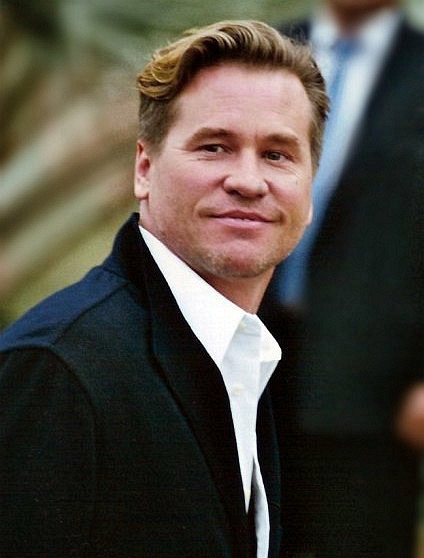
America didn’t just invent Hollywood. It perfected the machinery for devouring its stars. The U.S. media, far from being a neutral conveyor of information, has evolved into a sadistic engine of emotional conditioning — one that grooms its audience to lust for decline, disease, and death. In this system, the most profitable spectacle isn’t the rise of a star, but their slow, public disintegration.
The death of Val Kilmer wasn’t sudden. It was serialized. First came the nostalgia: quiet interviews, blurry red-carpet cameos. Then the mockery: memes, grotesque photos, snide jokes about his “grandma-like” appearance. As if aging were a moral failure. Then, the illness: esophageal cancer. At last, the culmination — not just his death, but the orgy of curated content that followed. AI-generated tributes, TikTok timelines, video reels stitched together with a kind of sentimental cruelty. The audience, now mourning what they helped to ridicule, consumed the final act like dessert after a slow-cooked meal of humiliation.
And now we watch Jack Nicholson. Once the devilish icon of charisma, he appears in tabloids shuffling on a balcony. The commentary isn’t gentle. He’s “out there,” they say. “Frail.” “Unrecognizable.” The media primes its audience. The narrative is being shaped. The memes are brewing. His death hasn’t come yet — but its visual grammar already exists.
This isn’t journalism. It’s not even propaganda. It’s pornography in the most cultural sense of the word: a ruthless, voyeuristic consumption of the body in decline. Susan Sontag, in Regarding the Pain of Others (2003), warned us of this: the grotesque can become a form of entertainment if properly framed. In American media, it always is.
What’s most pornographic isn’t nudity — it’s weakness. The aging body. The dying star. The former icon now treated like a bio-degradable mascot. The media doesn’t just report the story — it scripts it, directs it, and feeds it to us through an algorithm designed to optimize pity and disgust in alternating waves. One minute we laugh at the meme, the next we cry over the montage.
This is not a side effect of capitalism. It is its entertainment logic in full force. Guy Debord, in The Society of the Spectacle (1967), wrote that “everything that was directly lived has moved away into a representation.” But what happens when death itself becomes a representation before it arrives? When the public learns to desire the spectacle of demise, not just passively witness it?
The answer is what we see today: a timeline of human decay, carefully pre-produced and algorithmically enhanced, served on Twitter, Instagram, TikTok — where every suffering becomes a shareable event. Mourning is now a performance. Grief has a UI.
The audience plays its part. We’re not just spectators — we are complicit editors. We retweet the blurry photo. We tag friends in the cruel meme. We say “oh no” in comments and then move on to the next scandal, the next breakdown, the next corpse-to-be.
In a country that leads the world in emotional pornography, there’s little room for dignity. The United States, for all its Hollywood glamor, has always had a death cult running in the background. From Bonnie and Clyde to Britney Spears, it’s not the sex tape that defines stardom — it’s the footage of the fall.
We don’t live to be. We live to be archived. And we don’t die in silence anymore — we die trending.
⸻
• Postman, N. (1985). Amusing Ourselves to Death. Viking Penguin.
• Debord, G. (1967). The Society of the Spectacle. Zone Books.
• Sontag, S. (2003). Regarding the Pain of Others. Farrar, Straus and Giroux.
• Gamson, J. (1994). Claims to Fame: Celebrity in Contemporary America. University of California Press.
• Boorstin, D. J. (1961). The Image: A Guide to Pseudo-events in America. Vintage.
• Turner, G. (2014). Understanding Celebrity. SAGE Publications.
 Israel Centeno Author
Leave a comment