
Israel Centeno
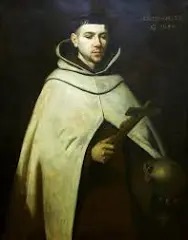
Silence in the mystical tradition is not emptiness—it is presence. It is not absence of language, but the language of what cannot be said. In The Dark Night of the Soul, St. John of the Cross offers us one of the most sublime expressions of what might be called the mystical linguistics of silence: a grammar where words fall away so the soul may listen, surrender, and be transformed.
This poem is not merely a description of suffering or abandonment. It is the intimate testimony of the soul’s journey through night—not a night of despair, but of hidden grace. The silence here is not void, but substance; not negation, but the space where God speaks in whispers too deep for sound.
Let us walk, stanza by stanza, through this silent path.
“On a dark night,
Kindled in love with yearnings—oh, happy chance!—
I went forth without being noticed,
My house being now at rest.”
The opening is paradoxical: darkness and happiness. The soul departs not in fear, but in joy. “My house at rest” suggests that the senses and thoughts—the inner household—have fallen silent. This is not just context; it is condition. Silence becomes the threshold of encounter.
“In darkness and secure,
By the secret ladder, disguised—oh, happy chance!—
In darkness and in concealment,
My house being now at rest.”
The soul moves with trust, not despite the darkness, but because of it. What guides her is not vision, but hiddenness. Disguised, secretive, the soul has shed identity, expectation, and self-regard. This is the humility that precedes union.
“In the happy night,
In secret, where none saw me,
Nor did I look at anything,
With no other light or guide
Than the one burning in my heart.”
Here the interior flame becomes the only compass. The soul walks not by doctrine, nor by reason, but by love—by that inexplicable fire which is the presence of God. All outer lights fade. The heart becomes the tabernacle.
“That guided me
More surely than the light of noonday,
To where He was waiting for me—
Him whom I knew so well—
In a place where no one else appeared.”
The destination is not a place but a Presence. “Him whom I knew so well” is the language of mystical intimacy—knowledge without explanation, certainty without image. The soul arrives not with fanfare, but into stillness, solitude, interior space.
“O night that guided me!
O night more lovely than the dawn!
O night that joined
Lover with beloved,
Beloved in the Lover transformed!”
Union. Here language begins to dissolve. No longer separation, no longer seeking—only transformation. The soul is not beside the Beloved, but in Him. The silence that began as darkness becomes fusion, communion, light beyond dawn.
“Upon my flowering breast,
Which I kept wholly for Him alone,
There He lay sleeping,
And I caressed Him,
And the breeze from the cedars fanned Him.”
Sensual imagery becomes spiritual offering. The flowering breast is the fertile interior of the soul. God rests there—not as a metaphor, but as a mystery. There is no need for speech. The breeze is the breath of grace.
“The breeze from the rampart,
While I loosened His hair,
With His gentle hand
Wounded my neck
And suspended all my senses.”
Mystical experience suspends ordinary perception. The soul is not unconscious but more fully awake. Every faculty falls silent to allow unity. This is not escape from the body—it is the integration of the body into divine stillness.
“I abandoned and forgot myself,
Laying my face on my Beloved;
All things ceased; I went out from myself,
Leaving my cares
Forgotten among the lilies.”
The final silence: forgetfulness of the self, abandonment of all anxiety, all speech. Only rest in the Beloved remains. The lilies speak of peace, purity, and eternal Sabbath. This is the consummation of silence: not an absence of meaning, but its fulfillment.
To read The Dark Night of the Soul is to be invited into a way of listening. It is a path that does not begin in clarity, but in longing. A path where language falls away, not in despair, but in awe. Where the night is not the end, but the secret place of union.
Perhaps what St. John teaches us most deeply is this: that silence is not where God hides—it is where God is found.
 Israel Centeno Author
Leave a comment