
Israel Centeno
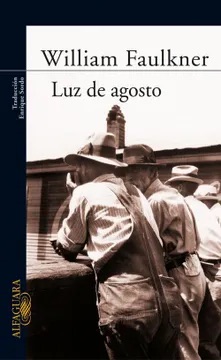
When I was young, I preferred the thunder — the unrestrained energy of The Sound and the Fury, As I Lay Dying, and Absalom, Absalom! over Faulkner’s more classical novels. There was something exhilarating about grappling with the chaos of language, about diving headfirst into that wild experiment of form and structure. Those books mirrored my own internal storm; they were companions to my youthful exploration of the limits of storytelling.
But time, with its patient wisdom, brings about a quiet metamorphosis. Now I find myself instinctively drawn back to what once seemed more “traditional”: Light in August, The Wild Palms, Old Man, Sanctuary. It is not that I have abandoned my admiration for the audacity of Faulkner’s innovations — The Sound and the Fury still commands respect — but it has lost the urgency it once held. As we grow older, it is no longer rupture we seek, but resonance.
Beyond Faulkner’s Southern Gothic and the dazzling modernist experiments of his generation, what ultimately grants us the true renewal of reading is the firm ground of structure — the solid art of storytelling — and the beauty that arises from coherence. Returning to this foundation revives the pure, essential joy of literature.
This does not mean we must reject the playful, adventurous forms that once entertained and challenged us. They had their necessary place in our intellectual and emotional journeys. Yet with the passing of years, I find myself valuing something increasingly rare: the delicate art of balance — of weaving together technique, form, and language with the pulse of narrative itself, and from this triad, birthing beauty: true aesthetic value.
The influence of Absalom, Absalom! itself cannot be overstated. It is no exaggeration to say that from Faulkner’s saga of the Sartoris sprang much of the greatness of Latin American literature. Absalom, Absalom! offered the blueprint for works such as Juan Rulfo’s Pedro Páramo, Gabriel García Márquez’s One Hundred Years of Solitude, Mario Vargas Llosa’s The Green House, and Carlos Fuentes’ The Death of Artemio Cruz, among others. The concept of a family saga that encompasses the destiny of a nation — the intertwining of blood, memory, myth, and power — finds one of its deepest modern roots in Faulkner’s Yoknapatawpha County.
Having moved beyond postmodernism, past its meanderings, its ironic pleasures, and its final collapse into the celebration of the ugly and the inexpressive, we fall once again — but we fall standing — upon the timeless elements that grant aesthetic meaning to every culture: form, story, and beauty. Whether in literature or in any of the other arts, it is always through these that a civilization expresses its truest self.
In the end, the classics are not monuments to be admired from a distance, nor relics of a lost past. They are living waters, ever fresh, capable of quenching the thirst of the soul in any era. They teach us, again and again, that while the fashions of style may change, the heart of art — beauty born from truth — remains immovable.
The only way to resist cynicism in art is to return to that which never moves: the pure aesthetic force where craft, narrative, and wonder converge.
 Israel Centeno Author
Leave a comment