
Israel Centeno
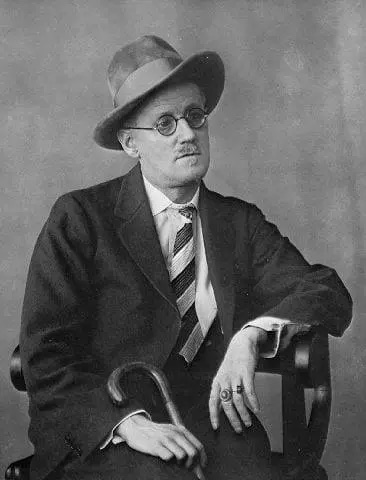
With Faulkner, the journey was clear: over time, I moved away from his furious experiments and found greater solace in his more grounded novels. But with James Joyce, my experience has been different.
Ulysses has never left me with the fatigue that so often follows excessive verbal acrobatics. On the contrary, each new reading has revealed deeper beauty.
In a recent fourth reading of Dubliners, I found in Joyce something solid and enduring: an author who, far from the wild provocations of modernism, could write with precision, with restraint, and with an impeccable sense of form. Each story in Dubliners is a small masterpiece — classic, perfect, profoundly human. There are no gratuitous dislocations here, only the clear, compassionate observation of tenderness, irony, and sorrow.
With Ulysses, the journey has been more complex, but ultimately even more rewarding. Setting aside the modernist excesses — the endless verbal possibilities that sometimes seemed an end in themselves — what remains is a periplus: the journey of a man through a living, breathing city.
Leopold Bloom walks through Dublin not only in space, but through the labyrinth of his own mind and soul.
And this is no ordinary journey. Bloom, like a modern Odysseus, carries a profound crisis of identity. He is a stranger in his own city, quietly burdened by the social mark of being Jewish, always inhabiting the uncomfortable space of the outsider. To this spiritual homelessness is added the silent torment of betrayal: the infidelity of his wife, which echoes through every street he crosses, every thought he tries to suppress.
In this, Bloom perfectly embodies the Homeric archetype — not merely the traveler, but the wounded man, the seeker of a home that perhaps no longer exists.
The miracle is even greater when we remember that Joyce wrote Ulysses far from Ireland, reconstructing his city from memory, with the precision of one who knows that distance sharpens love.
The imagined Dublin ended up shaping the real one.
And as Joyce conjured the city, he also conjured himself — the man he had been, the man he could never fully return to.
Thus, beyond its formal experiments, Ulysses is, at heart, a profoundly classical novel. Each chapter becomes a modern translation of Odyssean trials: the sirens, the cyclops, Circe — they all reappear in Dublin’s pubs, markets, and shadowed alleys.
Reading Ulysses makes one want to walk the streets, to sit in the pubs, to search for the echoes of ancient myths in the everyday life of the city.
This phenomenon does not repeat itself with other extreme modernist works, where the playful destruction of form often exhausts the reader. Some books, after one or two attempts, are abandoned without regret.
Ulysses, however, draws you back, again and again.
There is always something human, something alive, beneath the layers of style.
Returning to A Portrait of the Artist as a Young Man and to Dubliners only confirms this: Joyce, at his core, was always a classical writer.
Portrait is less modernist than often claimed, and Dubliners, with its quiet, devastating precision, remains one of the most beautiful collections of short stories ever written.
This, perhaps, is the essential difference I feel between Faulkner and Joyce:
With Faulkner, I return to classicism as a shipwrecked man seeks firm land after the storm.
With Joyce, I realize that even within the heart of modernism, there was always a lighthouse burning — guiding the way back to a beauty that never fades.
 Israel Centeno Author
Leave a comment