
(John 21:15–17)
Israel Centeno
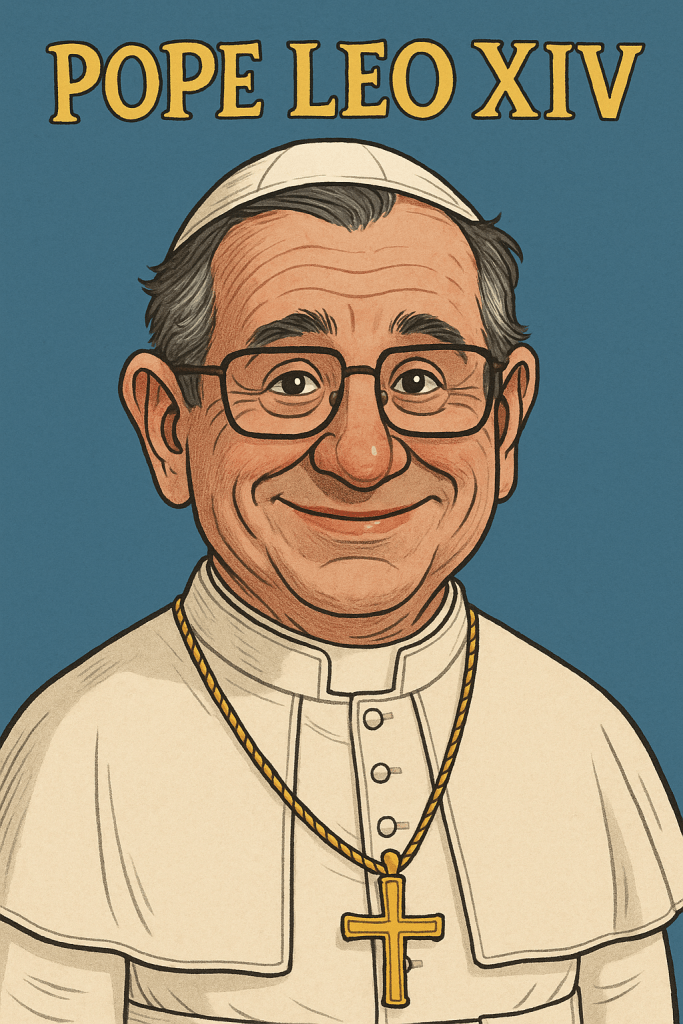
The election of Pope Leo XIV, born Robert Francis Prevost, marks a significant moment in the history of the Catholic Church. His life and ministry reflect a deep dedication to pastoral service and to building bridges between cultures and communities.
Prevost, originally from Chicago, spent decades serving in Peru, where he became a naturalized citizen in 2015. His missionary work in indigenous and rural communities demonstrates a profound commitment to those whom the State has often neglected. His Augustinian formation and extensive experience in Latin America position him as a leader capable of guiding the Church toward greater unity and mutual understanding.
In a world marked by division and turmoil, the figure of Leo XIV offers an alternative rooted in unity and reconciliation. His approach does not conform to conventional labels of liberal or conservative; instead, he promotes a balanced vision that prioritizes human dignity and social justice.
Under his leadership, the Church becomes a place of encounter and dialogue, far removed from the empty promises of populist leaders who, in the name of “the people,” sow division and conflict. Leo XIV reminds us that true transformation does not come from simplistic solutions or charismatic figures claiming to be saviors, but from a genuine commitment to the principles of the Gospel and the Church’s social doctrine.
His background in mathematics and canon law, combined with his pastoral experience, gives him a unique perspective on the challenges of our time. Rather than falling into the trap of populism, which often feeds on an “us versus them” mentality, Pope Leo XIV advocates for a Church that serves as a mediator and promoter of peace.
As Catholics, we are reminded that the Pope is the successor of Peter, the servant of the servants of God. His role is to lead the Church not as an idol, but as a shepherd who guides us toward Christ. The election of Leo XIV calls us to renew our faith and commit ourselves to the Church’s social teaching, always seeking the common good and justice.
In this new chapter, Catholics are called to reject the idolatry of political figures and reaffirm our faith in eternal values that transcend fleeting ideologies. The election of Leo XIV is not merely an ecclesial event—it is an invitation to build a more just and compassionate society, guided by faith, reason, and love for neighbor.
May this new pontificate be a time of spiritual renewal and deep commitment to the values of the Gospel.
Habemus Papam!
 Israel Centeno Author
Leave a comment