
Israel Centeno
(A letter to my nephew)
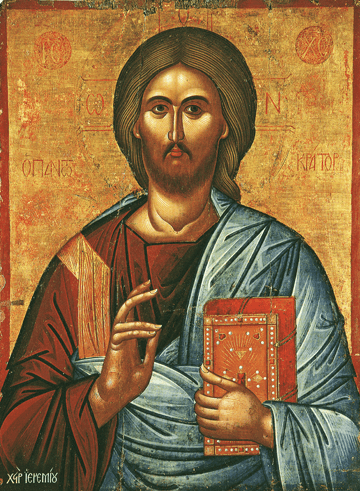
You ask a good question, maybe the only one that matters: Where is the body of Christ—now, really? Not just in theory, not in pious sentiment, but in truth. It’s not just curiosity that leads us here, is it? It’s something deeper—a disquiet, like we’ve cracked open the old door marked “Ascension” and something bright and strange waits behind it.
We talk about Christ sitting at the right hand of the Father, but that’s not a position on a map. It’s not about altitude or coordinates. It’s not about where, but how. Because if his body—still wounded, still flesh—has risen beyond decay and distance, yet remains a body, then maybe we’ve misunderstood what body really means all along.
You see, Jesus doesn’t vanish from Emmaus just as a magic trick. Nor does Philip disappear from the Ethiopian’s side as a flourish. These aren’t illusions—they’re signs. Not of absence, but of another kind of presence, a new kind of physicality. The body of Jesus after the resurrection is not less real, it’s more real. It’s reality pulled taut with glory.
And what about the Eucharist? It’s not just bread. But it’s not magic either. It’s not a GPS answer to “where is Jesus?”—it’s the opening of a veil, a glimpse into a world just beneath this one. The Eucharist doesn’t locate Christ like a satellite ping. It manifests him. It shows us the world as it truly is. That’s why we need the Holy Spirit—to sense Christ, not as he was, but as he is. And yes, this gets into mystery, but not the kind meant to hide the truth—rather, the kind that invites you to step into it.
You’ve probably never heard of Sophiology, but it’s this old stream of Christian thought that speaks of divine Wisdom—Sophia—not as a concept, but as the very architecture of reality. Christ is not separate from the world. He is the world transfigured. His risen body isn’t “out there somewhere”—it’s the seed of what the world is becoming. And so the Ascension is not Jesus escaping, it’s Jesus unveiling what lies beyond our dull senses.
Jesus said the Kingdom of Heaven is like a mustard seed. Tiny, overlooked, yet full of explosive potential. And he also said, “The Kingdom is within you.” Not metaphorically—ontologically. The immortal soul isn’t a cloud that floats off after death. It’s the deepest room in you, and yes, the Kingdom lives there. Saint Elizabeth of the Trinity used to say she carried the Trinity inside her and would go there, hide there. That was her act of faith, as quiet as it was radical.
But the Kingdom isn’t only inside. It’s also outside time and space. It surrounds us. Holds everything together. Christ, as the Logos—the reason and rhythm behind all things—is singing the universe into existence even now, note by note. The Kingdom is the music we’ve forgotten how to hear.
And the Eucharist? It’s not a metaphor. It’s the point where all things meet: time and eternity, flesh and spirit, heaven and earth. It is not about reenacting a distant memory. It is the memory becoming present. It is Golgotha and the wedding feast in one. The altar isn’t a stage. It’s a threshold.
Every Mass, anywhere in the world, is not a new sacrifice—it’s the same one. One flame, seen through different windows. One Christ, once offered, eternally present. We aren’t repeating Calvary. We’re entering it.
And the veil? It’s thinner than you think. It draws back not with force but with consent. You don’t tear through it—you notice it. You pass through it like breath through silence. The portal opens not just at the altar, but in any soul that’s hungry enough to see.
So—where is the glorified body of Christ?
In the Kingdom. In your soul. In the Eucharist. In that small, stubborn act of faith the size of a mustard seed. Because that little seed carries the gravity of a new creation.
The portal is already open. The veil is thin. And the invitation remains: Come and see.
 Israel Centeno Author
Leave a comment