
Magoya, Milagros, and a War Without Clear Fronts
By Israel Centeno
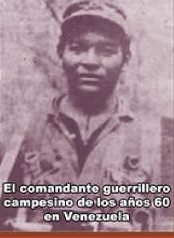
When Magoya and Milagros arrived, others were already there. They weren’t guests. They weren’t family. They were faces that couldn’t appear in any photo, people who carried false names and knew they were sleeping every night on a thread. They were accused of sabotage, of belonging to armed cells, of conspiring. Some had done these things. Others simply lived close to those who had.
The apartment was in Casalta, one of those identical buildings from the Banco Obrero housing project. Three rooms, a narrow living room, a shared bathroom, and a gas stove. It was far too small to contain so much tension. Bringing together several actively wanted people in one place was, in hindsight, a recklessness. But that’s how things were done. Necessity didn’t ask permission, and neither did war.
Our uncle—the eldest in the house—didn’t ask many questions. He moved quickly, without drama, like someone who knew well the boundaries of discretion. He offered Magoya and Milagros coffee, bread, a low radio with a bolero playing in the background. He didn’t pretend everything was normal. He just did what needed to be done. And between those minimal gestures, refuge was shaped.
Magoya barely spoke. He had a dry, angular face, a patchy beard. He didn’t look like a leader and didn’t try to be one. Milagros was younger, from the countryside. She had a quiet warmth, faded by fatigue. She played the cuatro, not with traditional folk songs, but with Mexican corridos—the kind of music you’d hear in rural Venezuela where Colombian or northern Mexican broadcasts reached with more clarity than local ones.
We moved through those days carefully. Lowered our voices. Took turns in the bathroom. Covered the pots when someone knocked. Danger wasn’t hypothetical: it was the sound of car brakes at the corner, a neighbor’s question, the long stare of a stranger at the bakery.
One day, our uncle decided we had to get out. “We can’t breathe in here anymore,” he said. He put Magoya and Milagros into his Fiat 125, a small, aging car that still did the job, and we all drove down to Naiguatá. There was no plan, no fixed destination. What mattered was to be in motion.
We stopped at a small café on the way down. Milagros ordered juice and stared at the sea from the sidewalk. She said nothing. Only after a while—when we were already seated, eating fried fish and tostones (or patacones, as Colombians call them)—she let out a quiet laugh, brief and low, like something she’d been holding back for weeks. It wasn’t a burst of joy. It wasn’t relief. It was rarer than that: a crack in the silence. A temporary permission not to be afraid.
At El Rey del Pescado Frito, we ate like tourists. Magoya had a beer. No one looked at us twice. We were just another family passing through, out for the day. For that hour, there were no acronyms, no pursuit, no maps hidden in the closet. Just warm food, salt in the air, and the illusion that normal life was still possible.
We returned the same way, quieter. Our uncle didn’t speak during the drive. Back home, the usual hum of low voices, cigarette smoke, the interior order of confinement resumed. But something had shifted. Maybe not outside, but within us.
Over time, we understood that history also happens in those spaces no one documents. A car heading down the highway. A laugh at the table. An uncle deciding that confinement was more dangerous than stepping out. No plaque commemorates it, but in that Casalta apartment, for a few days, a small truce was held. A truce without anthems. With fried fish.
Footnote: Magoya
Elegido Sibada, better known as Magoya, was a combatant of the FALN during the harshest years of Venezuela’s armed insurgency. His name circulated in intelligence reports and whispered conversations. He was trained politically in Cuba and China, and later supported the Nicaraguan Sandinista movement.
He never held public office. He left no memoirs. Nor did he seek recognition. After the pacification, he lived quietly, without fanfare. He died on February 19, 2016, in Montalbán, Carabobo State, at the age of 77. In his final years, those who knew him say he spoke little, read a lot, and barely mentioned the past. He left behind a few papers, a handful of photographs, and a vivid impression on those who had shared with him, if only for a few afternoons, the strange habit of resistance
 Israel Centeno Author
Leave a comment