
israel Centeno
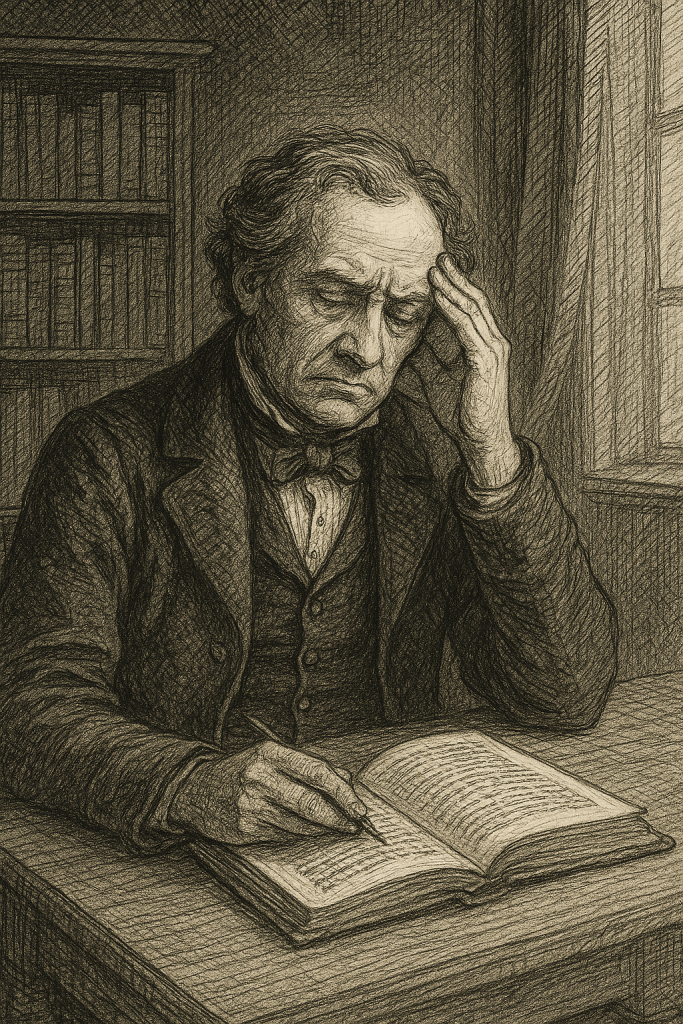
(A meditation inspired by Eleonore Stump, Teresa of Ávila, and Job)
I
In the age of artificial intelligence, computational models of the brain, and the obsession with reducing the human to verifiable patterns, an ancient question returns with renewed urgency: What is consciousness? Is it a biological function that emerges from complexity, a useful illusion for survival, a byproduct of language? Or is it, rather, the sacred threshold where something occurs that no machine can replicate: the encounter with the other, with meaning, with God?
Against the technical answers of neuroscience, many believers, philosophers, and thinkers have argued that there are forms of knowledge that cannot be derived from data, inferences, or mechanisms. There are forms of knowing that arise from a living relationship with a Thou. And in that experience —direct, immediate, transformative— something essential about the human being is revealed: that we do not merely think, but know from the soul.
This essay seeks to explore that kind of knowledge, drawing on a key distinction proposed by philosopher Eleonore Stump: Franciscan knowledge. We will approach it through three figures: Teresa of Ávila, Job, and the contemporary soul which —though surrounded by simulations— still longs for a truth that cannot be imitated.
II
In the medieval scholastic tradition, different ways of speaking about knowledge were developed. Among them, Eleonore Stump recovers two: Dominican knowledge, which is propositional, logical, inferential; and Franciscan knowledge, which is relational, experiential, non-propositional. The first is expressed in statements; the second, in encounters.
Teresa of Ávila, mystical Doctor of the Church, put it with disarming clarity: one of the signs of a true experience of God is that the one who lived it cannot doubt its reality. That certainty is not based on arguments or pleasant feelings. It is based on presence. Not in the soul folded in on itself, but in the I–Thou that breaks into the very center of consciousness.
It is the kind of certainty that cannot be proven, but that transforms utterly. The soul, once touched, is no longer the same. Not because of what it learned, but because of what it saw.
III
In the biblical story of Job, the protagonist journeys through the deepest void: suffering without explanation. His friends attempt to convince him there must be a hidden reason, a deserved punishment. But Job demands justice. He does not ask for theories — he asks for God Himself.
And when God finally speaks to him from the whirlwind, He offers no answers. He offers His presence. And Job, transformed, declares:
“I had heard of you by the hearing of the ear, but now my eye sees you.” (Job 42:5)
This line is a manifesto of Franciscan knowledge. Job does not know more than before, but now he truly knows. What he receives is not an explanation, but an encounter. And that alone is enough to calm his soul.
Consciousness, in this sense, is not a machine that analyzes, but a dwelling that can be inhabited. And that kind of experience can only occur in a being with a soul.
IV
The mirror neuron theory has been cited as an explanation for empathy, language, even consciousness. But these explanations, fascinating as they are, confuse correlation with cause. That certain neurons fire when seeing another act does not mean we understand the other through mechanical processes — let alone that we love.
Modern machines can simulate human language. But they cannot experience the certainty of having been seen, touched, understood. They cannot live the kind of unwavering conviction that Teresa of Ávila describes when she says she was in the presence of God.
Eleonore Stump rightly argues that such knowledge is only possible in a soul, because it requires more than data — it requires communion. It is relational knowledge, transformative not because of the information it conveys, but because of who gives it. And that cannot be programmed. It cannot be computed. It must be lived.
Consciousness, when authentic, does not represent — it recognizes. And in that recognition of the Other, of the Thou, what no algorithm can replicate is revealed: the experience of presence.
V
If consciousness were a byproduct of matter, why do I question it? Why am I unsettled by what I cannot see, touch, or need to survive?
The human being is the only creature capable of suspending necessity and gazing at the heavens — not for orientation, but to ask. And in that unnecessary question, something essential is revealed: inner freedom.
That freedom is not functional. It is not adaptive. It echoes something greater. It is the sign that the human mind is a soul in act, not a biological tool. That is why it is not enough to reduce thought to chemistry. For what I think freely is the sign that I am more than what composes me.
The soul cannot be described by its parts, just as fire cannot be described by its flames. The soul is unified presence. And only from there can the “I” who loves be spoken — and the “Thou” who awakens it.
VI
Teresa of Ávila, Job, and millions of silent witnesses have said the same in different languages: that there exists a kind of knowledge that is not deduced, but given; not calculated, but revealed; not born from analysis, but from encounter.
That knowledge —Franciscan knowledge, as Eleonore Stump calls it— is the sign that human consciousness is not an epiphenomenon. It is an altar.
It is there that the miracle of being loved takes place. It is there that the voice becomes audible which does not come from the world, yet sustains it. There, in the indivisible core of the soul, the human being does not merely think: he lets himself be touched.
And for that reason, no artificial intelligence will ever replace us. For it is not the ability to think that makes us human — but the ability to respond to a Presence that precedes us.
 Israel Centeno Author
Leave a comment