
The Nonbeliever’s Journey Toward the Mystery
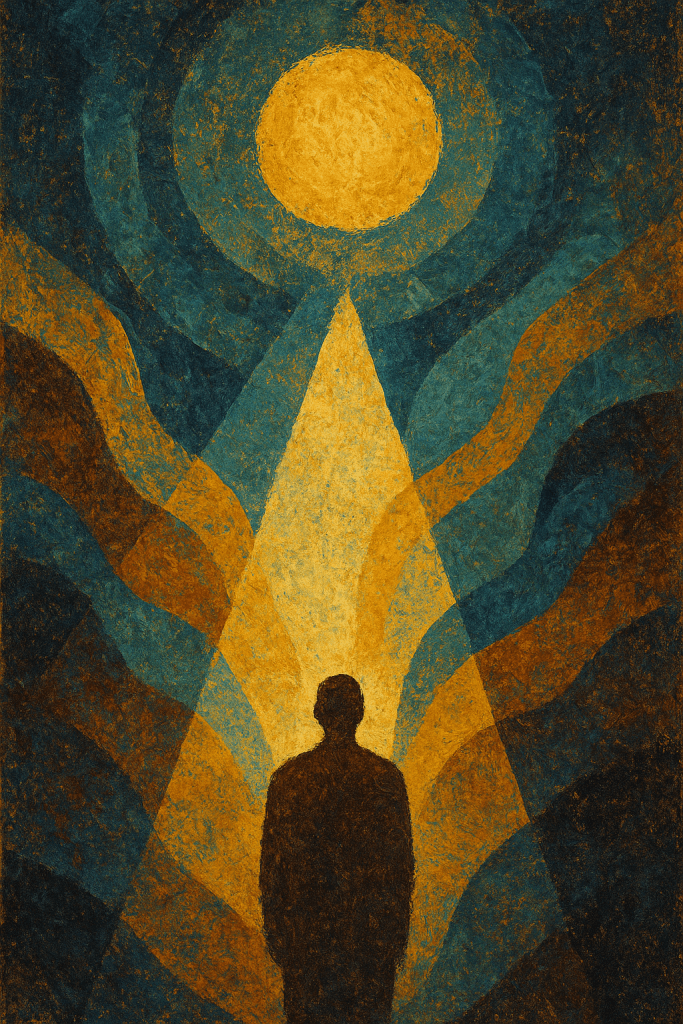
In an age marked by spiritual fragmentation, cultural disorientation, and the exhaustion of absolute narratives, a subtle yet persistent longing still pulses within the human heart: the thirst for fullness. This is not merely a religious impulse in the conventional sense, but a deeper, more primal yearning—one that precedes belief systems and creeds. It is the question that burns without a name, the inner movement that seeks meaning even when surrounded by night.
This thirst recognizes no ideological allegiance. It can dwell in the soul of the agnostic, the skeptic, or even the self-declared atheist. It may arise in the silent awe of a scientist contemplating the order of nature, in the trembling of an artist before unexpected beauty, or in the weariness of a volunteer who gives their days to care for the forgotten. There is no need to utter the name of God to feel summoned by something that exceeds all utility, something that calls without words from the center of one’s being.
Saint Augustine sensed this mystery with the wisdom of one who had wandered far and returned, wounded and changed: “You have made us for Yourself, O Lord, and our hearts are restless until they rest in You.” Restlessness of heart is not a flaw but a sign. An interior compass indicating that the world’s promises—power, pleasure, consumption, ideology—cannot quench the soul’s thirst. Because what the heart longs for is not another possession, but communion; not a formula, but a truth that embraces one’s entire existence.
Simone Weil, with the unusual clarity of one who sees from the margins, understood that the path toward the Mystery can begin with an act of attention. “Absolutely unmixed attention is prayer,” she wrote. That gaze which does not seek to possess or reduce the other to function or use is already a religious act, even when unnamed. Without dogma or baptism, Weil insisted that the human soul is summoned to respond to the suffering of others—even if that means walking alone and bearing the weight of the world. Pure attention to reality can be a form of prayer, a door to the divine.
Beauty, too—so often trivialized in a culture of spectacle—can be a sacred wound. When someone is moved by a sunrise, a melody, a work of art, or the smile of a child, something deep within is broken open. This stirring is more than aesthetic delight; it is a participation in the harmony that sustains the world. Edith Stein, philosopher and mystic, affirmed that “true beauty arises from a pure heart and an illumined mind.” Beauty, then, does not decorate life: it reveals it. It becomes a threshold. As Hans Urs von Balthasar wrote in his Glory, authentic beauty has form—and that form is Christ. Thus, one who honestly follows the traces of beauty may, without realizing it, stumble into Truth.
Service to others, especially to the suffering, is another quiet path toward the Mystery. No creed is needed to wash the feet of the elderly, to listen to the sick, to accompany a migrant, or to comfort a child. In each of these acts, the compassion of Christ is made flesh. “Whatever you did for one of these little ones, you did for me,” says the Gospel. Edith Stein translated this into her own words: “True love consists in giving back to the other their own existence, their own dignity, untouched.” To love in this way—without seeking recognition—is to embody a faith that perhaps the lips cannot yet articulate.
There are souls who walk without a map but not without direction. Who do not recite creeds, yet love justice. Who never kneel in a church, yet tremble before beauty. Who do not read Scripture, yet open their homes to those in need. They are seekers. Thirsting ones. Children of longing. And that longing—when sincere and unmasked—is already a form of openness to the divine. For only fullness can quench the soul’s thirst. And fullness, at its highest, has a face: the face of Christ, who comes to meet us even in the night of unknowing.
This essay does not seek to draw lines between believers and nonbelievers. On the contrary, it aims to recognize in every honest heart a spark of that light which never goes out. To show that the journey toward Goodness, Truth, and Beauty—however slow, ambiguous, or uncertain—is already a living prayer. And that those who love justice, tend to the suffering, cultivate beauty, and seek truth with courage are already very near the Kingdom. Even if they do not know it. Even if they cannot name it. Even if they walk with thirst and without map. For the Mystery does not require comprehension to reach the soul. It only needs to find a heart that is open.
 Israel Centeno Author
Leave a comment