
Israel Centeno
Jesus and the Impossibility of Myth
by Israel Centeno
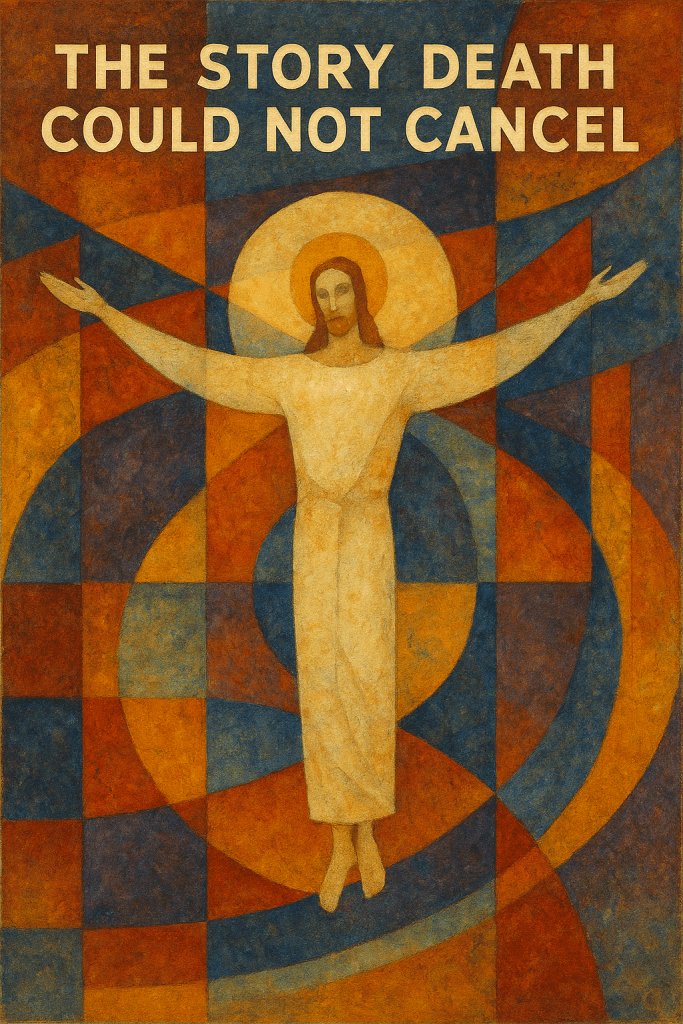
Jesus has often been reduced to a mythical construct, just another symbol within the vast religious imagination of antiquity. Certain sectors of contemporary academia—especially from progressive or postmodern perspectives—have attempted to place him in the same category as Greek heroes or solar deities, as a figure derived from earlier traditions. But this comparison collapses when one takes seriously the narrative, historical, and theological density that surrounds the figure of Jesus.
First, his story does not unfold like a Greek tragedy or a heroic myth. The Gospel accounts—even with their stylistic differences—possess a coherence born from the Jewish matrix in which they are rooted. Matthew, Mark, Luke, and John write from profoundly Hebrew cultural and theological frameworks. Even when Luke, likely not Jewish, writes his Gospel, he does so under the imprint of Paul of Tarsus—a rabbi, expert in the Law, and rigorous theologian. The result is a narrative interwoven with Scripture, breathing prophecy, genealogy, Law, numerology, and promise.
This interweaving is not trivial. In an age when the transmission of texts was limited, difficult, and fragmented, constructing a narrative that connects Genesis to Isaiah, the Psalms to Daniel—and makes of that tapestry an announcement and fulfillment in Jesus—is not the work of a single author nor of a late editorial school. It is a spiritual architecture impossible to fabricate. It would require exhaustive knowledge of Hebrew texts, of messianic expectations, of Jewish narrative forms. And it would also require having foreseen, centuries in advance, each gesture, each word, each number. Because the numbers in the Gospels also speak.
Biblical numerology permeates the texts. Seven, the number of fullness; twelve, the figure of the new Israel; three, the symbol of confirmation. Peter denies Jesus three times, but is also restored three times: “Do you love me?” Jesus asks him. And three times, he is called to shepherd. It is not repetition for emphasis—it is architecture of meaning. Just as when one is called to forgive “seventy times seven,” or when the third day marks the fullness of the paschal mystery. The Gospels do not merely narrate: they encode an inner logic, deeply Semitic, that links symbol to action.
To say that Jesus is a Greek myth is to ignore the fact that no other figure in history—not Buddha, not Krishna, not Hermes, not Mithras—claimed what he claimed: to be the eternal Logos, the Son of God, the Alpha and the Omega, the one by whom and for whom the universe was created. No one else claimed to have pre-existed creation and to remain beyond time. He is not one more cosmic figure. He is the very center of being, according to his own testimony. That is incompatible with the narratives of natural divinities or apotheosized heroes.
To this is added the testimony of those who were not Christians. The Roman historian Tacitus refers to Christ as the founder of the sect persecuted by Nero. Pliny the Younger, in his letters to the emperor, describes Christian practices of worshipping Christ “as a god.” Josephus, in the Testimonium Flavianum, speaks of Jesus as a wise man, executed under Pontius Pilate. And although there is debate over the authenticity of some passages, the basic reference remains. But perhaps most striking is what Jesus’ enemies said about him.
In the Talmud, a central text of post-1st-century rabbinic Judaism, there are several indirect and direct references to a figure named Yeshu. These are not friendly sources. But that is precisely what gives them weight: they do not aim to glorify, but to discredit. And yet, they accuse him of performing miracles… through magic. They call him a sorcerer, a charlatan, a seducer of Israel. Which, in negative language, still acknowledges that he had power. They do not deny the wonders—only their source. That detail is crucial: it confirms, even from the opposition, that Jesus was perceived as someone with authority and the ability to perform signs.
And then there is Paul. The persecutor. The Pharisee who hated Christians. Who never knew Jesus in life, but who had such a radical encounter that it transformed his life and theology. To him we owe the first Christian creed, written in 1 Corinthians 15, barely twenty years after the crucifixion, where he affirms that Christ died, was buried, and rose on the third day “according to the Scriptures.” Paul does not write myths; he writes with the urgency of a witness.
Against the Cancellation of the Risen One
It is no longer enough to distort the Jesus of faith; now, certain sectors of academia, under the banner of progressive rationalism, seek to eliminate even the Jesus of history. The strategy is twofold: on one hand, the Nazarene is reduced to a narrative archetype interchangeable with heroes from other cultures—a reformed Prometheus, a wandering Buddha, a more emotive Socrates; on the other hand, any possibility of a factual core that could support the most radical proclamation of Christianity—the Resurrection—is denied.
This systematic denial, however, faces a serious obstacle: the minimal yet powerful evidence recognized by historians of various schools of thought—even skeptical ones—that admits at least three fundamental facts:
- Jesus was crucified under Pontius Pilate.
- His tomb was found empty by a group of female disciples.
- A large number of his followers, including declared enemies like Paul of Tarsus, claimed to have seen him resurrected and radically changed their lives because of that encounter.
Critical scholarship may question the theological interpretation of these events—the Resurrection as a divine act—but it cannot erase the fact that Christianity begins precisely with that proclamation. It was not a moral teaching, nor a revolutionary theory, that sparked the growth of early Christianity—it was the persistent testimony that Jesus, dead and buried, had been seen alive, glorious, and present.
The German scholar Pinchas Lapide, a non-Christian Jew, went so far as to argue that the only plausible explanation for the transformation of the apostles and the birth of the Church is that something real happened to them. It was not a collective hallucination, nor a late symbolic construction. And William Lane Craig, Gary Habermas, and other specialized historians have compiled a vast critical, skeptical, and interconfessional literature that—while not embracing the faith—nonetheless acknowledges the historical solidity of the empty tomb.
Why, then, this drive to erase the Risen One? Why do certain academics insist on reducing Christianity’s foundational event to a collective symbol, when the testimony is rooted in time, place, and witnesses—many of whom were martyred without ever recanting? Perhaps because accepting that the tomb was empty opens an uncomfortable door. Because if the body wasn’t there… where was it? Who moved it? Why did no one produce it to discredit the fledgling sect?
It has rightly been said that the Resurrection is not merely a doctrine; it is an event. If it did not happen, Christianity is a myth. If it did, it changes history. There is no middle ground. That is why it cannot be dismissed as a fable. Because a fable does not cause hundreds of men and women to renounce power, family, and life itself to proclaim that the One they saw die had returned to embrace them.
And it is precisely that radical nature that unsettles: the empty tomb as a crack in materialism, a challenge to the arrogance of the age. The Resurrection—not as pious consolation, but as a fact that alters the laws of the world. A claim that cannot be canceled without also rewriting the history of the most scandalous love the world has ever known.
The Gospel Narrative as the Heart of Messianic Judaism
by Israel Centeno
There is a claim that often goes unnoticed, even among scholars of early Christianity: the Gospels are not a rupture with Jewish tradition, but its culmination and transfiguration. Far from being products of late Hellenization, their texts are steeped in the breath and deep logic of Hebrew Scripture. Even in those cases where the intended audience seems to be non-Jewish—such as in the Gospel of Luke—the theological framework, the symbolism, the narrative structure, and the references remain inseparably Jewish.
The Gospel of Matthew is perhaps the clearest example: it is constructed as a messianic rereading of Israel’s history, with Jesus as the new Moses, the new David, the Son who recapitulates and fulfills the faithfulness Israel could not sustain on its own. Every phrase, every scene is anchored in the Law and the Prophets. The text is conceived as a living exegesis of Scripture—a Christological midrash.
Mark, for his part, though more concise, retains the symbolic force of prophetic signs. The eschatological urgency and apocalyptic language point back to Jewish intertestamental literature, to the longing for Israel’s restoration, to the cry of the suffering righteous one in the style of Isaiah.
Luke, often considered the most “Greek,” is nonetheless inseparable from the figure of Paul—the converted Pharisee, the doctor of the Law, the most radical interpreter of Jewish tradition through a Christological lens. The Lukan Gospel and the Acts of the Apostles cannot be understood apart from Paul’s thought. And Paul, despite his missionary openness, never ceased to consider himself a Jew. “A Hebrew of Hebrews,” as he says himself. His theology, his use of Scripture, his vision of the Messiah—all of it is an internal reading of Israel’s story in the light of Christ.
And John, the most theological of the four, may be the most deeply Jewish. His prologue—“In the beginning was the Logos”—has often been interpreted as Hellenistic in influence. But in truth, it is a sublime reworking of the Bereshit of Genesis. The Logos is not a borrowed Greek concept, but the Dabar, the living Word that created the world. The entire Gospel of John is structured as a narrative of fulfillment: the signs, the Jewish feasts, the Temple, the Torah itself—all find their fullness in Jesus. John does not break with tradition; he brings it to its depths.
Thus, to read the Gospels as Jewish texts is not an archaeological concession, but a hermeneutic necessity. For the figure of Jesus can only be understood within the continuity—and fulfillment—of the biblical story of Israel. There is no Gospel without Exodus. No Cross without the Paschal Lamb. No Incarnation without the Davidic promise. No Resurrection without the hope of restoration.
In sum, the Gospels are not Hellenistic myths. They are the prophetic crown of a literary, theological, and historical lineage that begins with Abraham, passes through Moses and the prophets, and is revealed in the Son. In both form and content, they are Jewish narratives proclaiming the eruption of the eternal into history.
Sources Used / Recommended for Further Study
- N.T. Wright, The Resurrection of the Son of God
(On the uniqueness of the Easter message within the context of Second Temple Judaism) - Gary Habermas and Michael Licona, The Case for the Resurrection of Jesus
(A scholarly defense of the historicity of the Resurrection, including references to skeptical studies) - Pinchas Lapide, The Resurrection of Jesus: A Jewish Perspective
(Reflections by a Jewish scholar who considers the Resurrection historically plausible) - Jacob Neusner, Judaism and the Interpretation of Scripture
(On midrash, numerology, and Jewish narrative structures) - Richard Bauckham, Jesus and the Eyewitnesses
(On the validity of the Gospels as firsthand testimonies) - Margaret Barker, The Great High Priest: The Temple Roots of Christian Liturgy
(On the relationship between temple symbolism and the Christological narrative) - Michael Fishbane, Biblical Interpretation in Ancient Israel
(On symbolic exegesis and Hebrew hermeneutical structures) - Edith Stein, The Science of the Cross
(A mystical and theological reading of the Passion in Carmelite key, deeply rooted in the Jewish tradition)
 Israel Centeno Author
Leave a comment