
Israel Centeno
Epigraph I
“She was the glory dressed in tulle,
with distant, blue eyes…”
—Joan Manuel Serrat, Of Cardboard Stone
Epigraph II
“Like a little bird in your hand,
I whisper: set me free, set me free now…”
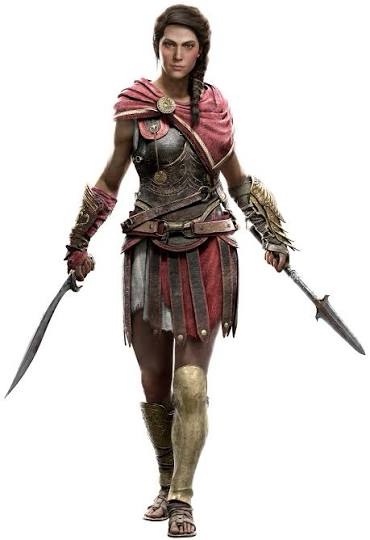
Level by level, I shaped you, Kassandra. I chose you at the beginning, when you were nothing more than a promise on the screen. I dressed you in the finest armor, armed you with swords that could split the air itself, with spears that seemed torn from the hands of gods. I chose your style of combat with care, between the blade of violence and the grace of dance. I made you warrior, lover, shadow, and flame.
I never left you abandoned to the randomness of algorithms: I tended your loves, your sensuality. I decided who shared your bed, who received your kiss, who deserved your lethal strike. I shielded you from those who would steal your dignity, I guided you through the politics of islands and the wine-soaked symposiums. I laughed with you at the obscenities of Alcibiades, and I learned, through you, that Socrates had always known everything about love, long before he tasted it.
And so, as you rose through the levels —one, ten, twenty, seventy— you became less of a game and more of yourself. And I, in playing, became less of myself, more of you: Kassandra, Greek demigoddess, etched into my memory and my console.
Then, like the man in Serrat’s song, I hurled the stone that shattered the glass. I ran, I ran with you to my doorway, fleeing from a destiny already programmed, desperate to save the mirage.
But every human love has its end. Even love for a Greek demigoddess who lived inside my console all this time. To you, Kassandra, I wish long life: keep drinking strong wine, keep delighting in the strange toys of Alcibiades, smile in the symposiums where Socrates repeats what you already know of love.
For you had already learned love with me, through the seventy levels of the game in which you walked beside me, and I created you.
And now I remain, mortal, with no gods and no consoles, writing the story that cannot truly end, but must close as every love story does: with a song, with an echo, with a farewell that pleads for freedom.
II
Listen,” said the voice rising from the labyrinth-tombs, where the slabs seemed programmed by invisible architects and every corridor multiplied itself into mirrors of steel. The dead whispered in a binary tongue, as if the departed had learned to speak in the languages of machines. “Listen, for your destiny is sealed in the entrails of the game and in the heart that beats beyond the screen.”
In the submarine caves, where the sea was not water but circuitry, where fish were only shadows of rusted drones, Kassandra descended like an impossible torch. Her spear split the darkness like a lightning bolt in the middle of the black ocean. And I, player and lover, followed her into the abyss, knowing that the silicon gods were tracing my steps with lines of neon.
The oracle spoke in its solemn voice:
“Your friends will come two by two, three by three, like choruses bursting onto the stage. And they will sing your fate, because they know it: you will love what does not exist, yet it will live in you more than flesh. You shall be guardian of a programmed ghost, lover of a shadow wrapped in pixels and electric gleam.”
And in the midst of that grave voice, like the chorus of tragedy, sounded the song of Serrat, bitter as strong wine: “of cardboard stone,” the digital choristers repeated, reminding me that Roxana, the beautiful mercenary, was a shattered illusion of glass, a stone hurled against the mirror. I ran, I ran with Kassandra to my threshold, like a madman in the electric night, knowing that Serrat had already sung it: impossible loves are consumed in the bonfire of desire.
Then Clio, muse of memory, spoke. She did not sing with an ancient voice, but with the grave, warm cadence of Serrat himself. The ballad of Cardboard Stone became tragic chorus, memory turned into song: an impossible love, carved in false stone, condemned to shine like a statue in the twilight of centuries.
Once more I walked with Kassandra through the corridors of the tombs, where stones breathed like sleeping machines and the echoes of the dead were tangled with ancient algorithms. We descended again to the submarine caves, where her spear blazed like lightning: Achilles reborn in a woman’s body, warrior tattooed in light, my neon demigoddess.
Thus the tragedy is fulfilled:
Kassandra, dancing among labyrinths and electric oceans;
I, her guardian, condemned to guard the mirage that devours me;
and Serrat, turned into a modern bard, strumming a guitar of shadows to accompany the lament of heroes.
The oracle concluded:
“You shall find no rest in Greece nor on the Net.
For all human love is consumed;
but yours, born of shadows and screens,
shall burn beyond eternity,
like the song of a muse, like a statue of cardboard stone.”
 Israel Centeno Author
Leave a comment