
Israel Centeno
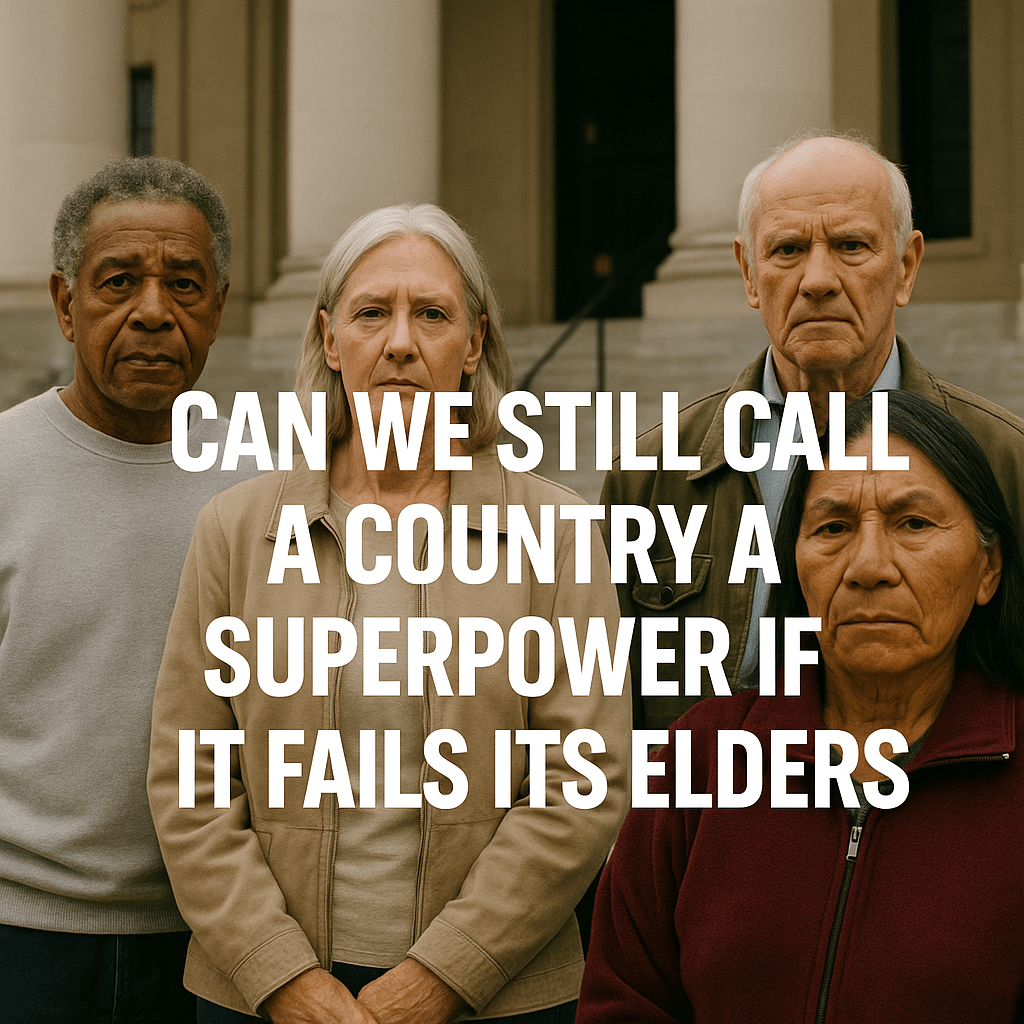
We call a country a superpower because of its military, its GDP, its technology, its reach. Yet the word collapses when we look at those who built that very strength: the elderly.
In the United States, millions enter old age with two certainties — they cannot retire with security, and they cannot find dignified work. This is not ideology; it is arithmetic.
In 2024, nearly one in five Americans over sixty-five remained in the workforce. Among them, almost 38 percent worked part-time, a sign of instability and need, not freedom. The myth of retirement collapses against rent, medical bills, and inflation. The “golden years” are becoming the gray years of uncertainty.
Without Social Security, poverty among the elderly would reach almost forty percent; thanks to it, it still stands around fourteen. One in seven older adults lives below the poverty line. The average Social Security check barely exceeds two thousand dollars per month — a sum that may cover rent in a modest town, but not the rising cost of life and medicine in a country that calls itself the richest on Earth. Fidelity estimates that a person retiring at sixty-five in 2025 will need roughly $172,500 after taxes to pay for healthcare alone. For most, that is an impossible mountain.
And when they cannot retire, many continue to work. But not by choice. Six out of ten workers aged fifty and older say they have seen or experienced age discrimination. Their experience, their wisdom, the years of craft become invisible. The market worships novelty, not knowledge. It rewards the young, not the faithful.
Race and gender widen the fracture. Poverty among Black or Native American seniors nearly doubles that of white seniors. Hispanic and Asian elders are not spared. The rhetoric of equality evaporates in the face of economic reality: in old age, all are vulnerable, but not all in the same way.
And what about the end? A country’s moral health is measured by how it treats those who can no longer produce. Yet the nursing homes, the supposed refuges for the last stage of life, remain understaffed, underfunded, and overburdened. The government’s new minimum staffing standards — 3.48 hours of daily care per resident, an RN always on duty — sound humane on paper. But most facilities fall short; shortages persist, lawsuits mount, and the elderly continue to die in loneliness or neglect.
If “superpower” means the ability to project strength across oceans but not compassion across generations, then the word has lost its soul. Greatness is not in missiles, but in mercy; not in GDP, but in dignity.
A truly great nation would ensure three things: that work at old age is a choice, not a punishment; that retirement is a right, not a privilege; and that dying is accompanied, not abandoned.
The data are clear: high participation of the elderly in the labor market out of necessity, growing poverty among retirees, chronic understaffing in care centers. These are not partisan accusations; they are the numbers from the Bureau of Labor Statistics, the Census, the SSA, the KFF, and Fidelity.
To be powerful is easy. To be humane is rare. A superpower that does not guarantee its elders a dignified ending is, in truth, a superpower in decline.
🇪🇸 ¿Podemos seguir llamando “superpotencia” a un país que no garantiza dignidad a sus mayores?
Llamamos “superpotencia” a un país por su ejército, su producto interno bruto, su tecnología, su dominio del mercado. Pero esa palabra se desmorona cuando miramos a quienes construyeron esa grandeza: los ancianos.
En Estados Unidos, millones de personas llegan a la vejez con dos certezas: no pueden retirarse con seguridad y no pueden encontrar trabajo digno. No es ideología, es aritmética.
En 2024, casi una de cada cinco personas mayores de sesenta y cinco años seguía en la fuerza laboral. Entre ellas, cerca del treinta y ocho por ciento trabajaba a tiempo parcial, señal de necesidad, no de libertad. El mito del retiro se deshace ante el alquiler, las facturas médicas y la inflación. Los “años dorados” se transforman en años grises de incertidumbre.
Sin la Seguridad Social, la pobreza entre los mayores alcanzaría casi el cuarenta por ciento; gracias a ella, aún ronda el catorce. Uno de cada siete ancianos vive por debajo del nivel de pobreza. El cheque promedio apenas supera los dos mil dólares mensuales: suficiente quizá para un alquiler modesto, pero no para la vida ni para la salud en el país más rico del mundo. Fidelity calcula que una persona que se jubile a los sesenta y cinco años en 2025 necesitará unos ciento setenta y dos mil quinientos dólares netos solo para cubrir gastos médicos. Para la mayoría, es una montaña imposible.
Y cuando no pueden retirarse, siguen trabajando. Pero no por gusto. Seis de cada diez trabajadores mayores de cincuenta años aseguran haber sufrido o presenciado discriminación por edad. Su experiencia, su sabiduría, los años de oficio se vuelven invisibles. El mercado adora la novedad, no el conocimiento; recompensa la juventud, no la fidelidad.
La raza y el género agrandan la fractura. La pobreza entre las personas negras o nativas americanas mayores casi duplica la de los blancos. Los hispanos y los asiáticos tampoco están a salvo. La retórica de la igualdad se evapora ante la realidad económica: en la vejez, todos somos vulnerables, pero no todos del mismo modo.
¿Y el final? La salud moral de una nación se mide por cómo trata a quienes ya no pueden producir. Sin embargo, los asilos y centros de cuidados, esos refugios supuestamente dignos, permanecen con poco personal, bajos salarios y recursos insuficientes. El nuevo estándar federal exige 3.48 horas de atención por residente y enfermeras presentes las veinticuatro horas. Sobre el papel, suena digno; en la práctica, la mayoría no lo cumple. Persisten los juicios, las vacantes, las muertes en soledad.
Si “superpotencia” significa capacidad para proyectar fuerza a través de los océanos pero no compasión a través de las generaciones, la palabra ha perdido su alma. La grandeza no está en los misiles, sino en la misericordia; no en el PIB, sino en la dignidad.
Una nación verdaderamente grande garantizaría tres cosas: que trabajar en la vejez sea elección, no castigo; que el retiro sea derecho, no privilegio; y que morir sea un acto acompañado, no un abandono.
Los datos son claros: alta participación laboral de los mayores por necesidad, pobreza creciente entre jubilados, centros de cuidados crónicamente desbordados. No son acusaciones partidistas: son cifras del Bureau of Labor Statistics, del Censo, de la SSA, de la KFF y de Fidelity.
Ser poderoso es fácil. Ser humano es raro. Una superpotencia que no garantiza a sus viejos un final digno es, en verdad, una superpotencia en decadencia.
#aging #economy #dignity #UnitedStates
 Israel Centeno Author
Leave a comment