
Bilingue. Spanish and English
ESPAÑOL
Si existe una década crucial para entender nuestra era, no es la de las guerras mundiales, sino la que se abrió entre ellas: la posguerra de la Primera Guerra Mundial, los años febriles de la República de Weimar.
Fue un experimento liberal, democrático, socialdemócrata: un intento heroico —y desesperado— de reconciliar al hombre moderno con la libertad.
Y fracasó.
Ese fracaso no se ha ido: sigue repitiéndose, disfrazado, como un eco que resuena en los márgenes de nuestra civilización.
Weimar fue el laboratorio donde el alma moderna se desnuda: el esplendor del arte, el vértigo del progreso, la inflación que convertía los billetes en polvo, el hambre, la corrupción, la danza de máscaras del cabaret.
Allí nacieron los mismos fantasmas que hoy nos acechan: el nacionalismo redentor, el colectivismo salvador, el deseo de orden absoluto.
El “hombre nuevo” de entonces es el mismo que hoy se asoma a las pantallas: saturado de información, vacío de sentido, cansado de libertad, deseoso de amo.
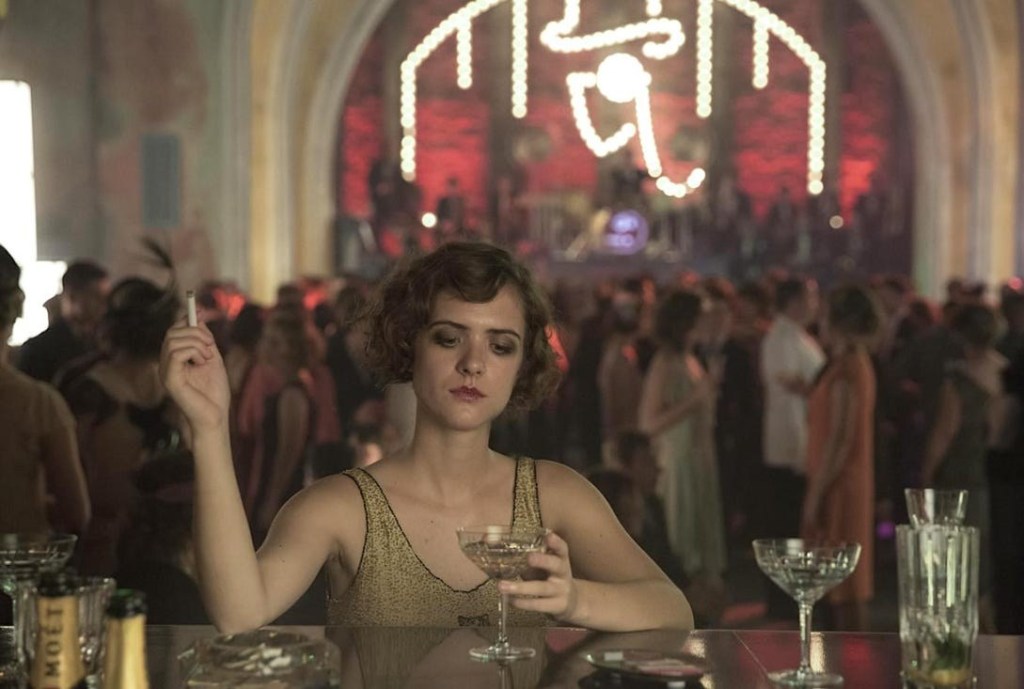
La serie Babylon Berlin, basada en las novelas de Volker Kutscher, reconstruye ese mundo con una precisión que roza lo profético.
Lo que en los libros es un relato policial —una investigación, un crimen, una mujer que sobrevive entre sombras—, en la serie se convierte en un fresco visual del derrumbe moral y estético de Europa.
Kutscher y la cámara dialogan sin repetirse: la literatura escarba en la conciencia, la serie captura el delirio de la superficie.
Ambas son radiografías de una civilización que no soporta su propia lucidez.
Leer a Kutscher después de ver la serie es volver al origen: abandonar el espectáculo y enfrentar la fractura.
En sus novelas, el crimen es apenas el hilo conductor; el verdadero misterio es la condición humana, el alma partida entre razón y deseo.
La novela policial, tan vilipendiada por el purismo académico, sigue siendo el último refugio de la inteligencia narrativa: allí la verdad se busca entre sombras, la moral se mide en grises, y la justicia es una forma de compasión.
Kutscher escribe desde la conciencia de que el detective no busca culpables, sino sentido.
El Berlín que describe no es solo escenario: es una mente colectiva en trance.
Cada personaje —Rath, Charlotte, los anarquistas, los adictos, las prostitutas, los policías corruptos— vive una guerra interior.
Son criaturas rotas que intentan sobrevivir a una época donde la libertad es un lujo y el deseo, una enfermedad.
La sexualidad en Babylon Berlin no es adorno ni provocación: es confesión.
El cuerpo, liberado de Dios y de culpa, se convierte en el nuevo altar del placer y del dolor.
En los cabarets y prostíbulos, el erotismo se mezcla con la miseria, y el amor con la transacción.
El deseo se presenta como emancipación, pero en el fondo es otro síntoma de orfandad: el intento desesperado de sentir algo verdadero en medio del artificio.
El cuerpo sustituye al alma, pero no logra suplantarla.
El goce se repite hasta volverse mecánico, y en su exceso aparece la tristeza: esa melancolía que ya no busca redención, solo olvido.
La locura acompaña ese desorden.
Weimar fue el tiempo de Freud, Jung y Kraepelin; el tiempo en que la razón científica exploró el inconsciente mientras los manicomios se llenaban de soldados mutilados del alma.
La guerra no terminó en 1918: continuó dentro de las cabezas.
El trauma, el temblor, las visiones y las adicciones son los restos invisibles del frente.
Gereon Rath, el protagonista, encarna esa fisura: un hombre brillante, disciplinado, devorado por el recuerdo y la morfina.
Su adicción no es vicio, sino intento de silenciar el ruido interior.
Las drogas son el verdadero lenguaje de la época: morfina, cocaína, éter, alcohol.
Sustitutos químicos del sentido, refugios momentáneos frente al abismo.
La droga cumple el mismo papel que el poder, el sexo o la ideología: anestesiar.
Pero también revela la desesperación de una humanidad que ha perdido el centro.
La conciencia se desintegra, el alma se disuelve, el cuerpo flota en el éxtasis químico como un simulacro de trascendencia.
Rath, en sus episodios de abstinencia y lucidez, vive el conflicto esencial del siglo XX: la imposibilidad de escapar de sí mismo.
La locura, entonces, deja de ser patología y se vuelve espejo.
Los delirios, las alucinaciones, los gestos compulsivos son modos de expresar lo que la razón ya no puede formular.
La normalidad, en cambio, es la verdadera enfermedad: el pacto silencioso de una sociedad que ha decidido no sentir.
Weimar fue una civilización que quiso curarse con placer, y terminó enferma de libertad.
La sexualidad sin amor, la razón sin alma, la droga sin conciencia: tres formas del mismo vacío.
Y ese vacío sigue aquí, disfrazado de progreso, algoritmos y bienestar.
Por eso Babylon Berlin fascina: porque debajo de su esplendor visual late la misma pregunta que atormentó a Dostoievski, Nietzsche, Freud y Roth:
¿qué queda del hombre cuando ha perdido el alma, pero sigue deseando lo infinito?
La serie y las novelas no ofrecen respuestas, pero nos obligan a mirar.
Nos recuerdan que el mal no es un accidente histórico, sino una posibilidad constante del ser humano.
Y que cada vez que la razón pretende sustituir a la verdad, cada vez que el cuerpo reemplaza al alma, cada vez que la conciencia se entrega a la anestesia, el espíritu de Weimar vuelve a resucitar.
Por eso sigo leyendo a Kutscher y a Philip Roth, el gran cronista de la caída moderna, el hombre que entendió que el cuerpo es la metáfora final de la civilización: el campo de batalla entre la culpa y la lucidez.
Roth, como Kutscher, nos enseña que el humor es la última defensa del alma frente al absurdo.
Y que quizá lo único que nos salva del totalitarismo —de cualquier signo— es la conciencia irónica de nuestra fragilidad.
Babylon Berlin no es solo entretenimiento: es un espejo.
En su superficie brilla el exceso, la música, el sexo, la violencia; pero en el fondo, en su respiración, late un lamento teológico: el del ser humano que, habiendo querido ser Dios, termina rogando por un poco de silencio.
ENGLISH
If there is a decade crucial to understanding our age, it is not the era of world wars, but the one opened between them: the post–World War I years, the feverish time of the Weimar Republic.
It was a liberal, democratic, social-democratic experiment —a heroic and desperate attempt to reconcile modern man with freedom.
And it failed.
That failure has never left us; it keeps returning, disguised, like an echo in the margins of our civilization.
Weimar was the laboratory where the modern soul stripped itself bare: the splendor of art, the vertigo of progress, the inflation that turned paper into dust, hunger, corruption, and the masquerade of the cabaret.
There were born the same ghosts that still haunt us: redemptive nationalism, salvific collectivism, the hunger for absolute order.
The “new man” of that time is the same one who now stares at screens —saturated with information, empty of meaning, weary of freedom, longing for a master.
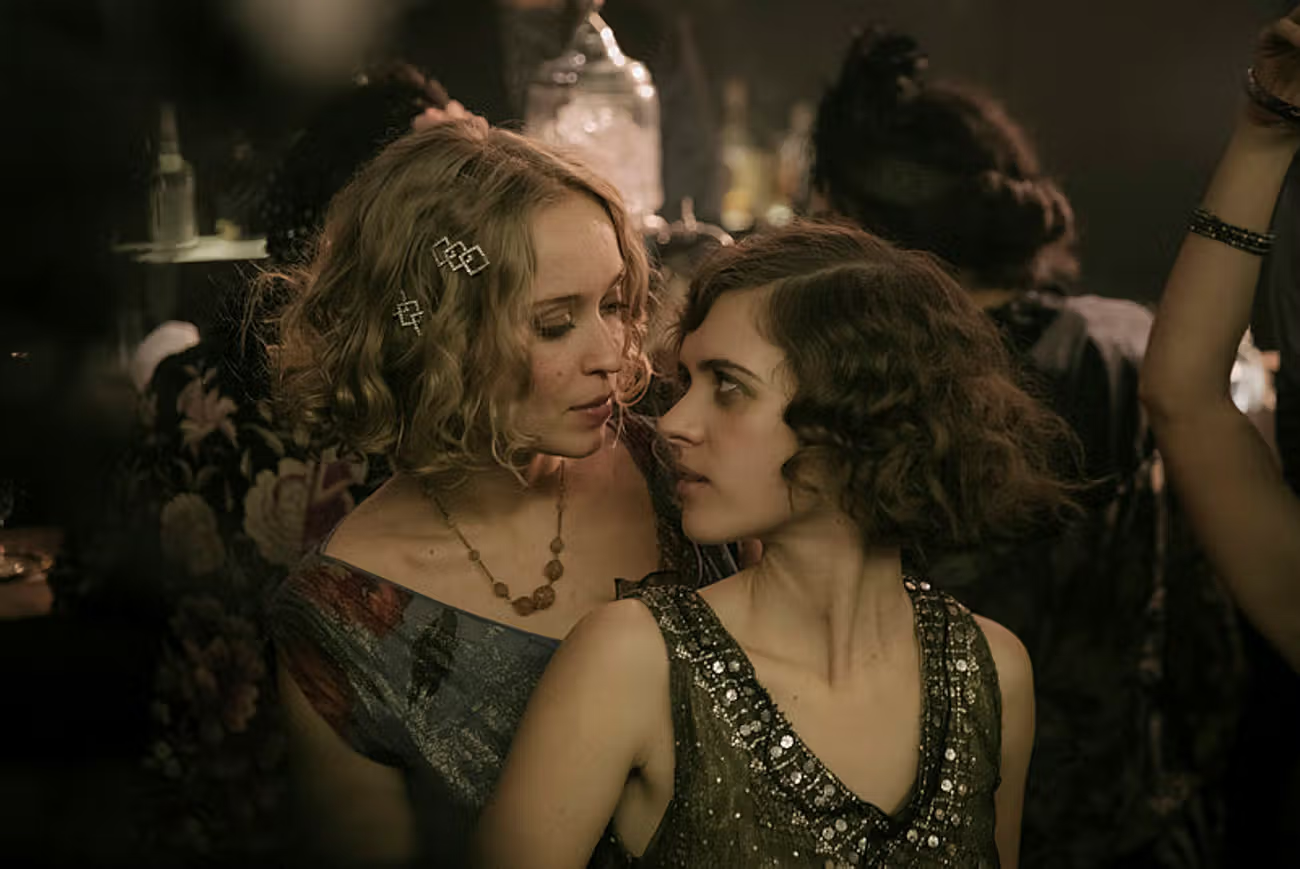
The series Babylon Berlin, based on the novels by Volker Kutscher, rebuilds that world with almost prophetic precision.
What in the books is a detective plot —an investigation, a murder, a woman surviving in the shadows— becomes on screen a visual fresco of Europe’s moral and aesthetic collapse.
Kutscher and the camera converse without repetition: literature delves into consciousness; the series captures the delirium of the surface.
Both are X-rays of a civilization that cannot endure its own lucidity.
Reading Kutscher after seeing the series is a return to the origin: leaving the spectacle behind and facing the fracture.
In his novels, the crime is merely the thread; the true mystery is the human condition —the soul split between reason and desire.
The detective novel, so despised by academic purists, remains the last refuge of narrative intelligence: a space where truth hides in shadows, morality is measured in gray, and justice becomes compassion.
Kutscher writes from the awareness that the detective does not seek culprits, but meaning.
The Berlin he depicts is not a setting but a collective mind in trance.
Each character—Rath, Charlotte, the anarchists, the addicts, the prostitutes, the corrupt police—lives an inner war.
They are broken beings trying to survive an era where freedom is a luxury and desire, a sickness.
Sexuality in Babylon Berlin is not ornament or provocation; it is confession.
The body, freed from God and guilt, becomes the new altar of pleasure and pain.
In cabarets and brothels, eroticism mingles with misery, and love with transaction.
Desire presents itself as emancipation, yet beneath it lies another form of orphanhood: the desperate attempt to feel something real amid the artificial.
The body replaces the soul, but cannot supplant it.
Pleasure repeats itself until it becomes mechanical, and in its excess appears sadness —that melancholy no longer seeking redemption, only oblivion.
Madness accompanies this disorder.
Weimar was the time of Freud, Jung, and Kraepelin—the moment when scientific reason explored the unconscious while asylums filled with soldiers mutilated in spirit.
The war did not end in 1918; it continued inside their heads.
Trauma, tremor, visions, and addiction were the invisible wreckage of the front.
Gereon Rath, the protagonist, embodies that fissure: a disciplined man devoured by memory and morphine.
His addiction is not vice but an attempt to silence inner noise.
Drugs are the true language of the era: morphine, cocaine, ether, alcohol—chemical substitutes for meaning, momentary shelters from the abyss.
Drugs play the same role as power, sex, and ideology: they anesthetize.
Yet they also expose the desperation of a humanity that has lost its center.
Consciousness disintegrates, the soul dissolves, the body drifts in chemical ecstasy as a counterfeit transcendence.
Rath, in his alternating withdrawal and clarity, lives the essential conflict of the twentieth century: the impossibility of escaping oneself.
Madness, then, ceases to be pathology and becomes a mirror.
Delirium, hallucination, compulsive gestures —all are ways of expressing what reason can no longer name.
Normality, instead, is the true disease: the silent pact of a society that has decided not to feel.
Weimar was a civilization that tried to heal itself with pleasure and ended sick with freedom.
Sex without love, reason without soul, drugs without consciousness: three faces of the same void.
And that void remains, disguised as progress, algorithms, and well-being.
That is why Babylon Berlin fascinates—because beneath its dazzling surface pulses the same question that haunted Dostoevsky, Nietzsche, Freud, and Roth:
What remains of man once he has lost the soul but still longs for the infinite?
The novels and the series offer no answers, but they compel us to look.
They remind us that evil is not a historical accident but a constant possibility of the human heart.
And every time reason tries to replace truth, every time the body replaces the soul, every time consciousness yields to anesthesia, the spirit of Weimar rises again.
That is why I keep reading Kutscher and Philip Roth, the great chronicler of modern decay, who understood that the body is the final metaphor of civilization —the battlefield between guilt and lucidity.
Roth, like Kutscher, teaches that irony is the soul’s last defense against absurdity.
And perhaps the only thing that saves us from totalitarianism —of any kind— is the ironic awareness of our own fragility.
Babylon Berlin is not mere entertainment: it is a mirror.
On its surface shimmer excess, music, sex, violence; but beneath, in its quiet breathing, we hear a theological lament —that of the human being who, having wanted to be God, ends up begging for a little silence.
 Israel Centeno Author
Leave a comment