
The Philosophies of Freedom and the Dilemma of Liberal Democracies
Israel Centeno
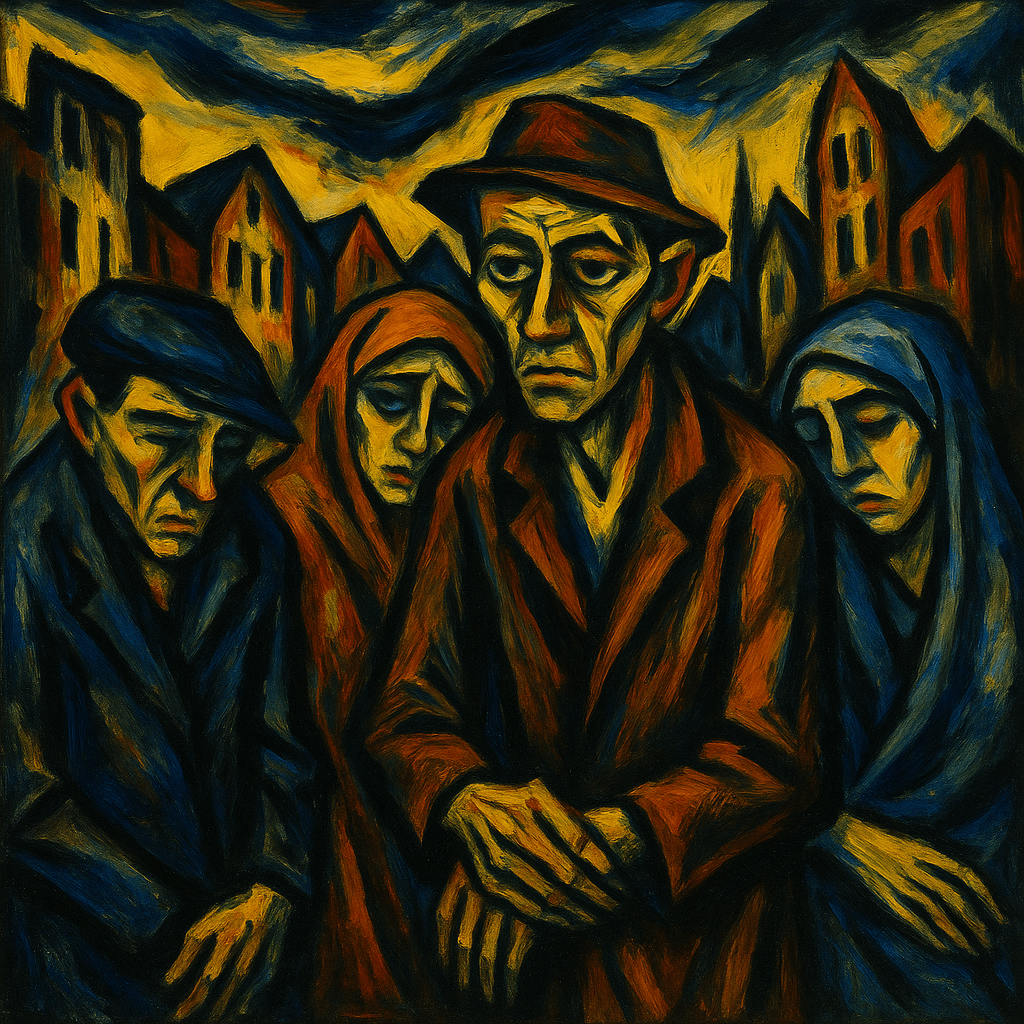
The story of Weimar did not end in 1933.
It still beats, like a wound and a mirror, within every liberal democracy torn between too much freedom and the longing for absolute order.
The twentieth century was nothing but the global repetition of the same drama that exploded in that humiliated, cultured, and progressive Germany—unable, however, to bear its own lucidity.
Today, a century later, the world once again stands at the same precipice: a system that, unable to sustain the weight of freedom, cries out for an authority to rescue it from itself.
I. The Weimar Experiment
The Weimar Republic was born in 1919 as an attempt to reconcile a devastated nation with democracy.
Germany was defeated, crushed by the Treaty of Versailles, torn apart by inflation and the loss of historical meaning.
And yet it was also vibrant: the Germany of Bauhaus, Expressionism, Brecht, Heidegger, Grosz, and Weill.
A nation that, having lost its moral center, sought comfort in aesthetics and technology.
Weimar’s liberal democracy embodied the essential dilemma of every modern republic:
when freedom weakens, chaos devours it; when it hardens, it gives birth to tyranny.
Between those extremes the Republic drifted—without moral roots, without trust in its institutions, with a weary citizenry that confused liberty with disorder.
The result was the oldest temptation: to sacrifice freedom in exchange for security.
II. The Roads to Totalitarianism
Nazism and communism, which rose from Weimar’s ruins, were not opposite phenomena but reflections of the same despair.
Both answered to the spiritual emptiness of modern man—who, having lost transcendence, seeks redemption in history.
1. Nazism: Redemption Through Obedience
Nazism turned humiliation into myth.
It offered the dispossessed a religion without God—purity instead of justice, obedience instead of conscience.
It was not an eruption of barbarism but a distorted form of faith: millions of educated men preferred order to truth.
The crime began long before Auschwitz, in the soul that renounced discernment.
The guilt of the executioners—and of those who remained silent—was the same: the abdication of inner freedom.
2. Communism: Redemption Through Equality
Communism promised to liberate humanity, yet it dissolved the individual into the State.
It turned history into a tribunal and the Party into a church.
Justice became a pretext for control, and equality a dogma.
In its attempt to abolish inequality, it destroyed dignity.
The soul was replaced by class consciousness; faith, by ideology.
Both systems were born of the same void: the despair of man without God, seeking meaning in power.
III. The Moral Burden of the Executors
Ideologies do not kill by themselves.
They kill through the hands that obey and the consciences that remain silent.
The “banality of evil” that Hannah Arendt saw in Eichmann is the modern tragedy: the man who executes without thinking.
Weimar was the laboratory of that obedience.
Citizens ceased to be responsible and became cogs in the machine.
The deepest guilt of the twentieth century was not hatred—it was indifference.
Every age recreates its own executor: the bureaucrat who justifies, the intellectual who rationalizes, the citizen who remains silent out of convenience.
And in that silent chain, evil always finds its way back.
IV. The Philosophies of Freedom: The Weimar Dilemma (The Philosophers of the Abyss)
Weimar was not only a political crisis—it was the philosophical consequence of centuries of debate about freedom.
Its downfall revealed that ideas can be as destructive as weapons.
Kant: Moral Freedom as Duty
For Kant, freedom is obedience to the moral law dictated by reason.
But reason, once severed from being, became mere instrument.
Without faith or transcendence, autonomy degenerated into narcissism, duty into bureaucracy, and freedom into abstraction.
Hume and Smith: The Freedom of Human Balance
Hume and Adam Smith understood that liberty cannot survive without virtue, habit, and affection.
Without civic morality, both the market and politics become pure mechanics.
Weimar forgot this: it replaced virtue with technique, spirit with efficiency, and collapsed between aesthetics and cynicism.
Marx: The Redemptive Freedom of Labor
Marx promised human emancipation through history.
But by making freedom dependent on economics, the individual was reduced to a tool for collective ends.
Where he sought to liberate man, he bound him to structure.
Revolution without soul became inquisition.
Keynes and Hayek: Freedom in Economic Tension
Keynes sought to save freedom through justice;
Hayek, to save justice through freedom.
Both knew the market is not neutral—it is moral.
But the world chose comfort over prudence.
Between intervention and laissez-faire, democracy lost its center.
Synthesis
Kant gave man the law, but not grace;
Hume, habit but not hope;
Marx, cause but not soul;
Keynes and Hayek, systems but not meaning.
The result: a freedom without truth and progress without purpose.
From that void arose both redeemers and executioners.
V. The Emptiness of the Present
Today the spirit of Weimar returns with another face:
the citizen saturated with information yet starved of meaning.
Populism, digital tribalism, and the culture of grievance echo the same symptoms: polarization, distrust, cynicism.
Democracy withers when citizens cease to believe in truth and retreat into moral comfort.
Today’s totalitarianism does not shout—it persuades.
It does not impose—it seduces.
It needs no camps, only screens.
We live on the edge of nihilism, distracted by its brightness.
VI. Synthesis: The Possible Equilibrium
The only antidote to the eternal Weimar is moral freedom—founded on duty and sustained by truth.
As Kant wrote:
“Freedom is not the ability to do what one wants, but the will to do what one ought.”
Democracy survives only when its citizens understand that freedom is not guaranteed by laws but by souls.
Weimar did not die—it dwells in every complicit silence, every cultivated indifference, every refusal to think.
The Eternal Weimar does not threaten us from the past:
it lives within us, every time silence feels more comfortable than truth.
🇪🇸 El Eterno Weimar.
Las filosofías de la libertad y el dilema de las democracias liberales
Israel Centeno
La historia de Weimar no terminó en 1933.
Sigue latiendo, como una herida y un espejo, en todas las democracias liberales que se debaten entre el exceso de libertad y el deseo de orden absoluto.
El siglo XX no fue más que la repetición, a escala global, del drama que estalló en aquella Alemania humillada, culta y progresista, pero incapaz de soportar su propia lucidez.
Hoy, un siglo después, el mundo vuelve a asomarse al mismo precipicio: el de un sistema que, incapaz de sostener el peso de la libertad, clama por una autoridad que lo salve de sí mismo.
I. El experimento de Weimar
La República de Weimar nació en 1919 como el intento de reconciliar a una nación destruida con la democracia.
Era una Alemania derrotada, aplastada por el Tratado de Versalles, desgarrada por la inflación y la pérdida del sentido histórico.
Y, sin embargo, era también una Alemania vibrante: la de la Bauhaus, el expresionismo, Brecht, Heidegger, Grosz, Weill.
Una nación que, habiendo perdido su centro moral, buscó consuelo en la estética y en la técnica.
La democracia liberal de Weimar encarnó el dilema esencial de toda república moderna:
cuando la libertad se debilita, el caos la devora; cuando se endurece, engendra tiranía.
Entre esos extremos se movió la República: sin raíces morales, sin confianza en sus instituciones, con una ciudadanía exhausta que confundió la libertad con el desorden.
El resultado fue la tentación más antigua: sacrificar la libertad por seguridad.
II. Los caminos hacia el totalitarismo
El nazismo y el comunismo, que florecieron sobre sus ruinas, no fueron fenómenos opuestos, sino espejos de una misma desesperación.
Ambos respondieron al vacío espiritual del hombre moderno, que al perder su trascendencia busca redención en la historia.
1. El nazismo: la redención por la obediencia
El nazismo convirtió la humillación en mito.
Ofreció a los despojados una religión sin Dios, donde la pureza sustituyó a la justicia y la obediencia al Führer reemplazó la conciencia.
No fue una irrupción de barbarie, sino una forma de fe desviada: millones de hombres cultos prefirieron el orden a la verdad.
El crimen no comenzó en los campos de exterminio, sino en el alma que renunció a discernir.
La culpa de los ejecutores —y de los que callaron— es la misma: la abdicación de la libertad interior.
2. El comunismo: la redención por la igualdad
El comunismo prometió liberar al hombre, pero lo disolvió en el Estado.
Convirtió la historia en tribunal y el partido en iglesia.
La justicia se volvió pretexto para el control, y la igualdad, en dogma.
En su intento de abolir la desigualdad, destruyó la dignidad.
El alma fue sustituida por la conciencia de clase; la fe, por la ideología.
Ambos sistemas nacieron del mismo útero: la desesperación de un hombre que, sin Dios, busca sentido en el poder.
III. La carga moral de los ejecutores
Las ideologías no matan por sí solas.
Matan las manos que obedecen y las conciencias que callan.
La “banalidad del mal”, que Hannah Arendt vio en Eichmann, es la tragedia moderna: el hombre que ejecuta sin pensar.
Weimar fue el laboratorio de esa obediencia.
El ciudadano dejó de ser responsable para convertirse en engranaje.
La culpa más profunda del siglo XX no fue la del odio, sino la de la indiferencia.
Cada época reproduce su versión del ejecutor: el burócrata que justifica, el académico que racionaliza, el ciudadano que calla por conveniencia.
Y en esa cadena silenciosa, el mal encuentra siempre su cauce.
IV. Las filosofías de la libertad: el dilema Weimar (Los filósofos del abismo)
Weimar no fue solo una crisis política: fue la consecuencia filosófica de siglos de pensamiento sobre la libertad.
Su ruina mostró que las ideas pueden ser tan peligrosas como las armas.
Kant: la libertad moral como deber
Para Kant, la libertad es obediencia a la ley moral que dicta la razón.
Pero la razón, separada del ser, se volvió instrumento.
Sin fe ni trascendencia, la autonomía degeneró en narcisismo, el deber en trámite, la libertad en abstracción vacía.
Hume y Smith: la libertad del equilibrio humano
Hume y Adam Smith comprendieron que la libertad necesita virtud, costumbre y afecto.
Sin moral cívica, el mercado y la política son pura mecánica.
Weimar olvidó eso: sustituyó virtud por técnica, espíritu por eficiencia, y se derrumbó entre la estética y el cinismo.
Marx: la libertad redentora del trabajo
Marx prometió emancipar al hombre en la historia.
Pero al convertir la libertad en producto de la economía, el individuo quedó reducido a medio para el fin colectivo.
Donde quiso liberar al hombre, lo encadenó a la estructura.
La revolución, sin alma, se volvió inquisición.
Keynes y Hayek: la libertad en tensión económica
Keynes quiso salvar la libertad con la justicia;
Hayek, salvar la justicia con la libertad.
Ambos intuyeron que el mercado es una cuestión moral.
Pero el mundo prefirió la comodidad a la prudencia.
Entre el intervencionismo y el libertarismo, el espíritu democrático perdió su centro.
Síntesis
Kant dio al hombre la ley, pero no la gracia;
Hume, el hábito, pero no la esperanza;
Marx, la causa, pero no el alma;
Keynes y Hayek, los sistemas, pero no el sentido.
El resultado: una libertad sin verdad y un progreso sin propósito.
De ese vacío nacieron los redentores y los verdugos.
V. El vacío del presente
Hoy, el espíritu de Weimar regresa con otro rostro:
el del ciudadano saturado de información y vacío de sentido.
El populismo, el tribalismo digital y la cultura del agravio repiten los síntomas: polarización, desconfianza, cinismo.
La democracia se vacía cuando el ciudadano deja de creer en la verdad y se refugia en su comodidad moral.
El totalitarismo actual no grita, persuade.
No impone, seduce.
No necesita campos, solo pantallas.
Vivimos frente al abismo del nihilismo, pero nos distrae su brillo.
VI. El equilibrio posible
El único antídoto contra el eterno Weimar es una libertad moral, fundada en el deber y sostenida por la verdad.
Como dijo Kant:
“La libertad no es hacer lo que se quiere, sino querer lo que se debe.”
La democracia solo sobrevive cuando el ciudadano comprende que la libertad no se garantiza por leyes, sino por almas.
Weimar no murió: habita en cada silencio cómplice, en cada indiferencia cultivada, en cada renuncia a pensar.
El eterno Weimar no nos amenaza desde el pasado:
vive en nosotros, cada vez que el silencio resulta más cómodo que la verdad.
 Israel Centeno Author
Leave a comment