
Israel Centeno
🇪🇸
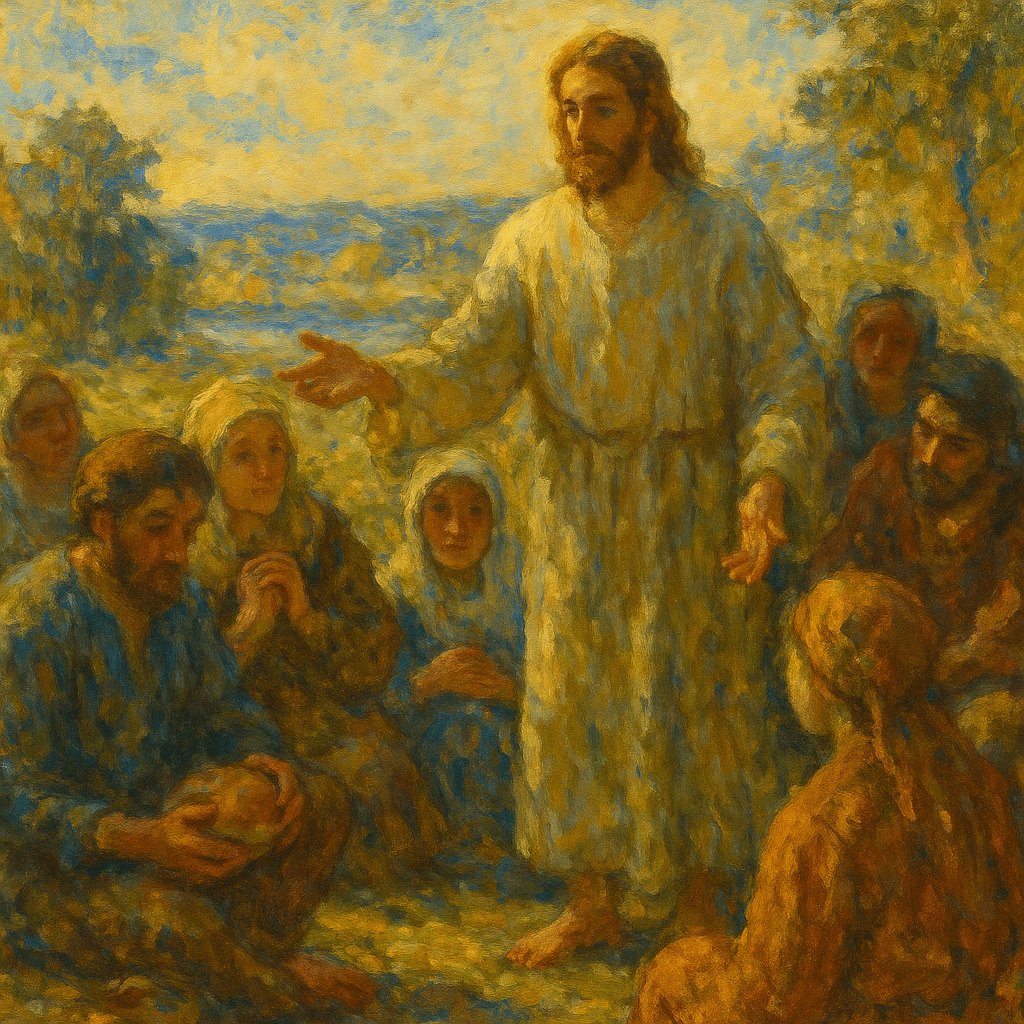
Hay pasajes de la Escritura que uno revisita con los años y que, lejos de debilitarse, se vuelven más agudos. Entre ellos, el cuadro que ofrece Hechos de los Apóstoles sobre la comunidad cristiana primitiva. Allí encontramos uno de los momentos más extremos y misteriosos del Nuevo Testamento: los primeros discípulos, persuadidos de que el Señor estaba por volver en cualquier instante, venden todo lo que poseen y viven en una fraternidad absoluta.
El texto es directo:
“Nadie consideraba suya ninguna de sus cosas… y se repartía a cada uno según su necesidad.”
(Hechos 4:32–35)
Esto no es ideología económica: es la lógica interna de un pueblo que vive al borde del fin del mundo. Cuando crees que la historia está por romperse, los bienes pierden su peso, y la propiedad se vuelve irrelevante. Lo urgente es estar preparados, vigilantes, disponibles.
Desde allí —desde ese clima escatológico— Marx toma la estructura de su famosa frase:
“De cada cual según su capacidad; a cada cual según su necesidad.”
(Crítica del Programa de Gotha)
Pero Marx hace algo imposible: seculariza un estado espiritual propio de la inminencia del Reino y lo propone como modelo político permanente. Lo que en Jerusalén duró un breve tiempo bajo el fuego del Espíritu, él intenta convertirlo en programa histórico para sociedades destinadas a vivir siglos. Allí comienza toda la distorsión.
Porque la comunidad de Jerusalén no vivió sin propiedad por convicción ideológica, sino por convicción apocalíptica. El Señor volvía ya. ¿Para qué guardar escrituras, herencias, acumular graneros?
Pero los años pasan. Y los apóstoles descubren lo que cambiará para siempre la forma cristiana de relacionarse con los bienes.
El verdadero problema no es la propiedad: es el tiempo.
La comunidad primitiva pudo desprenderse de todo porque estaba convencida de que no habría futuro. Cuando esa expectativa empieza a diluirse, cuando entienden que el Reino no entra por derrumbe sino por fermento, que la historia continúa, que habrá generaciones nuevas, viudas que alimentar, cosechas, viajes, persecuciones y construcción de iglesias, la propiedad vuelve naturalmente a ocupar su lugar.
Una verdad emerge entonces:
El desprendimiento absoluto solo funciona cuando el tiempo está por agotarse,
o cuando una comunidad decide vivir como si ya hubiera agotado el tiempo.
Ese tipo de vida solo es viable en espacios muy concretos:
– el cielo
– un monasterio
– un kibutz
– una comunidad consagrada donde se comparte todo por amor, no por obligación
Fuera de allí —en sociedades abiertas, frágiles, plurales— la consigna “a cada cual según su necesidad” se vuelve antropológicamente imposible.
No porque sea injusta, sino porque requeriría una humanidad sin miedo, sin rivalidad, sin egoísmo, sin pecado. Una humanidad que todavía no existe.
La propia Jerusalén habría fracasado si el fin del mundo no hubiera parecido tan cercano.
Los Padres de la Iglesia lo entendieron con una claridad que sigue siendo luminosa.
San Basilio no suaviza nada:
“El pan que guardas pertenece al hambriento; la ropa que reservas está en manos del desnudo.”
(Homilía a los ricos)
Pero no pide abolir la propiedad: pide santificarla.
San Juan Crisóstomo, siempre punzante:
“No compartir tus bienes con los pobres es robarles… Tú no eres dueño, sino administrador.”
Y añade la frase que destruye toda lectura marxista del cristianismo:
“La comunidad de bienes no fue ley, sino fruto del amor.
Y el amor es libre: por eso tiene mérito.”
San Agustín lo lleva a su terreno:
“La propiedad privada no es pecado; el pecado es usarla contra el amor.”
Y advierte que el ideal de igualdad total no pertenece a esta historia:
“La paz perfecta solo será posible en la Ciudad eterna.”
(La Ciudad de Dios XIX, 15)
San Clemente de Alejandría lo resume:
“El Señor no exige renunciar a la propiedad, sino a la esclavitud interior hacia ella.”
San Gregorio Magno interpreta la desigualdad como un misterio de servicio:
“A veces Dios permite que algunos tengan más, para que otros no carezcan.
No para orgullo, sino para servicio.”
El cristianismo, a diferencia de Marx, comprende que la igualdad radical pertenece al final de los tiempos, no al desarrollo histórico.
El desprendimiento total solo es posible cuando el tiempo mismo deja de tener poder.
Por eso la Iglesia nunca ha pedido abolir la propiedad, sino convertirla en caridad viva.
Que no esclavice.
Que no endurezca.
Que no se pudra en el granero mientras otros mueren.
Que circule como un río, no como una muralla.
La comunidad primitiva nos mostró un anticipo del Reino.
Marx lo confundió con un manual para la historia.
Los apóstoles lo entendieron mejor: mientras la historia continúe, la propiedad será inevitable… y el desafío será siempre el mismo:
No idolatrarla.
No temer perderla.
No poner en ella la salvación.
Porque lo único eterno, lo único que permanece,
no es lo que guardamos,
sino lo que entregamos por amor.
🇬🇧The End of the World, Property, and Marx’s Impossible Dream
English Version
There are passages of Scripture that don’t soften with time—they sharpen. One of them is the striking portrait in the Acts of the Apostles of the first Christian community. For a brief, incandescent moment, the believers in Jerusalem lived without private property at all. They sold everything, placed the proceeds at the apostles’ feet, and shared “as anyone had need.”
The text is unequivocal:
“No one claimed that any of their possessions was their own… and it was distributed to each as they had need.”
(Acts 4:32–35)
This wasn’t an economic theory.
It was an eschatological reaction.
They believed the Lord would return any day.
And when you live on the edge of the end of history, deeds, titles, inheritances—all that becomes trivial. What matters is readiness.
It is precisely from this atmosphere that Marx extracts the structure of his famous slogan:
“From each according to his ability; to each according to his need.”
(Critique of the Gotha Program)
But Marx commits the great category error: he secularizes an apocalyptic moment. What in Jerusalem was a short-lived blaze of the Spirit, he tries to turn into a permanent political model for societies meant to endure centuries. The distortion begins there.
Because Jerusalem did not give up property out of ideology, but out of expectation.
If time is about to collapse, ownership collapses with it.
But time didn’t collapse.
History kept going.
And the apostles discovered something that would shape Christian life forever:
The real problem isn’t property. It’s time.
The early community could renounce everything because they believed there would be no future. But once the apostles understood that the Kingdom would not arrive as a sudden demolition but as a slow ferment—once they realized that history would run long—property naturally returned. Churches needed to be built. Widows needed help. Families endured. Evangelization stretched across continents. The world didn’t end.
And from that moment a simple truth becomes unmistakable:
Absolute dispossession only works when time is about to run out
—or when a community chooses to live as if time had already ended.
Which means it is only viable in places like:
– heaven
– a monastery
– a kibbutz
– a consecrated community where sharing is an act of love, not coercion
Outside those spaces—in open, plural, economically fragile societies—the slogan “to each according to his need” becomes anthropologically impossible. Not because it is unjust, but because it assumes a humanity without fear, rivalry, ego, or sin. A humanity we do not yet possess.
Jerusalem itself would have collapsed had it not believed the end of the world was imminent.
The Fathers of the Church understood this with remarkable clarity.
Basil the Great does not mince words:
“The bread you keep belongs to the hungry;
the cloak you store belongs to the naked.”
But he does not call for abolishing property—only for sanctifying it.
John Chrysostom presses further:
“Not to share your wealth with the poor is to steal from them…
You are not the owner but the steward.”
And then he utters the sentence that destroys every Marxist reading of Christianity:
“The common life was not a law, but the fruit of love.
Only what is free has merit.”
Augustine adds his realism:
“Private property is not a sin; sin is using it against love.”
And he reminds his readers that full equality belongs to another order:
“Perfect peace is proper to the Eternal City.”
(City of God XIX, 15)
Clement of Alexandria sharpens the point:
“The Lord does not demand that you renounce property,
but that you renounce the slavery of the heart.”
Gregory the Great interprets inequality itself as a mystery of service:
“Some are permitted to have more so that others may not lack.
Not for pride, but for mercy.”
Christianity, unlike Marx, understands that radical equality belongs to the end of time, not to the unfolding of history.
Total dispossession only makes sense when time loses its power.
That is why the Church has never demanded the abolition of private property, but its conversion:
that it serve, not dominate;
that it flow, not harden;
that it become mercy rather than fortress.
The primitive community in Jerusalem showed us a glimpse of the Kingdom.
Marx mistook it for a blueprint for the world.
The apostles understood better: as long as history continues, property will remain—and the battle will always be spiritual:
Not to worship it.
Not to cling to it.
Not to confuse it with salvation.
Because what is eternal,
what survives fire and judgment,
is never what we keep,
but what we give away in love.
 Israel Centeno Author
Leave a comment