
Israel Centeno
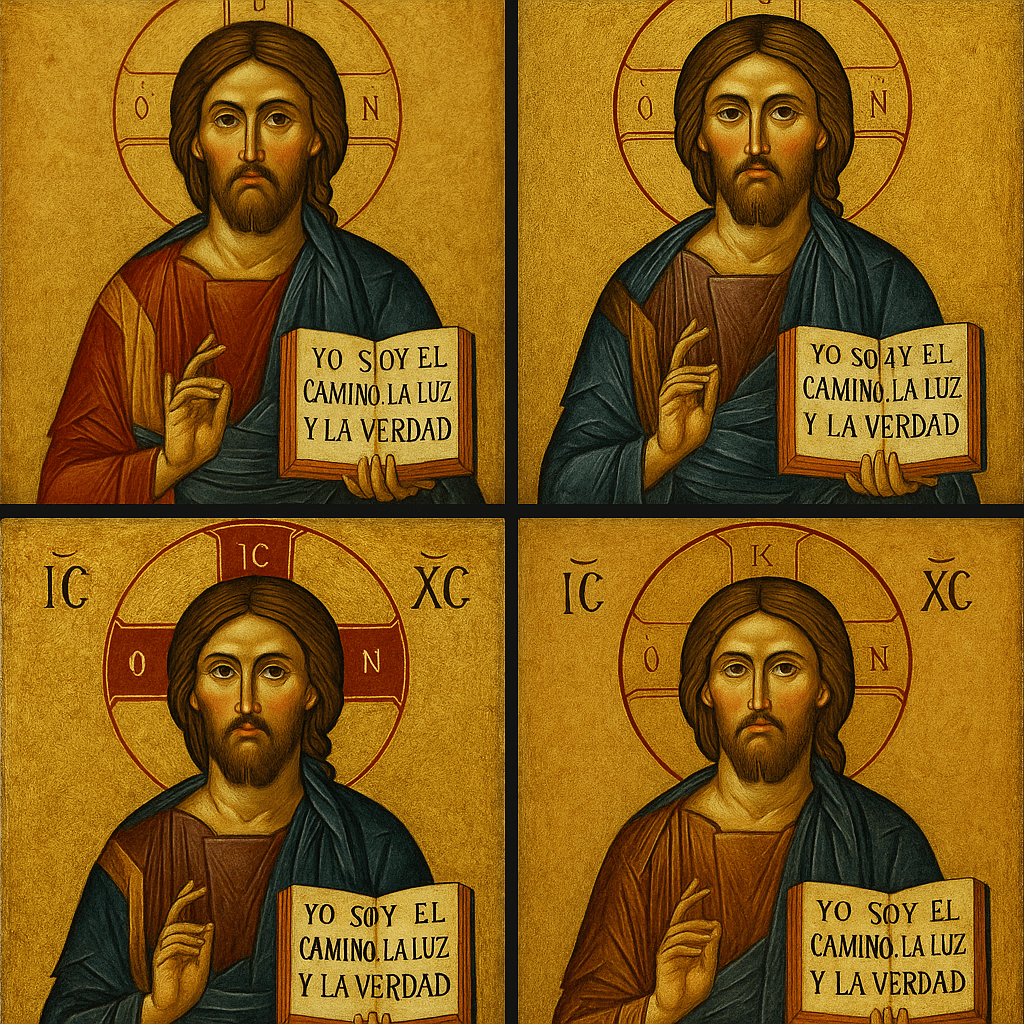
At the center of Christian revelation stands a phrase so absolute that it pierces through language itself: “I AM.” In Scripture, this is the name God speaks from the burning bush, and it is the name Jesus dares to speak of Himself in the Gospel of John. For Edith Stein, whose philosophical vision unites phenomenology with the metaphysical tradition, this declaration is nothing less than the entrance of Eternal Being into the fragile domain of the finite.
Stein distinguishes three levels of being.
The first is real being, the realm of human existence marked by temporality, change, and constant dependence. The second is essential being, the intelligible structure that gives form and meaning to what appears. Beyond both lies the eternal being of God: pure act, fullness without becoming, the unfathomable ground from which all existence flows. God does not receive being; He is being.
Thus, when Jesus says simply “I AM,” He does not identify Himself as a prophet or a teacher of divine things. He speaks from the plane of Eternal Being itself. In Him, Stein would say, there is no gap between essence and existence. He does not participate in being; He is the One from whom all participation comes.
His later declarations unfold this mystery in human terms:
- “I am the Way” — the path by which the finite returns to its origin.
- “I am the Light” — the illumination that makes every essence intelligible.
- “I am the Truth” — the unity of meaning and ground, embodied rather than taught.
- “I am the Resurrection and the Life” — the One whose very being overcomes death.
None of these statements describe functions or roles. They are revelations of what Eternal Being looks like when it steps into time.
And all of them rest on the deepest scriptural affirmation: “God is Love.”
Love, in this framework, is not an emotion but the inner structure of divine being itself. To create is to love; to sustain is to love; to reveal is to love. Christ, the Incarnate Word, is Love translated into human visibility — the Eternal entering the temporal not to dominate it but to lift it into its own fullness.
But the mystery reaches its depth on the Cross.
For Stein, the human person is constantly receiving existence as a gift, never holding it securely. Death is the boundary where this gifted being collapses. Yet in Christ, the One who is Being accepts the limit that defines finitude. When He cries out:
“Father, into Your hands I commend my spirit,”
it is not resignation but the eternal act of self-gift entering the final vulnerability of the finite. The One who does not need to receive being freely embraces the experience of losing it.
The descent into hell, proclaimed in the Creed, becomes in Stein’s metaphysics a descent into the depths of non-being: the realm where real existence has failed, where only the shadow of essence remains. Christ goes to the place where the finite can no longer cling to itself. And in that abyss, the “I AM” speaks again.
There,
the Way opens,
the Light dawns,
the Truth names,
and Love restores.
He does not destroy death by force; He fills it with Himself.
The realm of non-being is touched by the One who cannot cease to be, and death loses its dominion.
So when Jesus proclaims:
“I am the Resurrection and the Life; whoever believes in Me shall never die,”
this is not metaphor but ontological revelation.
He is not merely alive — He is Life, the pure act from which all living flows. He is not merely raised — He is Resurrection, the divine power by which the finite is opened to eternity. To believe in Him is to be drawn into the very movement of Eternal Being: not a continuation of temporal life but participation in unending fullness.
His rising on the third day is not simply the reversal of death.
It is the unveiling of what happens when Eternal Being takes the entire span of human finitude — birth, suffering, abandonment, death, descent — and makes it transparent to divine life. In Christ, the structure of being is rewritten from within: finitude no longer terminates in nothingness but opens toward infinite communion.
Thus, the “I AM” crosses death without dimming.
The Way becomes a passage through the abyss.
The Light shines where no light should be.
The Truth withstands the contradiction of the grave.
Love descends to the lowest place and transforms it into a beginning.
Through Edith Stein’s lens, Christ is not merely the interpreter of divine being —
He is the manifestation of being itself,
eternity speaking in the language of time.
In Him, the finite discovers its origin and its destiny.
What seemed a restless becoming is revealed as a pilgrimage toward fullness.
What seemed fragile is opened to unbreakable life.
And the human person, believing in Him, enters the movement beyond death —
the movement of the One who eternally says:
“I AM.”
 Israel Centeno Author
Leave a comment