
By Israel Centeno
(Exhibition at the John A. Hermann Memorial Art Museum Memorial Art Museum, February 2026)
Upon entering Christine’s exhibition, the first impulse I felt was to pause and orient myself. This was not simply a matter of looking; it was about recognizing the spirit inhabiting those rooms. The space felt both familiar and strange at once, as though I had stepped into the courtyard of a Caracas home from my childhood.
At times, I was transported back to my early years. I remember my uncle blindfolding me and guiding me onto a contraption he called a “flying horse carriage.” He would activate pedals and mechanical sounds, and my imagination would do the rest: I truly believed I was flying. He did not take me to the sky; he taught me how to imagine it.
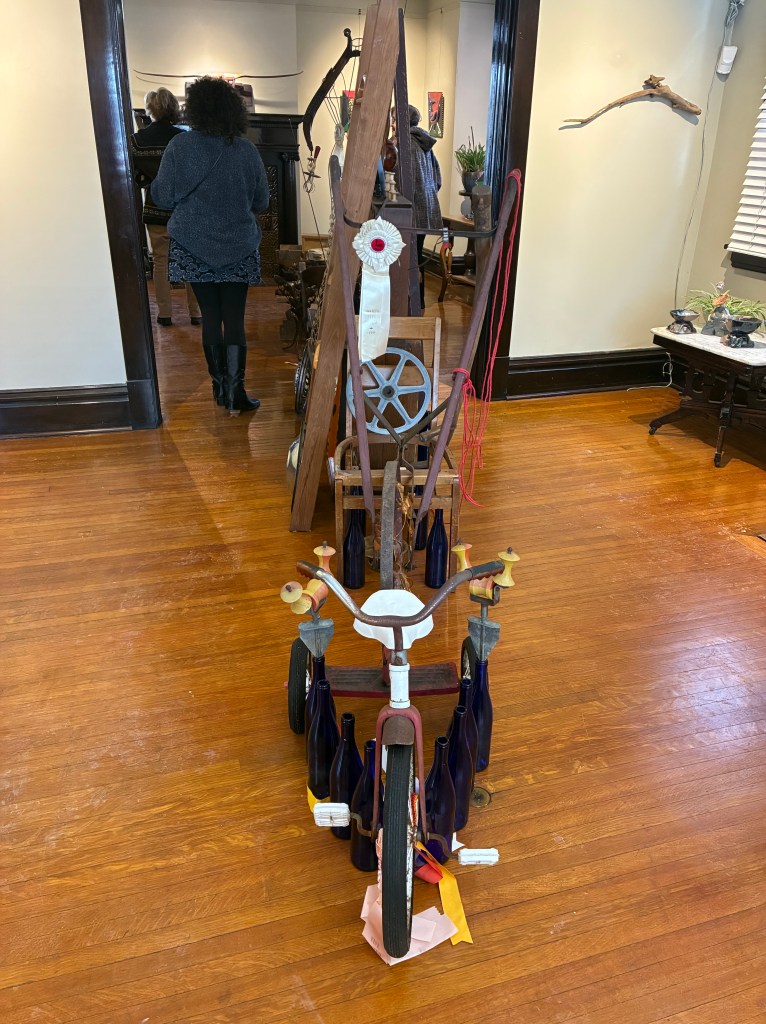
At the center of the exhibition stands an assemblage that returned me to that exact sensation. Constructed from keys, frames, pink ballerina slippers, and a multitude of disparate objects, the structure initially appears chaotic. Yet, when contemplated patiently, it reveals an extraordinary vitality. It adapts itself to the viewer’s imagination. In my mind, it was not a collection of things; it became the horse that once carried me across the skies of Caracas.
As I moved through the galleries, the space began to resemble an antique shop, a place where forgotten objects are given a second life. Later, I was reminded of Manrique’s scrap yard in the third passage of San Agustín del Sur in Caracas. Manrique purchased fragments collected by those who roamed the city—pieces of pipe, broken frames, remnants of everyday life. That place would have fascinated Christine. The accumulation of objects heavy with memory that I encountered there is the same accumulation I encounter here.
From this emerged a clear thought: an artist may present themselves to the world in many ways. Without an organized vision, they might simply be a hoarder. But when fragments are given order, intention, and meaning, they are transformed into art. The artist, above all, is an organizer of chaos.
This is precisely what unfolds in Christine’s exhibition at the John Hertman Junior Memorial Art Museum. She gathers fragments of a city—one that might appear chaotic at first glance—and through arrangement, gives them voice. Each object finds its place. Every corner begins to speak.
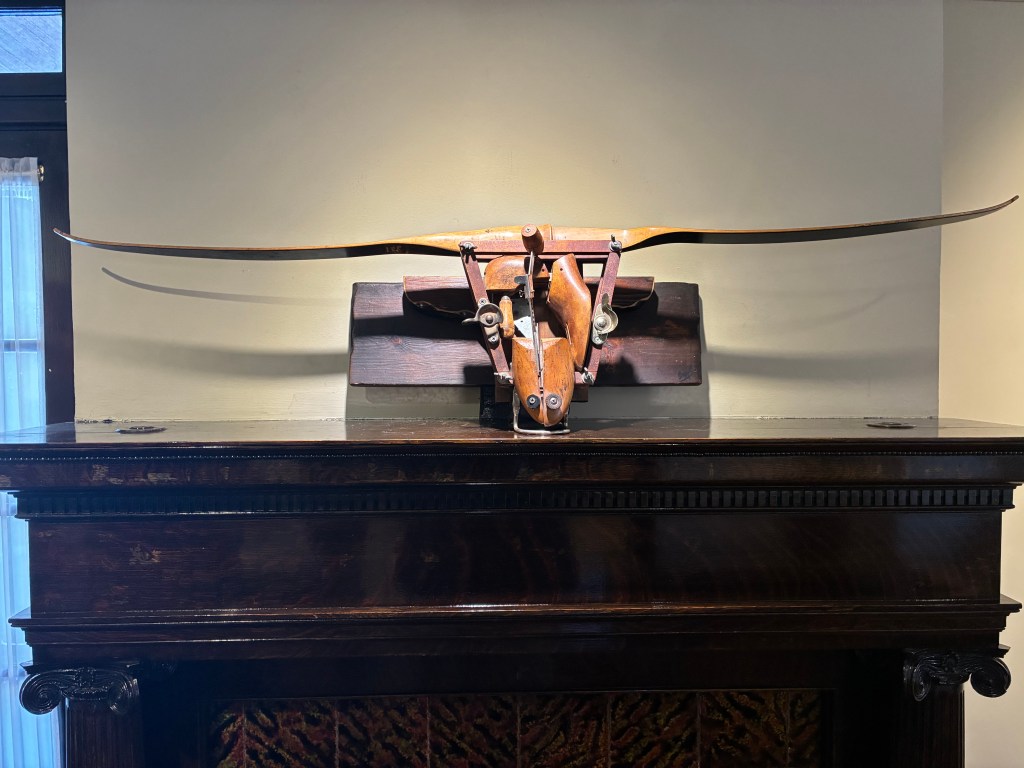
On the second floor, alongside Christine’s works, there is a selection of pieces by artists who have influenced her, as well as works by John Hertman himself. Seeing these references alongside her current practice illuminates her sources: the tradition of African American quilting, the textural maximalism of folk art, and the geometric abstractions of the Congo that she has studied and reinterpreted.
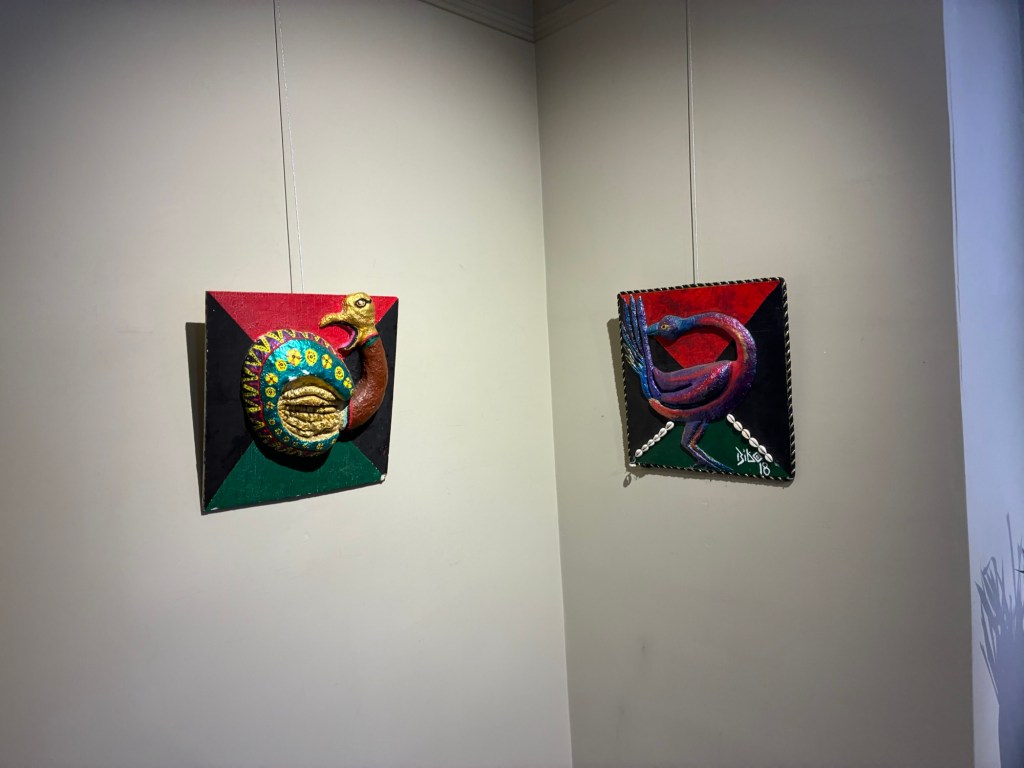
Here lies one of the exhibition’s most profound strengths. The African dimension of Christine’s work is neither dogmatic nor rigid. It is not a citation, nor a militant purism. It is a living, permeable, conversational presence. The small clay or ceramic figures, iridescent masks with elaborate hairstyles, forms reminiscent of Kuba textiles, buttons, cowrie shells, saturated colors, and repetitive rhythms—all coexist without imposing themselves.
What is truly remarkable is that this African presence is not isolated from the rest. It exists in harmony with popular culture: the melting retro television in the Birthday at Tiffany’s poster, the Royal typewriter with its handwritten letter, the modified child’s tricycle, the ballerina slippers from her childhood, references to Pittsburgh jazz and to Roberto Clemente. There is no hierarchy. No contradiction. Everything finds its place at the same table.
Christine does not choose between tradition and contemporaneity, between Africa and the West, between the “serious” and the popular. Her work is deeply eclectic, and within that diversity, all elements converse and find balance. It reminded me of Venezuela’s coastal regions, where African influence is woven into daily life—into colors, forms, and visual rhythms—without any demand for purity.
This cultural continuity—this memory that persists, transforms, and blends without losing its force—is one of the great lessons of this exhibition.
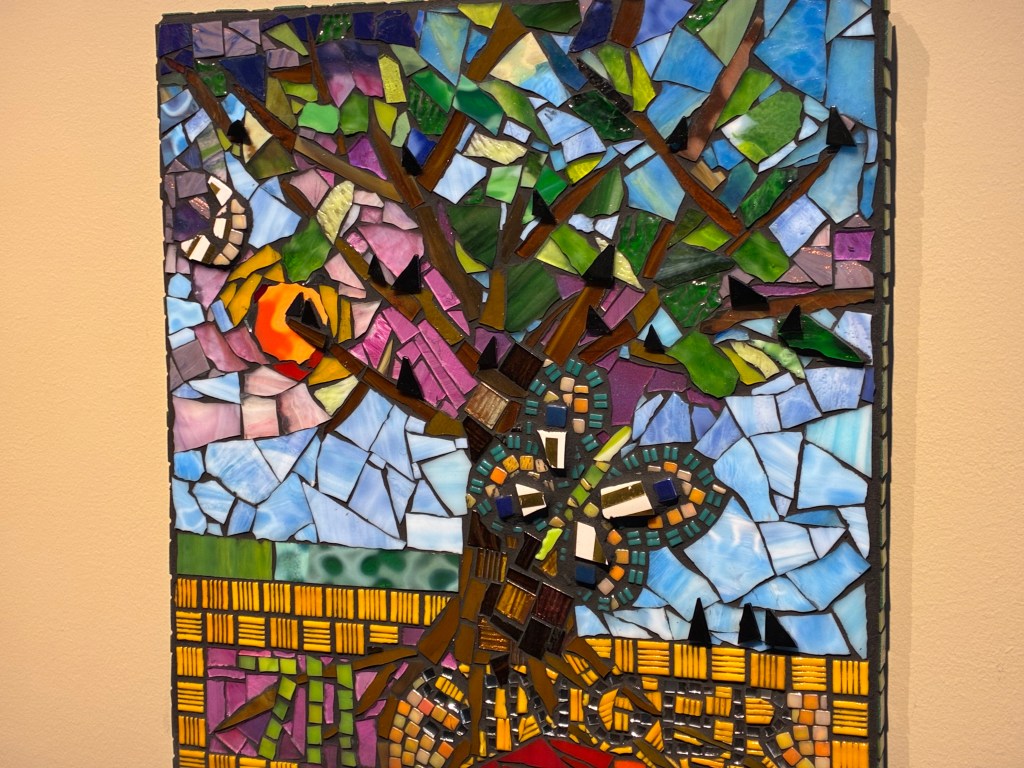
From a technical standpoint, the spatial orchestration is notable. Natural light from the windows combined with directed spotlights creates shadows that animate the hanging works and assemblages, lending them depth and movement. The density of objects—potentially overwhelming in another context—is resolved here through a clear visual hierarchy. Large suspended works act as anchors, while smaller quilts and mosaics function as narrative counterpoints. There is no overload; rather, there is an intentional saturation that invites the viewer to pause and decipher the layers one by one.
In summary, The Alchemy of Christine CMC Bethea is not merely an exhibition of transformed objects. It is a lesson in how art rescues what has been discarded—materially and emotionally—and turns it into living memory. Christine does not accumulate indiscriminately; she organizes chaos with poetic precision and deep cultural awareness. For those who enter with open eyes and an attentive memory, the experience is profoundly moving.

 Israel Centeno Author
Leave a comment