
The Limitations of Disassociation in Kastrup’s Idealism: A Reflection on the Trinity, Evolution, and Creation
Israel Centeno
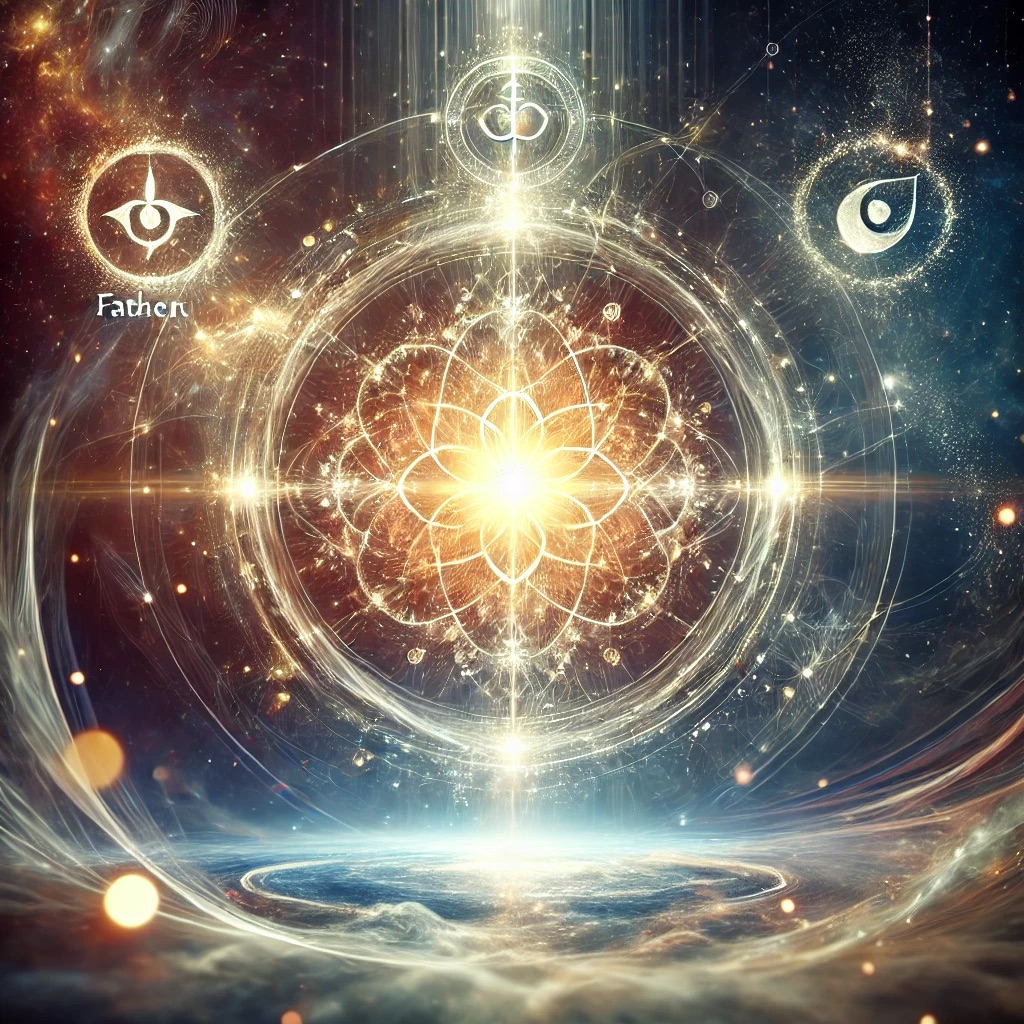
Yesterday, I wrote an article, excited by my discovery of Bernardo Kastrup’s analytic idealism. His ideas reaffirmed my long-held belief that there is no such thing as an objective reality—a thought that traces back to Berkeley. This perspective, which was harshly criticized by Marx, deeply influenced my early readings. Marx, during my youth, was the philosopher who most shaped my understanding of the world.
Kastrup, however, challenges the materialist worldview, asserting that not only are we mind, but that all is mind—even what we call objective reality. This thought inspired me to write because, through his work, I have been able to make greater sense of Christian revelation. His ideas give more philosophical substance to the notion of the Logos as the underlying subjective reality, the creator of all that is, the light of light, the Way, the Truth, and the Life.
However, there is a point where Kastrup falls short. He applies his idealist principles to the realm of science, critiquing materialism, but he does not extend these same principles to certain fundamental questions that would clarify his position on God. For instance, he does not apply his tools of analysis to the theory of evolution as a subjective element arising from a subjective mentation. Thus, he arrives at the conclusion that at least a personal God does not exist.
Evolution as a Divine Mentation
Where Kastrup falters, however, is in his reluctance to fully embrace the implications of his own idealism when it comes to evolution. Evolution, from a Christian perspective, can be seen as another mentation—a thought or process within the divine mind. In this view, evolution is not merely a random material process but a structured, intentional development arising from God’s creative consciousness. It is part of the instrument we use to interpret our genesis as human beings.
If Kastrup were to apply his idealism consistently, he might consider evolution as a manifestation of divine mentation, just as everything else in the universe is a product of mind. Evolution could then be understood as a dynamic unfolding of God’s creative thought, a process through which life is brought into being and developed according to the intentionality of the divine mind.
From this standpoint, evolution would not contradict faith but would enhance it, offering a way to see God’s presence in the intricate details of creation, where physical processes are guided by a higher consciousness. It would provide a bridge between science and theology, framing evolution as part of God’s ongoing creative work. Rather than a purely material explanation of life’s development, evolution, in this light, would be another expression of the Logos, working through time to bring humanity into its fullness.
God Outside Space-Time and the Act of Creation
In failing to fully interrogate the underlying mentation of the universe, Kastrup stops short of projecting it to the ultimate source—the space and non-space where God is, outside the frame of space-time. From this place beyond time and space, God creates the universe as an act of mentation. Creation itself, including the laws of nature, the unfolding of evolution, and the emergence of human consciousness, is the product of this divine mentation.
From this position outside space-time, God’s act of creating the universe brings both material and mental realities into existence. The creation of the universe is the first differentiation of divine thought, and the creation of human mentation is a further differentiation within the divine mind. Human beings, as part of this differentiated mentation, are endowed with free will and the capacity for self-awareness. This consciousness, however, is distinct but not dissociated from the mind of God.
Kastrup acknowledges the singularity and the minimal point from which the Big Bang emerged—a theory that remains largely uncontested. Yet, he does not ask the fundamental question: what is the first cause of all things? If the cause of all things is a mentation, it must have existed before time and space. Let us call this unthinkable space and time X. In this context, human consciousness and the entire cosmos are differentiated thoughts within the divine mind. As Christians, we understand that this divine mind is the Trinity, and it is through the Logos that all things were made.
The Underlying Mentation and the Personal God
For Christians, the Logos incarnated is the divine mental Logos made flesh—subjective mind differentiated, entering history with a plan of salvation. Christ shows us the way to commune with and praise the Father. Original sin or the fall can be seen as the subjective differentiation of our first-person consciousness from the creative consciousness of God.
Kastrup’s theory of disassociation doesn’t fully align with Christian theology, particularly in its treatment of God as impersonal. He seems to suggest that the subjective universal mentation lacks subjectivity itself. But from the Christian perspective, God is both pure act and pure potentiality. God, being omnipotent and outside space-time, has the capacity to correct any anomaly within His creation. Thus, disassociation as a permanent condition doesn’t fit into the Christian understanding of God’s ultimate control and relational engagement with creation.
Instead of disassociation, a more fitting term would be differentiation. We are differentiated consciousnesses—distinct but never completely severed from the divine mind. This understanding preserves both human freedom and the personal nature of God, who desires to be in relationship with His creation.
The Philosophical Implications of Kastrup’s Idealism
Bernardo Kastrup’s analytic idealism offers a compelling challenge to materialist philosophies that dominate modern thought. By positing that all of reality is essentially mental, he reopens metaphysical discussions that transcend mere physicality. Kastrup’s critique of materialism aligns well with Christian theological views, particularly the notion of creation ex nihilo—creation from nothing by an all-powerful, transcendent God.
However, Kastrup’s reluctance to fully embrace the implications of his idealism in relation to God’s nature and evolution leaves his philosophy incomplete. If all is mind, then it follows that a supreme mind exists behind all creation—a mind that is personal, intentional, and engaged with creation. In Christian theology, this mind is the Trinity: Father, Son, and Holy Spirit.
Kastrup could benefit from a deeper examination of divine intentionality. While he suggests that we are dissociated beings, a more fitting Christian interpretation is that we are distinct, created consciousnesses, each made in the image of God. The fall can be seen as the moment when humanity’s subjective consciousness chose to differentiate itself from God’s will, leading to a disordered state of being.
Kastrup’s insights offer valuable tools to explore the relationship between mind and reality, but they stop short of addressing the fundamental question of a personal God. His assertion that at least a personal God does not exist is problematic for Christian theology, which holds that God is not only personal but is the source of all personhood and relationality.
Dissociation vs. Differentiation: A Christian Perspective
One key divergence between Kastrup’s philosophy and Christian theology lies in the interpretation of human consciousness. Kastrup suggests that we are dissociated alters of a universal mind—a concept that echoes pantheistic or Eastern philosophical traditions. From a Christian perspective, however, we are not dissociated but differentiated beings, each created with purpose by a personal God.
This differentiation of consciousness is not a flaw but part of God’s design for human freedom and relationality. God, as pure act and pure potentiality, created human beings with free will, allowing for the possibility of rejecting or accepting the divine will. The fall is not a permanent disassociation from God but a turning away from divine truth. Christ, the Logos incarnate, entered history to reconcile us to the Father, showing us the way back to the divine mind.
While Kastrup’s theory of dissociation offers an intriguing perspective on the fragmentation of human consciousness, it lacks the redemptive dimension central to Christian theology. In the Christian narrative, the differentiated consciousness of humanity is called back into communion with God through Christ.
Conclusion: Toward a Personal God in Idealism
Bernardo Kastrup’s analytic idealism provides a fascinating framework for understanding the mental nature of reality. His critique of materialism aligns with Christian teachings about the spiritual foundations of creation. However, his reluctance to fully explore the personal nature of the divine leaves his philosophy incomplete from a Christian perspective.
To bridge this gap, we must recognize that the supreme consciousness Kastrup describes is not impersonal or indifferent but is, in fact, the Triune God—Father, Son, and Holy Spirit. The disassociation Kastrup speaks of is more accurately understood as differentiation within the divine mind, not a severance from it. This differentiation is not a flaw but part of the divine plan, with Christ as the ultimate reconciler, drawing all consciousness back into unity with God.
In the end, Kastrup’s idealism offers valuable insights for exploring the nature of reality, consciousness, and evolution, but it must be expanded to account for the personal, intentional God of Christian theology—a God who is not only the source of all consciousness but also the Logos, the Light, the Way, the Truth, and the Life.
 Israel Centeno Author
Leave a comment