
Israel Centeno
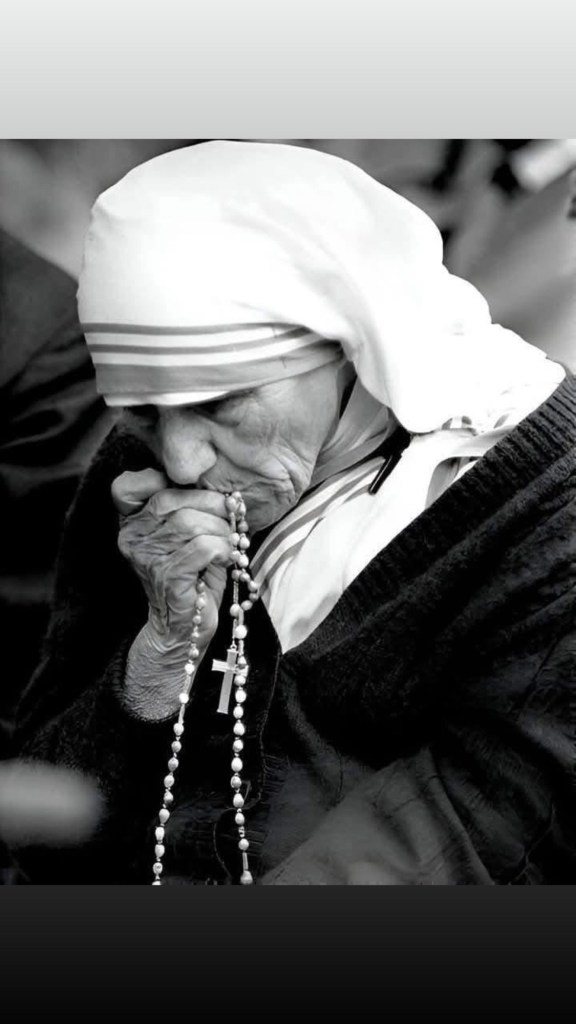
Mother Teresa of Calcutta, born Anjezë Gonxhe Bojaxhiu, remains a figure of admiration and controversy. Her life of absolute devotion to the poorest of the poor has garnered profound praise but also unfair criticism, much of it from people who have never taken a single concrete action to alleviate the suffering of others. Among her most vocal detractors was Christopher Hitchens, whose accusations not only misrepresented her legacy but also overlooked the tangible impact of her work. This article explores the magnitude of Mother Teresa’s mission and dismantles the fallacies propagated against her.
Mother Teresa dedicated her life to serving those whom others ignored: the sick, the dying, and the marginalized. Her organization, the Missionaries of Charity, grew from Calcutta to every corner of the world, bringing hope to places where despair was all that remained. Her efforts were not without challenges or confrontations with dark forces, such as Chicago’s drug gangs, which she boldly faced to rescue young people trapped in cycles of violence and addiction.
Beyond the material poverty she combated, Mother Teresa spoke out against spiritual poverty in the First World. She highlighted how the hunger for love, loneliness, and the lack of solidarity in materially wealthy societies were equally devastating forms of misery. This message was not welcomed by all, especially by those uncomfortable with her pro-life stance and her critique of the culture of disposability.
Christopher Hitchens accused her of “glorifying suffering” and perpetuating poverty through inadequate care. However, these claims are both false and decontextualized. Mother Teresa did not glorify suffering; she confronted it. Her mission was not to act as a modern healthcare system but to provide a refuge for the forgotten—those dying on the streets without love or care. Her critics, from the comfort of their desks, have profited from their words, but how many of them have descended into the trenches to care for the sick or feed the hungry?
In contrast, the Missionaries of Charity not only remain active but have expanded their presence to places where no one else dares to go. Today, these courageous women are where people suffer most: under the bombs in Gaza, in the most neglected neighborhoods of Nicaragua and Venezuela, and in the most dangerous and hostile countries. Without incendiary rhetoric or ideological stances, the Missionaries stand beside starving mothers, helping them bring food to their families. They also care for children, the sick, and the dying, defending the dignity of life from conception to natural death and opposing both abortion and the death penalty with an ethical consistency that few can match.
Mother Teresa was unafraid to speak against power structures and denounce injustice wherever she found it, even within the Vatican. But her approach was not that of a political revolutionary—it was that of a revolutionary of love. Her commitment was to the poor, the abandoned, and the marginalized. Her pro-life stance, which so deeply troubled her critics, was not a political position but an extension of her unconditional love for every human being.
The figure of Mother Teresa remains a beacon of light, an example of the transformative power of love and faith in action. Those who criticize her often do so from positions of comfort and distance, while she and her sisters were, and still are, in the streets, on the battlefields, and in hospitals. In a world that often glorifies destructive criticism, her life serves as a reminder that true heroism lies in serving others.
 Israel Centeno Author
Leave a comment