
Israel Centeno
“Blessed are the peacemakers, for they shall be called the children of God.”
— Gospel of Matthew
There are gifts that blend with the breath of the soul. Love is one of them. But just after it —as its visible reflection, its natural consequence— comes Peace. Not the peace understood as the silence of weapons or the cold handshake of convenience, but the peace that rises when love matures into justice and truth. Peace is the Grace that completes the circle of Love.
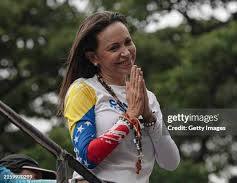
That is why, when the 2025 Nobel Peace Prize was awarded to María Corina Machado, the announcement resonated far beyond politics. In a world saturated with cynicism and violence, the award seemed to remind us that there are still men and women who, at great cost, embody the possibility of peace born from moral courage. And that, in the wounded heart of Venezuela, this Grace —Peace— has become the most precious of all.
I
The Nobel Peace Prize has not always rewarded tranquility; more often, it has crowned the storm.
A brief look at its history is enough to see that it was never meant to celebrate calm, but to honor the strength of those who, in the midst of fear, choose the path of the spirit. Martin Luther King Jr. confronted racial hatred and defeated it with the power of forgiveness. Nelson Mandela turned his long imprisonment into a school of reconciliation. Liu Xiaobo wrote from his cell a manifesto of freedom that still resounds in China’s silence. Shirin Ebadi defended the dignity of women and children in Iran with a faith that persecution could not break.
All of them understood that Peace is not passivity, but a radical form of moral resistance.
And so the Nobel Committee, when it chose them, did not reward compliance but inner fire. It did not honor the politician, but the witness —the one who keeps the word burning when everything else goes dark.
That same lineage now reaches María Corina Machado, who for years has led a civil, non-violent struggle against a regime that turned repression into method and hopelessness into scenery. In honoring her, the Nobel recognizes her fidelity: the stubborn refusal to cease being human in the midst of dehumanization.
II
In Venezuela, to speak of peace may sound like a luxury, almost a provocation.
When there is no bread, no water, no light; when children leave and the streets grow empty; when fear becomes routine and lies become law, the word peace feels foreign. Yet precisely there lies its power: in naming what is absent, in invoking what is denied.
María Corina Machado has insisted on a form of peace that is not surrender but lucidity —peace as a political act, as moral coherence, as the refusal to be corrupted. She is no saint, no flawless figure, but she has chosen to stand without hatred in a land where hatred has become a common currency. That calm, so often mistaken for rigidity, is in fact a kind of active prayer: the gesture of someone who knows that violence only perpetuates slavery.
Hers is the peace that resists.
The peace that refuses to rot.
The peace that holds meaning together when everything else collapses.
III
In the hierarchy of virtues, Love stands at the top —but true Love demands Peace as its fruit. Thomas Aquinas called peace “the tranquility of order.” Augustine described it as “the serenity of the soul reconciled with truth.” Peace, then, is not the opposite of conflict; it is its redemption.
Seen this way, the Nobel awarded to María Corina Machado is not a political trophy but a sign of collective redemption. Peace does not belong only to her; it belongs to the people who, though exhausted, still seek reconciliation without surrender. Venezuela has suffered deeply, yet it still holds —in its humor, its faith, its quiet tenderness— an indestructible moral core. Out of that tenderness may yet grow the roots of its peace.
IV
What defines Venezuela’s recent history is internal rupture —between brothers, generations, those who left and those who stayed. Years of internal exile have carved a wound that feels almost metaphysical.
In that context, the Nobel Prize acts as both a mirror and a promise.
A mirror, because it reflects the dignity of a nation that, though wounded, has not lost its moral center.
A promise, because it suggests that the world still believes in us.
It is not the first time the Nobel Committee dares to name hope where hope seems impossible. It did so with Lech Wałęsa in communist Poland, when oppression seemed eternal. It did so with Narges Mohammadi, imprisoned in Iran for defending women’s right to live without fear. And it does so now with María Corina Machado, who embodies the possibility of a peaceful transition in a country exhausted by repression and pain.
The message is both ancient and new: peace must also be fought for.
V
When a people reconcile with their own truth, when they stop striking back, when they choose hope over resentment, that people has already begun to heal. Peace, ultimately, does not depend on treaties or decrees but on an inward transformation. It is a Grace bestowed on those who love patiently, even when there is no visible reward.
This Nobel, therefore, transcends Venezuelan politics. It speaks of a higher order —of a mercy that seeps into history through human hands. Peace is the gift of those who love, and María Corina Machado has been recognized precisely for that: for not ceasing to love her country, even when her country seemed to have forgotten itself.
VI
There is no peace without love, and no love that does not lead to peace.
The history of the Nobel teaches that the greatest transformations begin in the heart of someone who decides not to hate. Mandela, Liu Xiaobo, Mohammadi, Ebadi —all of them knew that violence leaves ruins, but peace, even when defeated, leaves roots.
Perhaps this is the deepest message of 2025: that in Venezuela, where so much has been lost, the miracle has already begun. Because wherever faith in truth persists, Peace is no longer a utopia —it is a Grace on its way.
La Gracia más preciada: la Paz
“Bienaventurados los que trabajan por la paz, porque serán llamados hijos de Dios.”
— Evangelio según San Mateo
Hay dones que se confunden con la respiración del alma. El Amor es uno de ellos. Pero justo después —como su reflejo visible, su consecuencia natural— está la Paz. No la paz entendida como silencio de las armas ni como simple pacto de conveniencia, sino aquella que surge cuando el amor madura en forma de justicia y de verdad. La Paz es la Gracia que completa el ciclo del Amor.
Por eso, cuando el Premio Nobel de la Paz 2025 fue concedido a María Corina Machado, el anuncio resonó más allá de la política. En un mundo saturado de cinismo y de violencia, ese reconocimiento pareció recordar que aún existen mujeres y hombres que encarnan, a costa de todo, la posibilidad de una paz nacida del coraje moral. Y que, en el corazón herido de Venezuela, esa Gracia —la Paz— se ha vuelto la más preciosa de todas.
I
El Nobel de la Paz no siempre ha premiado la tranquilidad; muchas veces ha coronado la tormenta. Basta repasar su historia para ver que su propósito no es recompensar la calma, sino honrar el valor de quienes, en medio del miedo, eligen el camino del espíritu. Martin Luther King Jr. desafió al odio racial y lo venció con la fuerza del perdón. Nelson Mandela convirtió su prisión en una escuela de reconciliación. Liu Xiaobo escribió, entre rejas, un manifiesto de libertad que aún resuena en el silencio chino. Shirin Ebadi defendió en Irán la dignidad de las mujeres y los niños con una fe que ni la persecución logró quebrar.
Todos ellos comprendieron que la Paz no es pasividad, sino una forma radical de resistencia moral.
Y así, el Comité Nobel, al distinguirlos, no premió la docilidad sino el fuego interior. No distinguió al político, sino al testigo. Aquel que mantiene la palabra encendida cuando todo a su alrededor se apaga.
Ese linaje espiritual es el que hoy alcanza a María Corina Machado, quien desde hace años sostiene una lucha civil, sin armas ni violencia, frente a un régimen que convirtió la represión en método y la desesperanza en paisaje. El Nobel, al distinguirla, reconoce esa fidelidad: la obstinación en permanecer humana en medio de la deshumanización.
II
En Venezuela, hablar de paz puede parecer un lujo, casi una ironía. Cuando falta la luz, el pan, el agua; cuando los hijos parten, cuando el miedo se convierte en rutina y la mentira en ley, la palabra “paz” parece un sarcasmo. Pero precisamente allí reside su fuerza: en afirmar lo que falta, en invocar lo que se niega.
María Corina Machado ha insistido en esa forma de paz que no es rendición, sino lucidez. La paz como acto político, como coherencia interior, como negativa a corromperse. No es una santa ni una figura sin sombras, pero ha elegido mantenerse de pie sin devolver odio, en un país donde el odio se ha vuelto moneda corriente. Esa serenidad, tantas veces confundida con rigidez, es en realidad una forma de oración activa: el gesto de quien sabe que la violencia perpetúa la servidumbre.
La suya es la paz que resiste. La paz que no se pudre. La paz que sostiene el sentido cuando todo se derrumba.
III
En la escala de las virtudes, el Amor es la más alta, porque de él se derivan todas. Pero el Amor, si es verdadero, exige Paz como fruto. Santo Tomás decía que la paz es la tranquilidad del orden, y San Agustín la describía como la serenidad del alma reconciliada consigo misma y con Dios. La Paz, entonces, no se opone al conflicto: lo redime.
Visto así, el Nobel concedido a María Corina Machado no es un trofeo político, sino un signo de redención colectiva. La Paz no pertenece sólo a ella; pertenece al pueblo que, aun exhausto, busca reconciliarse sin claudicar. Venezuela ha padecido mucho, pero aún conserva —en su humor, en su fe, en su ternura silenciosa— una reserva moral indestructible. De esa ternura brota la posibilidad de su paz.
IV
Si algo define nuestra historia reciente es la ruptura interior. Entre hermanos, entre generaciones, entre quienes se fueron y quienes se quedaron. Hemos vivido largos años de destierro interno. Por eso, el Nobel actúa como un espejo y una promesa.
Un espejo, porque refleja la dignidad de una nación que, aun herida, no ha perdido su centro moral.
Una promesa, porque insinúa que el mundo todavía cree en nosotros.
No es la primera vez que el Comité Nobel se atreve a señalar la esperanza donde parece imposible. Lo hizo con Lech Wałęsa en la Polonia comunista, cuando la opresión aún parecía eterna. Lo hizo con Narges Mohammadi, encarcelada en Irán por defender el derecho de las mujeres a vivir sin miedo. Y ahora lo hace con María Corina Machado, que representa la posibilidad de una transición pacífica en un país agotado por la represión y el dolor.
El mensaje es claro y antiguo: la paz también se lucha.
V
Cuando un pueblo se reconcilia con su verdad, cuando deja de devolver el golpe, cuando elige la esperanza en lugar del rencor, ese pueblo ya ha comenzado a sanar. La Paz, en última instancia, no depende de decretos ni de tratados, sino de una conversión interior. Es una Gracia que se concede a quienes aman con paciencia, incluso cuando no hay recompensa visible.
Por eso, este Nobel trasciende la política venezolana: habla de un orden más alto, de una misericordia que se filtra en la historia a través de las manos humanas. La Paz es el don de los que aman, y María Corina Machado ha sido reconocida precisamente por eso: por no dejar de amar a su país incluso cuando el país parece haberse olvidado de sí mismo.
VI
No hay paz sin amor, ni amor que no conduzca a la paz.
La historia del Nobel enseña que las verdaderas transformaciones comienzan en el corazón de alguien que decide no odiar. Mandela, Liu Xiaobo, Mohammadi, Ebadi: todos comprendieron que la violencia deja ruinas, mientras que la paz, incluso vencida, deja raíces.
Quizá este sea el mensaje más hondo de este 2025: que en Venezuela, donde tanto se ha sufrido, el milagro ya comenzó. Porque allí donde persiste la fe en la verdad, la Paz no es una utopía: es una Gracia en camino.


Leave a Reply