
It is worth pausing for a moment before chasing every new literary novelty. Sometimes we look to the recent for what the recent can no longer give us, while untouched treasures still wait in the past
🇬🇧🇪🇸
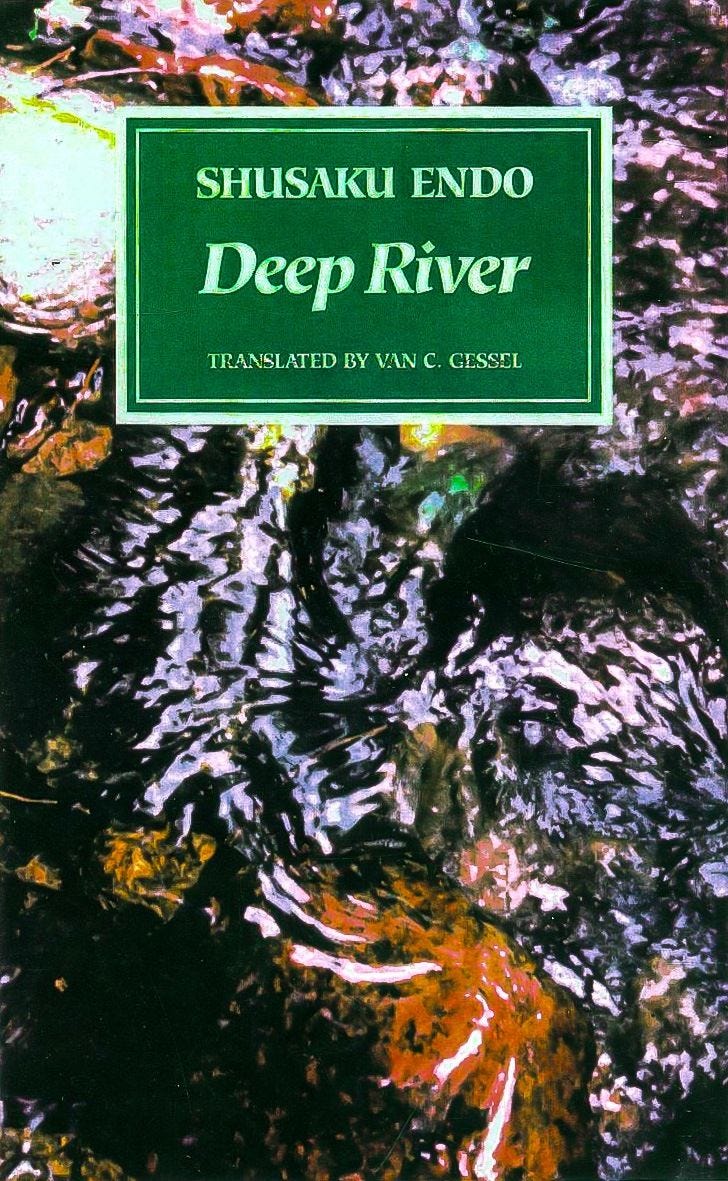
Throughout his literary life, Shūsaku Endō returned again and again to a question that only seems simple on the surface: Can Christianity truly take root in the soil of the East? For him, this was not a matter of translating liturgy or dressing Western doctrines in Japanese robes. The problem was far more visceral. He wondered whether Christ could be received in a place where the mind does not always move in straight lines, where suffering does not necessarily demand a logical explanation, and where salvation is not built like a cathedral of concepts.
In Deep River, his final novel, this lifelong ache finds its most vulnerable expression. Endō moves away from defending the faith like a fortress and embraces a more unsettling possibility: that for the message of Jesus to touch the heart of the East, it must first strip itself of certain Western securities. It must stop presenting itself mainly as a rigid system of correct answers and appear instead as a presence — a quiet, suffering love that carries what no one else wants to touch.
The story follows a group of Japanese travelers to India, but they are not pilgrims in any traditional sense. They are people unmoored by grief, wartime guilt, erotic failure, spiritual exhaustion, and a modern emptiness they cannot quite name. None of them has a clear map for the soul. Yet all of them find themselves converging in Varanasi, at the edge of a river that refuses nothing.
The Ganges is the secret heart of the book. In its waters, the holy and the horrific drift together: funeral ashes, flowers, excrement, prayers, offerings, and the remains of the poor and the rich alike. The river does not filter. It does not ask where the filth comes from. It does not separate the pure from the impure. In this almost scandalous acceptance of human misery, Endō finds one of his most powerful intuitions: perhaps, in the East, Christ is not meant to be understood first as an idea, but as a river. A Christ who does not remain clean on the shore, but enters the muddy, turbulent current of human existence.
This intuition takes flesh in Otsu, a Japanese priest rejected by the hierarchy because he does not fit the mold of a successful man of God. His faith has been stripped of intellectual armor, institutional prestige, and visible authority. What remains is a stubborn, almost silent willingness to carry the weight of others.
Otsu does not preach from above. He sinks into the muck. His desire to become a kind of spiritual cesspool — to absorb the shame, sickness, guilt, and failure that the world spits out — is a disturbing but deeply Christian image of the cross. His Christ is not the triumphant, polished figure of European art, but the Suffering Servant who had no beauty to attract us, the one who simply bears the load.
Otsu is uncomfortable because he cannot be domesticated. He is too confused for the orthodox, too Christian for the skeptics, and too humble for those who need religion to look like visible victory. But Endō suggests that if Christ is to enter the Eastern soul, he may have to come this way: not as a conqueror with an explanation, but as a companion in the ache.
Mitsuko serves as the perfect, cynical foil. She is sharp, sensual, sarcastic, and emotionally guarded, carrying within herself a deep incapacity for love. In her youth, she tried to break Otsu’s faith almost as if it were a toy. Yet she remains haunted by him. She is drawn to his weakness because it does not belong to the world of power, desire, or intelligence.
Her encounter with the goddess Chamunda — a terrifying, withered figure, wounded, grotesque, maternal and monstrous at once — is one of the moments in which Western categories of beauty and religion begin to collapse. In that disturbing image, Mitsuko sees a compassion that does not need to be beautiful in order to be true. It is a mirror of the Christ of the slums, a love that gazes at the world’s wounds without flinching.
Endō is not trying to dissolve Christianity into a vague universal spirituality. His gesture is subtler and more demanding. He is challenging Christianity to be truly catholic — truly universal — by allowing itself to be translated into the deepest symbols of a culture. This happened in Europe, in Latin America, and in Africa: the faith did not merely repeat one cultural grammar, but entered imaginations, wounds, feasts, images, rituals, and popular memories. Not in order to lose itself in everything, but to show that Christ could speak from there as well. In Deep River, Endō seems to ask something similar for the East: that Christ not be presented first as a Western structure, but as a presence capable of inhabiting the spiritual sensitivity of those peoples.
The other characters complete this landscape of wounds. One man searches for the possible reincarnation of his dead wife, though he does not even know whether he believes in reincarnation. Another carries the burden of wartime guilt. Another releases caged birds, as if that small gesture could somehow repair, however slightly, the accumulated damage of the world. None of them reaches the truth through reasoning. They reach it through cracks, through fractures, through gestures they barely understand.
That is what makes the novel so powerful. Endō does not place his characters before a thesis, but before a mystery. Suffering is not explained away. Guilt is not resolved with a neat formula. Faith does not appear as a brilliant answer. What emerges instead is a form of love that survives when reason finally runs dry.
Here, the comparison with Buddhism, especially Zen, becomes inevitable. For a certain Eastern sensibility, suffering is not overcome by constructing a perfect explanation. Zen distrusts logic when logic becomes a cage. Paradox, silence, the koan, the rupture of linear thought — these do not offer answers in the Western sense. They dismantle the anxiety of needing to answer everything.
Endō seems to have understood something similar from within his own Christianity. Christ does not enter the East as a syllogism, nor as a judge. He does not enter as a system meant to organize the chaos of existence from the outside. He enters as a shared wound, as mercy that does not need to explain itself before it acts, as someone bending over an abandoned body.
This is why Mother Teresa of Calcutta inevitably comes to mind. Her presence in India did not consist of displaying a sophisticated theology. Her language was more elemental and more radical: touching, washing, gathering, looking, accompanying. Where a body was treated as refuse, she saw a person. That gesture, more than any argument, made Christianity intelligible. Not because it denied doctrine, but because it embodied doctrine in the only place where doctrine becomes true: concrete love.
There is a scene involving Mitsuko that condenses almost the whole novel. Faced with the work of the Missionaries of Charity caring for an abandoned woman, in the middle of Calcutta, where countless anonymous bodies are dying, Mitsuko senses the disproportion of the gesture. What is the point of saving one person, of easing one agony, when all around them suffering keeps multiplying like a tide? Her question is not entirely cynical. It is the question of reason when confronted with suffering too vast to be solved. Then one of the sisters answers with a simplicity that disarms every system: they do it for Him, for Jesus.
That answer is profoundly moving because it neither explains evil nor justifies suffering. It does not solve the social problem of misery or turn charity into a statistic. It simply reveals another logic: the logic of a love that does not need to save everyone in order for saving one person to matter. For Mitsuko, accustomed to measuring life through lucidity, desire, failure, and the apparent uselessness of human gestures, that answer opens a crack. Where reason sees absurdity, charity sees presence. Where the world sees one more body among thousands, the sister sees Christ.
In Deep River, love is not a soft sentiment. It is not decorative tenderness. It is a force that carries, dirties itself, and empties itself. It is a love capable of stopping violence before it becomes another link in the chain of evil. When Otsu, offering himself as a victim, restrains the fury of a crowd ready to lynch the photographer who exploits the misery of the dying, no moral theory triumphs. Something quieter and harder triumphs: a compassion that prevents the cycle from completing itself and keeps hatred from reproducing itself in him.
Perhaps this is Endō’s deepest spiritual conclusion. Reason matters, but it is not enough. Theology matters, but it does not save by itself. There are regions of the soul where concepts arrive late. There are pains that cannot be organized. There are guilts that cannot be healed by explanation. And there are cultures, wounds, memories, and sensibilities that can only be touched by a love that does not arrive to conquer.
In Deep River, Christ does not appear as a clean answer. He appears as a river. As a terrible mother. As a rejected man. As a failed priest carrying bodies beside the Ganges. As a presence willing to enter the impurity of the world without ceasing to love.
And perhaps that is why the novel moves us so deeply. It does not offer an easy faith. It does not give us comfortable clarity. It leaves us before something more unsettling and more true: salvation does not always arrive as an explanation. Sometimes it arrives as someone who remains when everything else has become incomprehensible.
El amor que vence a la razón: la visión espiritual de Shūsaku Endō en Deep River
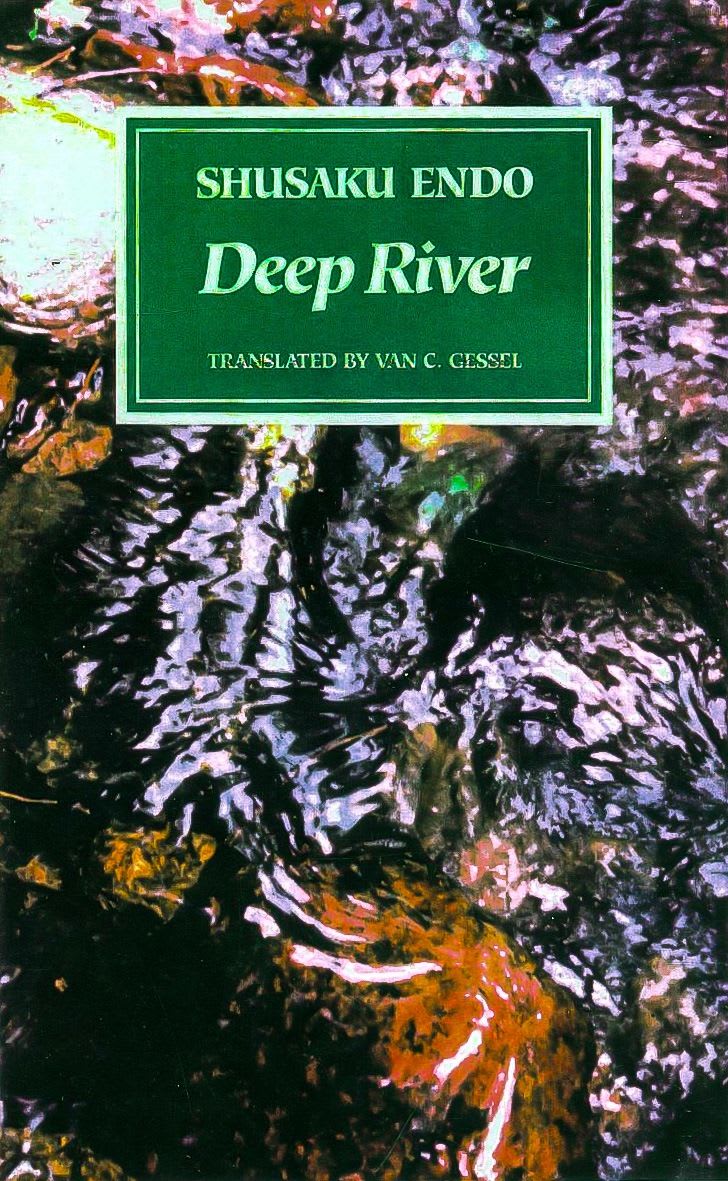
Durante toda su vida literaria, Shūsaku Endō volvió una y otra vez sobre una pregunta que solo parece sencilla en la superficie: ¿puede el cristianismo arraigar de verdad en el suelo de Oriente? Para él, no se trataba de traducir la liturgia ni de vestir doctrinas occidentales con ropajes japoneses. El problema era mucho más visceral. Se preguntaba si Cristo podía ser recibido en un lugar donde la mente no siempre se mueve en línea recta, donde el sufrimiento no exige necesariamente una explicación lógica, y donde la salvación no se construye como una catedral de conceptos.
En Deep River, su última novela, esa inquietud de toda una vida encuentra su expresión más vulnerable. Endō se aleja de la defensa de la fe como si fuera una fortaleza y abraza una posibilidad más inquietante: que, para que el mensaje de Jesús toque el corazón de Oriente, primero deba despojarse de ciertas seguridades occidentales. Debe dejar de presentarse principalmente como un sistema rígido de respuestas correctas y aparecer, más bien, como una presencia: un amor silencioso y sufriente que carga con aquello que nadie quiere tocar.
La historia sigue a un grupo de japoneses que viajan a la India, pero no son peregrinos en ningún sentido tradicional. Son personas desamarradas por el duelo, la culpa de la guerra, el fracaso erótico, el agotamiento espiritual y un vacío moderno que no terminan de nombrar. Ninguno de ellos posee un mapa claro para el alma. Y, sin embargo, todos terminan convergiendo en Varanasi, a orillas de un río que no rechaza nada.
El Ganges es el corazón secreto del libro. En sus aguas, lo santo y lo horroroso flotan juntos: cenizas funerarias, flores, excrementos, oraciones, ofrendas y restos de pobres y ricos por igual. El río no filtra. No pregunta de dónde viene la suciedad. No separa lo puro de lo impuro. En esa aceptación casi escandalosa de la miseria humana, Endō encuentra una de sus intuiciones más poderosas: quizá, en Oriente, Cristo no esté destinado a ser comprendido primero como una idea, sino como un río. Un Cristo que no permanece limpio en la orilla, sino que entra en la corriente turbia y agitada de la existencia humana.
Esa intuición toma cuerpo en Otsu, un sacerdote japonés rechazado por la jerarquía porque no encaja en el molde de un hombre de Dios exitoso. Su fe ha sido despojada de armadura intelectual, de prestigio institucional y de autoridad visible. Lo que queda en él es una voluntad terca, casi silenciosa, de cargar con el peso de los demás.
Otsu no predica desde arriba. Se hunde en el lodo. Su deseo de convertirse en una especie de cloaca espiritual —de absorber la vergüenza, la enfermedad, la culpa y el fracaso que el mundo escupe fuera de sí— es una imagen perturbadora, pero profundamente cristiana, de la cruz. Su Cristo no es la figura triunfal y pulida del arte europeo, sino el Siervo Sufriente que no tenía belleza que nos atrajera, el que simplemente carga.
Otsu resulta incómodo porque no puede domesticarse. Es demasiado confuso para los ortodoxos, demasiado cristiano para los escépticos, y demasiado humilde para quienes necesitan que la religión luzca como una victoria visible. Pero Endō sugiere que, si Cristo ha de entrar en el alma oriental, tal vez deba hacerlo así: no como conquistador con una explicación, sino como compañero en el dolor.
Mitsuko funciona como el contrapunto cínico perfecto. Es aguda, sensual, sarcástica y emocionalmente blindada, con una profunda incapacidad para amar. En su juventud intentó quebrar la fe de Otsu casi como si fuera un juguete. Y, sin embargo, él sigue persiguiéndola en su interior. Se siente atraída por su debilidad porque esta no pertenece al mundo del poder, del deseo o de la inteligencia.
Su encuentro con la diosa Chamunda —una figura terrible, marchita, herida, grotesca, maternal y monstruosa a la vez— es uno de los momentos en que las categorías occidentales de belleza y religión comienzan a derrumbarse. En esa imagen perturbadora, Mitsuko descubre una compasión que no necesita ser bella para ser verdadera. Es un espejo del Cristo de los barrios miserables, un amor que mira las heridas del mundo sin apartar la vista.
Endō no intenta disolver el cristianismo en una espiritualidad universal vaga. Su gesto es más sutil y más exigente. Está desafiando al cristianismo a ser verdaderamente católico —verdaderamente universal— permitiendo que se traduzca en los símbolos más hondos de una cultura. Eso ocurrió en Europa, en América Latina y en África: la fe no se limitó a repetir una sola gramática cultural, sino que entró en imaginarios, heridas, fiestas, imágenes, ritos y memorias populares. No para perderse en todo, sino para mostrar que Cristo también podía hablar desde allí. En Deep River, Endō parece pedir algo semejante para Oriente: que Cristo no sea presentado primero como una estructura occidental, sino como una presencia capaz de habitar la sensibilidad espiritual de esos pueblos.
Los otros personajes completan este paisaje de heridas. Un hombre busca la posible reencarnación de su esposa muerta, aunque ni siquiera sabe si realmente cree en ella. Otro carga con el peso de la culpa de la guerra. Otro libera pájaros enjaulados, como si ese pequeño gesto pudiera reparar de algún modo, aunque fuera apenas, el daño acumulado del mundo. Ninguno llega a la verdad por razonamiento. Llegan por grietas, por fracturas, por gestos que apenas comprenden.
Eso es lo que vuelve tan poderosa la novela. Endō no coloca a sus personajes ante una tesis, sino ante un misterio. El sufrimiento no queda explicado. La culpa no se resuelve con una fórmula limpia. La fe no aparece como una respuesta brillante. Lo que emerge, más bien, es una forma de amor que sobrevive cuando la razón finalmente se seca.
Aquí la comparación con el budismo, especialmente con el Zen, se vuelve inevitable. Para cierta sensibilidad oriental, el sufrimiento no se supera construyendo una explicación perfecta. El Zen desconfía de la lógica cuando esta se convierte en una jaula. La paradoja, el silencio, el koan, la ruptura del pensamiento lineal no ofrecen respuestas en el sentido occidental. Desmontan, más bien, la ansiedad de tener que responderlo todo.
Endō parece haber comprendido algo semejante desde dentro de su propio cristianismo. Cristo no entra en Oriente como un silogismo, ni como un juez. No entra como un sistema destinado a organizar, desde fuera, el caos de la existencia. Entra como una herida compartida, como una misericordia que no necesita explicarse antes de actuar, como alguien que se inclina sobre un cuerpo abandonado.
Por eso viene inevitablemente a la memoria la Madre Teresa de Calcuta. Su presencia en la India no consistió en exhibir una teología sofisticada. Su lenguaje fue más elemental y más radical: tocar, lavar, recoger, mirar, acompañar. Allí donde un cuerpo era tratado como desecho, ella veía a una persona. Ese gesto, más que cualquier argumento, hacía inteligible el cristianismo. No porque negara la doctrina, sino porque la encarnaba en el único lugar donde la doctrina se vuelve verdadera: el amor concreto.
Hay una escena relacionada con Mitsuko que condensa casi toda la novela. Frente al trabajo de las Misioneras de la Caridad con una mujer abandonada, en medio de una Calcuta donde mueren incontables cuerpos anónimos, Mitsuko percibe la desproporción del gesto. ¿Qué sentido tiene salvar a una persona, aliviar una sola agonía, cuando alrededor el sufrimiento se multiplica como una marea? Su pregunta no es enteramente cínica. Es la pregunta de la razón cuando se enfrenta a un sufrimiento demasiado vasto para ser resuelto. Entonces una de las hermanas responde con una sencillez que desarma cualquier sistema: lo hacen por Él, por Jesús.
Esa respuesta conmueve porque no explica el mal ni justifica el sufrimiento. No resuelve el problema social de la miseria ni convierte la caridad en una estadística. Simplemente revela otra lógica: la de un amor que no necesita salvar a todos para que salvar a una sola persona importe. Para Mitsuko, acostumbrada a medir la vida desde la lucidez, el deseo, el fracaso y la aparente inutilidad de los gestos humanos, esa respuesta abre una grieta. Donde la razón ve absurdo, la caridad ve presencia. Donde el mundo ve un cuerpo más entre miles, la hermana ve a Cristo.
En Deep River, el amor no es un sentimiento blando. No es ternura decorativa. Es una fuerza que carga, se ensucia y se vacía de sí misma. Es un amor capaz de detener la violencia antes de que se convierta en otro eslabón de la cadena del mal. Cuando Otsu, ofreciéndose como víctima, contiene la furia de una multitud dispuesta a linchar al fotógrafo que explota la miseria de los moribundos, no triunfa una teoría moral. Triunfa algo más silencioso y más difícil: una compasión que impide que el ciclo se complete y que el odio se reproduzca en él.
Tal vez esa sea la conclusión espiritual más honda de Endō. La razón importa, pero no basta. La teología importa, pero no salva por sí sola. Hay regiones del alma donde los conceptos llegan tarde. Hay dolores que no pueden organizarse. Hay culpas que no se curan con una explicación. Y hay culturas, heridas, memorias y sensibilidades que solo pueden ser tocadas por un amor que no llega a conquistar.
En Deep River, Cristo no aparece como una respuesta limpia. Aparece como río. Como madre terrible. Como hombre rechazado. Como sacerdote fracasado que carga cuerpos junto al Ganges. Como una presencia dispuesta a entrar en la impureza del mundo sin dejar de amar.
Y quizá por eso la novela nos conmueve tanto. No ofrece una fe fácil. No nos da una claridad cómoda. Nos deja ante algo más inquietante y más verdadero: la salvación no siempre llega como explicación. A veces llega como alguien que permanece cuando todo lo demás se ha vuelto incomprensible.


Leave a Reply