
Israel Centeno
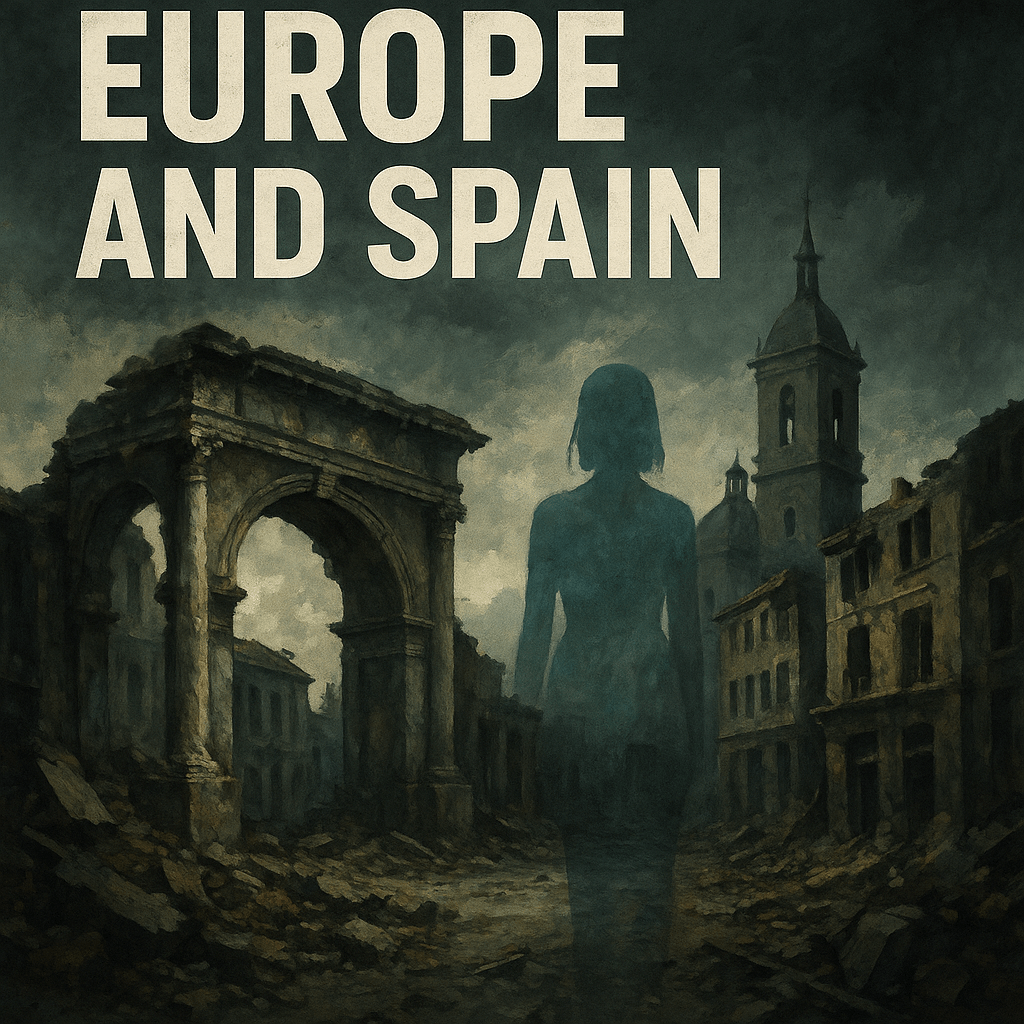
The trajectory of Europe’s development presents a complex tapestry woven with threads of unity and division. Spain’s historical narrative, in particular, has been marked by a distinct sense of otherness, a feeling of existing at the periphery rather than the core. This sentiment, famously articulated by Napoleon’s geographical demarcation at the Pyrenees, was further reinforced by centuries of Spain’s entanglement with the Arab world, a cultural and political reality that set it apart from the dominant narratives of continental Europe. The profound isolation experienced during the Spanish Civil War and the subsequent Francoist regime left indelible scars on the nation’s psyche, wounds that continue to influence its democratic transition. While Spain’s embrace of democracy represented a pivotal moment of integration with the European ideal, the abrupt shift from a deeply rooted identity, anchored in traditional values such as family and religion, to the adoption of a seemingly externally imposed European identity was a process fraught with unresolved tensions. This cultural dissonance, this underlying contradiction, has fostered a persistent cultural anxiety that lingers in Spanish society today.
The speed and scale of Spain’s cultural transformation in a relatively short period are noteworthy. Within a single generation, the nation was compelled to relinquish cultural touchstones considered fundamental to its identity. Iconic traditions like bullfighting and vibrant popular festivals such as the Pamplona bull runs, once romanticized by figures like Hemingway, faced increasing external pressure for their abandonment. The rapid discarding of these deeply ingrained symbols created an identity vacuum, a set of internal contradictions that proved challenging to reconcile. The resolution of such paradoxes invariably demands sacrifice, and in Spain’s case, this involved surrendering elements perceived as essential to its national essence to align with a European project that was already grappling with its own internal inconsistencies and fractures.
Europe’s own journey toward cohesion, particularly with the establishment of the European Union, has been far from seamless. The aspirational vision of a unified political entity mirroring the United States has largely remained an elusive ideal, a theoretical construct rather than a tangible reality. Europe’s path to its current state was arduous and protracted, marked by the cataclysmic devastation of two world wars and the oppressive shadows of authoritarian regimes like Nazism and Communism. While the EU emerged as a potential antidote to these historical conflicts, the process of integration was never complete, never truly encompassing. The bonds between member states often felt tenuous, held together by pragmatic considerations rather than deep-seated unity, resulting in a union that proved incapable of fully resolving the long-standing historical fissures between European nations, exemplified by the enduring tensions between France and Germany. The intertwined history of these two pivotal countries, scarred by repeated and devastating wars, serves as a stark reminder of Europe’s deep-seated divisions, which the well-intentioned but perhaps overly hasty pursuit of unity has struggled to overcome, resulting in what could be perceived as an artificially constructed edifice.
Against this backdrop of incomplete European integration, Spain found itself in a vulnerable position, becoming, in a sense, a casualty of a European integration strategy that prioritized superficial unity over genuine cohesion. Lacking a robust foundation of political solidarity, Europe presented Spain with the allure of belonging to a collective that lacked true substance. Throughout this period, the increasing waves of mass migration and the escalation of global tensions reaching Europe’s borders exposed the fragility of this union, revealing it to be more of a temporary patch than a durable solution.
The contemporary landscape is characterized by a pervasive sense of fragmentation, extending beyond the traditional boundaries between Europe and the rest of the world and permeating within individual nations themselves. The forces of urbanization and the proliferation of new forms of identity, significantly amplified by technological advancements and the ubiquitous presence of social networks, have further accelerated societal fragmentation. The concept of the tribe has evolved, transcending geographical and cultural limitations to encompass a diverse array of affiliations, from localized urban enclaves to fluid digital communities. Those who resist this fragmentation, such as staunch advocates for the values and traditions of the rural world, observe with concern as society splinter into increasingly disparate factions, lacking a common framework for dialogue and shared purpose. The very notion of a cohesive community appears increasingly distant and unattainable.
The contemporary emphasis on the proliferation of infinite rights, catering to every emergent group or identity, carries the inherent risk of societal incoherence and paralysis. Instead of fostering liberation and empowerment, this relentless multiplication of rights can become an overwhelming burden, hindering the capacity to forge new collective identities and pursue common goals. Change, in this context, becomes an end in itself, devoid of a clear direction or unifying vision. Consequently, society finds itself adrift, struggling to formulate a coherent and effective response to the complex challenges of the modern era.
In this environment of fragmentation, Europe’s primary response seems to be the further imposition of division on a global scale. The advocacy for a multiplicity of rights, taken to its extreme, paradoxically results in a situation where rights are simultaneously granted to all and effectively denied to all, creating a state of pervasive contradiction. Within this fractured world, the pursuit of peace appears to hinge on the acceptance of this very fragmentation, but the cost of such acceptance is potentially profound. The emergence of ideologies like transhumanism, promising a technological resolution to these fundamental tensions, suggests a potential future where peace is achieved through the ultimate dissolution of traditional human boundaries. Whether this path represents a viable or desirable long-term solution remains uncertain, but it is plausible that Europe, given its long history of internal divisions and conflicts, might see in this fragmented order a means of control, even at the expense of core human values and shared identity.
The European Union, born out of a noble aspiration for lasting peace, has inadvertently become a symbol of this fragile and ultimately incomplete integration. In its pursuit of inclusivity and the avoidance of past conflicts, the project has arguably sacrificed the unique identities and distinct characteristics of its constituent nations. While the rhetoric of rights, inclusion, and freedom prevails, the unintended consequence is a society that grapples with a profound identity crisis, uncertain of its collective purpose and direction. The fragmentation of Europe is not a random occurrence; it is the cumulative outcome of a history marked by external impositions and unfulfilled promises. The prevailing response seems to be an acceptance of this inherent multiplicity, a resignation to the absence of a truly unifying solution. However, this raises a fundamental question: can such a state of fragmented existence truly be considered peace? Perhaps the more pertinent inquiry is whether Europe ever possessed genuine unity, or if the semblance of peace achieved was always predicated on a form of imposed fragmentation.
The nations that emerged from the era of European colonization often find themselves navigating a complex and challenging terrain, caught between the enduring legacies of their colonial past and their aspirations to forge independent and modern identities. The expansionist policies of European powers across the globe established a hierarchical order that frequently disregarded and undermined indigenous cultures and societal structures in the colonized territories. This imposition of foreign political systems, economic frameworks, and social norms has had a lasting impact. As these nations achieved independence, they were confronted with the fragmented identities and often arbitrarily drawn political boundaries left behind by their former colonizers, leading to persistent struggles with the legacies of division, inequality, and underdevelopment.
For many post-colonial nations, the pursuit of genuine sovereignty and self-determination has been a protracted struggle, often involving ongoing battles against deeply entrenched inequalities within their societies. Simultaneously, they have had to navigate a global order that continues to be shaped by the geopolitical and economic interests of the very European powers that once held them in colonial subjugation.
In a significant sense, these nations continue to experience the reverberations of the expansionist policies of colonial powers. Many have been trapped in cycles of conflict, enduring economic dependence, and grappling with the formidable task of building cohesive nations from often artificially constructed borders. All the while, they must contend with the pervasive influence of the West. Furthermore, contemporary global forces such as capitalism, modern forms of imperialism, and pressing issues like migration, human rights, and the exploitation of resources continue to exert significant influence on these countries today.
Ultimately, the imposition of guilt as a collective moral imperative can become a debilitating burden, hindering progress and perpetuating resentment. The historical guilt that certain groups, particularly those perceived as inheritors of colonial hegemony, are urged to bear will not lead to constructive outcomes. The past is immutable; it is a completed and irreversible chapter in human history. The crucial question is not how to erase or atone for that past through endless cycles of guilt, but rather how to learn from it and move forward in a way that acknowledges its complexities without being defined and constrained by them.
The true challenge lies in recognizing that beyond the unproductive focus on guilt, the imperative is to actively rebuild the future. Remaining trapped in a cycle of recrimination and guilt only serves to perpetuate frustration and paralysis. By fixating solely on symbolic acts of reparation, societies risk neglecting the more substantive work required to create a future that acknowledges the multifaceted nature of history without being enslaved by its negative aspects.
The manipulation of guilt, particularly when employed as a tool to further fragment society along historical fault lines, carries the potential for disastrous consequences. Instead of fostering reconciliation and progress, such tactics only exacerbate existing divisions and hinder the development of shared understanding. Genuine reparations are not achieved through the imposition of a singular moral narrative or the endless recitation of remorse, but rather through the cultivation of mutual understanding, the development of new common ground, and a collective commitment to healing the wounds of the past. Because, in the final analysis, what is truly needed is a pathway toward reconciliation and shared purpose, not an unending and self-defeating cycle of guilt and recrimination.
 Israel Centeno Author
Leave a comment