
Israel Centeno
(La Paz por Conquista)
“Hacen un desierto, y lo llaman paz.” — Tácito
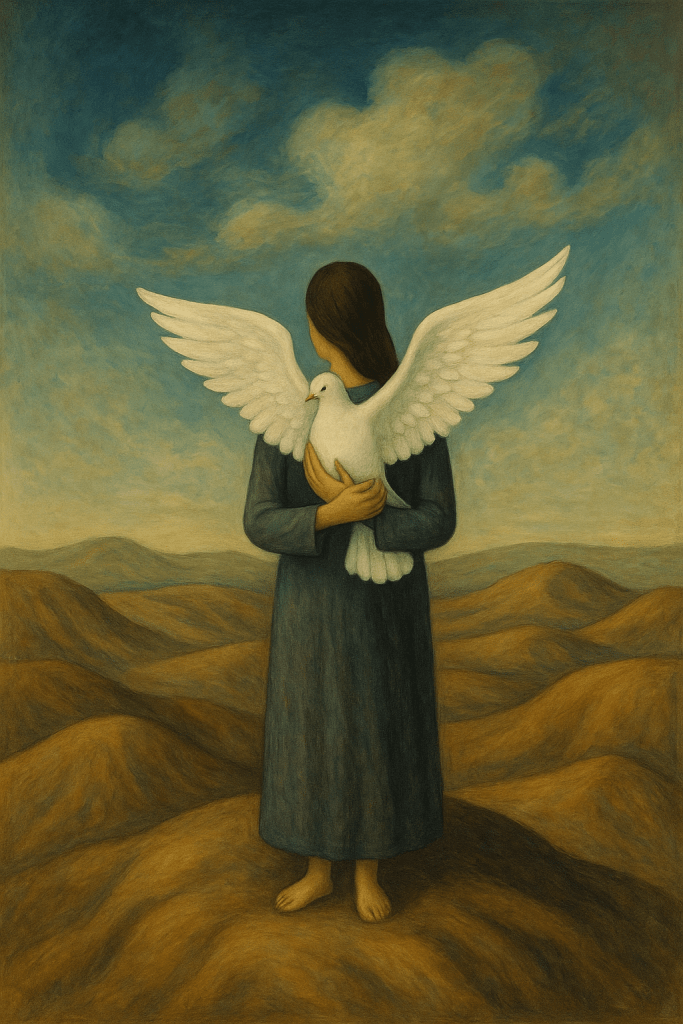
La Falsa Paz
Se creyó alguna vez que un solo dominio global traería la paz.
Que si la humanidad unificaba sus leyes, sus mercados, sus comunicaciones, la espada podría por fin descansar. El siglo XX susurró esa promesa a través de imperios e ideologías: desde la Sociedad de Naciones hasta la ONU, desde la Pax Americana hasta la globalización. Pero la práctica reveló la ilusión: un poder único no trae la paz, solo concentra el miedo.
Ahora, en el siglo XXI, hemos entrado en la era del mundo multipolar. Muchos centros, muchas ambiciones, muchas verdades. El arco del mundo, que antes tensaba una sola mano, hoy lo tensan varias —y la cuerda vuelve a vibrar.
De Europa al Pacífico, del Medio Oriente a las estepas, el mapa tiembla con rivalidades nuevas y viejos rencores renacidos.
Nos dijeron que la competencia equilibraría la tiranía, que el pluralismo nos protegería del imperio. Pero bajo la superficie se agita el mismo mecanismo de siempre: la paz por la fuerza, el orden por el miedo.
La humanidad no ha cambiado de gramática, solo de acento.
Los ensayos reunidos bajo el título La Gracia más Preciada no son manifiestos políticos, sino meditaciones sobre el largo cansancio del espíritu humano.
Preguntan si, en su afán eterno por imponer orden, el hombre no ha estado buscando la paz en el lugar equivocado; si la verdadera paz no comienza precisamente donde termina el control.
I
Todo imperio ha prometido la paz.
Roma la llamó Pax Romana. China, Pax Sinica. La Iglesia habló de la Cristiandad, y los británicos de la Pax Britannica. Pero todas esas “paces” se construyeron del mismo modo: con fuego, miedo y sometimiento.
En verdad, no fueron eras de paz, sino de violencia centralizada. El imperio estaba tranquilo en su centro porque sus fronteras ardían. La “paz” de la civilización fue casi siempre guerra contra las periferias: contra los no conquistados, contra los que se negaban a inclinarse.
Tácito, al ver a las legiones romanas devastar Britania, escribió la definición más cruel y más cierta de la paz: Hacen un desierto, y lo llaman paz.
II
En China, los emperadores hablaban de armonía. Las dinastías se sucedían proclamando el Mandato del Cielo, mientras las guarniciones vigilaban las murallas contra los pueblos nómadas llamados bárbaros.
La paz reinaba en la capital, pero se pagaba con sangre en la estepa.
En Persia, en Bizancio, en Al-Ándalus, en los califatos de Damasco y Bagdad, se repetía el mismo patrón: el orden del cielo se defendía con la espada.
Incluso la Iglesia que predicaba la misericordia envió cruzadas en nombre de la paz divina.
Así, a lo largo del mundo, la lógica fue la misma: orden impuesto desde arriba, serenidad en el centro, sometimiento en los márgenes. La humanidad ha confundido el control con la armonía.
III
Cuando la marina británica dominó los mares, lo llamó Pax Britannica: paz para Londres, guerra para la India, África y el Caribe.
Cuando la bomba atómica silenció las grandes guerras europeas, lo llamaron la Larga Paz: paz para los poderosos, guerras por delegación para los débiles.
El siglo XX nos enseñó que la humanidad puede conservar una “paz global” si distribuye sus guerras de manera más eficiente.
Nunca el mundo estuvo tan comunicado —y nunca tan roto.
La paz se volvió industria: negociada, televisada, vendida. Pero pocas veces vivida.
IV — Los continentes invisibles
La historia de la “pax” es también una historia de geografía.
Del Mediterráneo al Pacífico, los imperios proclamaron su orden como paz. Pero cuando miramos hacia las Américas y Oceanía, el concepto mismo se desmorona.
No existen archivos continuos, ni crónicas oficiales de paz. Lo que sabemos de esos mundos anteriores a la conquista europea proviene de fragmentos: arqueología, tradiciones orales y testimonios coloniales.
Y, sin embargo, los indicios revelan el mismo pulso humano: conquistas permanentes entre pueblos y el surgimiento de imperios subyugadores.
El Inca expandió su dominio con caminos, alianzas y guerras; el Azteca erigió un imperio de tributo y de miedo; los mayas alternaron rivalidades y treguas.
Pero, por razones metodológicas, no podemos hablar de una Pax Inca o una Pax Azteca como hablamos de Roma o de China, porque todas las fuentes están filtradas por la conquista.
De hecho, habría que preguntarse: ¿qué fuente no lo está?
La historia misma ha sido escrita desde la fortaleza, no desde las cenizas.
La voz de la paz —si alguna vez habló— no dejó archivo.
En Oceanía, la distancia mantuvo separadas a las islas, pero también allí hubo incursiones, migraciones y guerras. En todas partes, el hombre buscó el orden a través de la jerarquía, y la paz, a través del sometimiento del otro.
V — Un número sin consuelo
Si tratáramos de contar los años que el mundo ha vivido sin guerra desde el 100 a.C., el resultado sería estremecedor.
De unos 2 100 años de historia registrada, la humanidad ha conocido apenas 300 sin conflictos mayores: cerca del 14 % de su tiempo documentado.
Y aun esos años de aparente calma esconden opresiones silenciosas, guerras no registradas y matanzas olvidadas.
La conclusión es ineludible: el hombre ha aprendido mucho más sobre cómo hacer la guerra que sobre cómo habitar la paz.
VI
Quizás la pregunta no sea por qué el hombre no encuentra la paz, sino por qué insiste en buscarla a través del miedo.
Construimos armas para sentirnos seguros, imperios para sentirnos eternos, ideologías para sentirnos puros.
Y cada vez que decimos “nunca más”, el ciclo vuelve, vestido con nuevos colores.
Tal vez nuestra tragedia no sea la violencia en sí, sino la confusión: confundir el orden con el amor, el silencio con la paz, la obediencia con la justicia.
Llamamos paz al silencio del otro, al miedo que mantiene las calles quietas. Eso no es paz: es agotamiento.
VII
La paz verdadera no puede nacer del miedo. No es un armisticio entre fuerzas, sino un pacto entre conciencias.
Nos exige algo más difícil que la victoria: humildad.
Nace no cuando el enemigo se rinde, sino cuando el enemigo es comprendido; cuando el yo deja de multiplicar enemigos dentro de sí mismo.
La historia humana es la confesión de un ser roto que busca una paz que ninguna espada puede dar.
La ha buscado en templos y campos de batalla, en revoluciones e imperios, en la razón y en la fe. Pero la paz —la verdadera, la que reconcilia— no se conquista: se recibe.
VIII
Tal vez el hombre nunca ha encontrado la paz porque sigue buscándola con métodos nacidos del miedo.
Quiere paz sin amor, armonía sin verdad, seguridad sin entrega.
Y, sin embargo, incluso en su ruina, continúa buscándola. Esa persistencia, esa sed, es lo que lo redime.
El ser humano está roto, sí —pero roto con la forma de su anhelo de paz.
Y quizá esa búsqueda eterna, aunque herida, ya sea el primer signo de la Gracia.
The Broken Bow of the World
It was once believed that a single global order would bring peace.
If humanity could unify its laws, its markets, its communications, perhaps the sword would finally rest. The twentieth century whispered this promise through empires and ideologies —from the League of Nations to the United Nations, from Pax Americana to globalization. But practice has revealed the illusion: a single power does not bring peace, it only centralizes fear.
Now, in the twenty-first century, we have entered the age of the multipolar world. Many centers, many ambitions, many truths. The bow of the world, once held by one hand, is now drawn by many —and the string is tense again.
From Europe to the Pacific, from the Middle East to the steppes, the map trembles with new rivalries and ancient resentments reborn.
We were told that competition would balance tyranny, that pluralism would protect us from empire. Yet the same old mechanism stirs beneath the surface: peace through strength, order through fear.
Humanity has not changed its grammar —only its accents.
The essays gathered under The Most Precious Grace are not political manifestos; they are meditations on the long fatigue of the human spirit.
They ask whether man, in his endless attempt to impose order, has been seeking peace in the wrong place —whether true peace might only begin where control ends.
The False Pax
(The Peace of Conquest)
“They make a desert, and call it peace.” — Tacitus
I
Every empire has promised peace.
Rome called it Pax Romana. China, Pax Sinica. The Church spoke of Christendom, and the British of Pax Britannica. But all these “paxes” were born the same way: through fire, fear, and subjugation.
In truth, these were not ages of peace but of centralized violence. The empire was calm at its core only because its borders were burning. Civilization’s “peace” was a permanent war against the periphery: against those not yet conquered, against those who refused to kneel.
Tacitus, witnessing the Roman legions destroy Britain, wrote the cruelest and most honest definition of peace: They make a desert, and call it peace.
II
In China, emperors invoked harmony. Dynasties rose and fell proclaiming the Mandate of Heaven, while garrisons stood watch along the Great Wall against nomads labeled as barbarians. Peace reigned in the capital, but it was paid for with blood on the steppe.
In Persia, Byzantium, Al-Andalus, and the caliphates of Damascus and Baghdad, the same pattern unfolded: the order of heaven was maintained by the sword.
Even the Church that preached mercy sent crusades in the name of divine peace.
Across the world, the logic repeated itself: order imposed from above, serenity at the center, submission at the margins. Humanity has long mistaken control for harmony.
III
When the British navy ruled the seas, it was Pax Britannica —peace for London, but war for India, Africa, and the Caribbean. When the atomic bomb silenced the great wars of Europe, they called it the Long Peace —peace for the powerful, but endless proxy wars for the rest.
The twentieth century taught us that humanity can preserve “global peace” only by distributing its wars more efficiently.
Never before had the world been so connected —and yet, never so fractured.
Peace became an industry: negotiated, televised, sold. But rarely lived.
IV — The Unseen Continents
The story of pax is also a story of geography.
From the Mediterranean to the Pacific, empires proclaimed their order as peace. But when we turn our gaze to the Americas and Oceania, the very concept collapses.
There are no continuous archives, no official chronicles of peace. What we know of those lands before European conquest comes through fragments —archaeology, oral traditions, and the writings of conquerors.
And yet, even these fragments reveal the same human rhythm: permanent conquest between peoples and the rise of subjugating empires.
The Inca expanded through roads, alliances, and wars; the Aztec built an empire of tribute and fear; the Maya oscillated between rivalry and truce.
But methodologically, we cannot speak of a Pax Inca or a Pax Azteca as we do of Rome or China —because every surviving source is filtered through conquest.
Indeed, one must ask: What source is not filtered by conquest?
History itself has been written from the fortified citadel, not from the ashes.
The voice of peace —if it ever spoke— left no archive.
In Oceania, distance kept the islands apart, but even there, tales of raids, migrations, and rivalries persist. Everywhere, man sought order through hierarchy, and peace through domination.
V — A Number Without Comfort
If we were to count, as historians have tried, how many years the Earth has known without recorded war since 100 B.C., the figure is brutally small.
Of roughly 2,100 years, humanity has lived no more than 300 without major conflict —barely 14 percent of its documented history.
And even those years of supposed calm hide silent oppressions, unrecorded wars, and forgotten massacres.
The conclusion is inescapable: man has known far more about how to wage war than how to dwell in peace.
VI
So perhaps the question is not why mankind fails to find peace, but why it keeps seeking it through fear.
We build weapons to feel safe, empires to feel eternal, ideologies to feel pure.
Each time we say never again, the cycle begins anew, clothed in new colors.
Maybe our tragedy is not violence itself, but confusion —mistaking order for love, silence for peace, obedience for justice.
We call it peace when the other no longer speaks, when fear keeps the streets quiet. That is not peace; it is exhaustion.
VII
True peace cannot be born from fear. It is not a truce between powers but a covenant between consciences.
It demands something harder than victory —humility.
It is born not when the enemy surrenders, but when the enemy is understood; when the self stops multiplying enemies within.
Human history is the confession of a broken being searching for a peace no sword can give.
He has looked for it in temples and battlefields, in revolutions and empires, in reason and faith. But peace —the real peace, the reconciling one— is not conquered. It is received.
VIII
Man has never found peace because he keeps seeking it with methods born of fear.
He wants peace without love, harmony without truth, safety without surrender.
And yet, even in his ruin, he continues to search. That persistence —that thirst— redeems him.
Humanity is broken, yes —but broken in the shape of its yearning for peace.
And perhaps that endless search, though wounded, is already the first sign of Grace.

 Israel Centeno Author
Leave a reply to Lorena Tosta Cancel reply